Preparation and Performance Test of Ultraviolet Curable Urushiol-Based Epoxy Acrylate Coatings
Wipe the tinplate sheet and glass slide with absolute ethanol to remove impurities on the surface for later use. Apply the pre- prepared urushiol-based epoxy acrylate to the tinplate so that the coating meets the paint film thickness standard. The coating needs to be uniform, otherwise there will be differences in performance. Place the painted film under 2000W UV curing agent, cure for a certain period of time, take it out and put it in the Drying Oven for 6 hours, and prepare for testing various properties. Figure 3-1 is the flow chart of coating preparation.

Performance Testing
Mechanical properties of UV-cured film
This test tests the mechanical properties of the cured film: follow the national standard GB/T 1731-93 to test the flexibility of the paint film , follow the national standard GB/T6379-1996 to test the hardness, follow the national standard GB/T 9286-1998 to test the paint The hardness of the film has passed the national standard GB/T1732-1993 to test the impact resistance of the paint film.
Gloss of UV-cured film
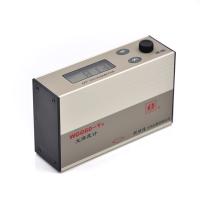
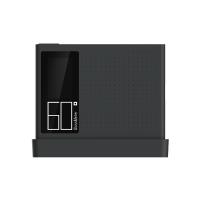
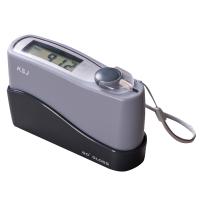
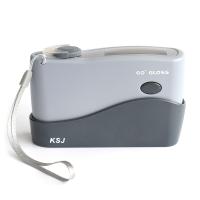
This test uses a gloss meter to test the gloss of the paint film, and follows the national standard GB/T1743-1979 to test the gloss of the paint film.
Solid content of UV curable film
In this test, acetone solution was used for extraction first, and the mass of the remaining insoluble matter in the reaction system can be determined by the degree of . The cured product contains unsaturated double bond resin, forming a three-dimensional network structure. Calculated as follows:

In the formula: m1 is the unextracted mass of the sample: m2 is the mass of the sample after extraction;
Note: The extracted tinplate sheet should be washed and dried before the quality can be tested.
Corrosion Resistance Test
In this experiment, according to the national standard GB 9274-88 method, the UV cured film was soaked in the test. After soaking in the solution for a while, the surface state of the coating was observed.
- 1Emulsion Solid content determination
- 2Three methods for determination of Solid content of concrete admixture
- 3Principle and Application of Glossiness Tester
- 4Working Principle and Application of Metal Gloss Meter
- 5Basic principle and application analysis of insulating paint gloss Detector
- 6Working principle and application analysis of film Glossmeter
- 7Principle and application analysis of microporous gloss meter
- 8 FZ/T 01097 Analysis of fabric gloss test method
- 9Evaluation and Application of Optical Properties of Powder coatings