Comparison of Three Different Coating Machines for Thermal Insulation Coatings on Architectural Glass
There are three different types of film coating machines commonly used in laboratories: pull film coating machine, rotary film coating machine, and metal applicator coating film. The following three types of film coating machines are used to apply thermal insulation coatings on architectural glass. :
(1) Pull coating machine
The pull coating machine puts the substrate into the solution, dips the substrate, and after dipping for a period of time, pulls the substrate out of the solution at a certain speed through the pull rod on the upper part of the pull machine. The pulling speed, pulling height, dipping time and dipping length of the substrate can be controlled by the pulling machine. This process can coat the surface of silicon crystal, glass, plastic and other object substrates.
This coating machine is currently limited to laboratory use, without much engineering significance. In the process of use, both sides of the glass will be infected with the paint at the same time, and both sides will be coated; after pulling, the paint will still flow down by itself under the action of gravity, resulting in the difference in the thickness of the upper and lower layers of the coating film. uniform.
(2) Rotary coating machine
The rotary Film Applicator uses the centrifugal force generated to spread the coating onto the panel. Excess paint will fly to the edge and flow into the surrounding grooves. At present, this coating method is also limited to laboratory use. At the same time, due to the effect of centrifugal force, the thickness of the film layer at the center point and the side will be uneven.

(3) Metal applicator
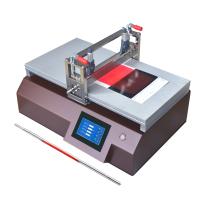
The more common metal applicators for experiments include I-shaped applicators and linear applicators. They are generally made of stainless steel and can be scraped at one time. The effective coating width varies according to the model, generally between 70- 110mm; the I-shaped applicator can generally coat on both sides, and the thickness of the produced film is generally between 100-600μm. film machine for coating.

The above three methods are mainly used in the laboratory. If it is to be used for engineering coating, generally use methods such as flow coating and sponge coating.
-
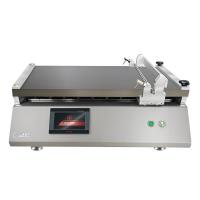
![China TBJ-X3-DJ7 Laboratory Automatic Film Applicator Spreader with Automatic Feeding System]()
-
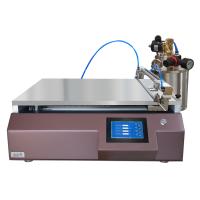
![SETCAS KW-4A Spinning coater Manual]() SETCAS KW-4A Spinning coater Manual$ 1237.00
SETCAS KW-4A Spinning coater Manual$ 1237.00 -
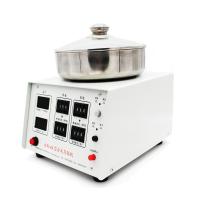
![Study on Nanomaterials for SHENYANG KEJING PTL-OV6P 6 Station Lifting Film Applicator]()

- 1How Flat Film Applicators Can Build a New Generation of Functional Materials on Fabrics
- 2NVP anode film FAQ and solution
- 3Application Technology of Laboratory Film Applicator in Dielectric Thin Film
- 4Comparison of Advantages and Disadvantages of Three Heating modes for Laboratory Film Applicators
- 5Application and selection of laboratory coater in PDMS thin film prepative
- 6Scraping machine selection case: film substrate large size high accuracy scraping solution
- 7Application of Laboratory Automatic Film Applicator in Coating Battery Slurry on Copper Foil and Aluminum Foil
- 8Application of Film Applicator in PEM Research and Preparation
- 9Application of Film Applicator in PVDF-HFP Material Research