What performance subjects need to be tested for thermofluororesin coating PVDF? How to meet the standard?
Thermal fluororesin coating PVDF is a coating with fluororesin as the main film-forming substance, which is non-sticky, low-friction, chemical-resistant and weather-resistant. It is applied to the pre-coating of metal surfaces for decoration and protection. Today we will introduce the testing requirements for thermal fluororesin coating PVDF specified in the HG/T 3792~3793—2005 standard.
Item detection
1. State in the container: If the sample has no hard lumps after stirring and is in a uniform state, it is considered to be up to standard.
2. PVDF resin content in the resin: the sample must be ≥70% to meet the standard.
3. Appearance of the coating film: visually observe the test sample under scattered sunlight. If the coating film color is uniform, the surface is smooth, and there are no bubbles, shrinkage cavities and other coating film pathological phenomena, it is rated as "normal".
4. Coating film color consistency: use the actual production line on-site coating samples as reference samples for comparison.
5. Solvent wiping resistance: wiping ≥ 200 times with butanone solution is considered to be up to standard.
6. Gloss: The gloss index is determined by the testing parties according to the actual needs.
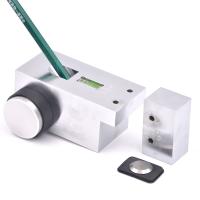
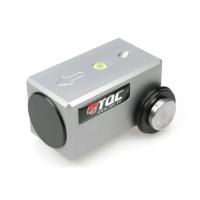
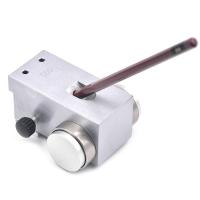
7. Pencil hardness: scratch level ≥ F is considered up to standard.
8. Adhesion: Dry adhesion should be ≤1 grade; wet adhesion should be ≤1 grade, and there should be no coating film pathology such as blistering in the test area; boiling water adhesion should be ≤1 grade, and there should be no coating film pathology such as blistering in the test area , then the standard is met.
9. Impact resistance: tape peeling test is carried out in the deformed area of the sample. If there is no peeling and cracking of the paint film in the deformed area, a small amount of tiny cracks are allowed on the circumference of the pit of the test plate, and the number of cracks is rated not more than 2, the size of the cracks is not more than S2, and there is no peeling, it can be rated as "pass".
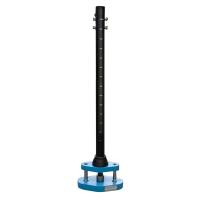
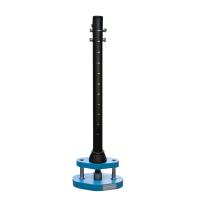
10. Abrasion resistance: the sample must be ≥ 2.8L/μm to be considered up to standard.
11. Chemical resistance: soak the sample in hydrochloric acid solution for 15 minutes, if there is no change, the hydrochloric acid resistance meets the standard; put the sample in the mortar for 24 hours, if there is no change, the mortar resistance meets the standard; soak the sample in nitric acid solution for 30 minutes, If the color changes, △E≤5.0, the resistance to nitric acid is up to the standard; soak the sample in the detergent for 72 hours, if there is no abnormality, the detergent resistance is up to the standard; soak the sample in the window washing solution for 24 hours, if there is no abnormality, the resistance to the detergent is up to the standard; Window washing liquid is up to standard.
12. Moisture and heat resistance: put the sample in a humid and hot environment for 4000 hours, if there is a small amount of foaming, the size of the foaming is "No. 8", and there is no other pathological phenomenon of the coating film, it is considered to be up to the standard.
13. Salt spray resistance: put the sample in the salt spray environment for 4000 hours, if the damage at the lined part is ≥ 7 grades, and the damage at the unmarked part is ≥ 8 grades, it is considered to be up to the standard.
14. Resistance to artificial weathering: put the sample in an artificial climate environment for 4000 hours, if discoloration ≤ 2 grades, loss of light ≤ 2 grades, white paint pulverization ≤ 1 grade, other color paint pulverization ≤ 2 grades, no other paint Membrane pathological phenomenon, it is considered up to standard.

- 1Working principle and application of UV coating Cupping testing device
- 2Application of shakeout Tester in organic polymer film abrasion resistance testing
- 3Application of shakeout Tester in aluminum surface coating abrasion resistance testing
- 4Paint film abrasion resistance and test method thereof
- 5Polyethylene (PE) coating indentation hardness inspection and its importance in pipeline corrosion protection
- 6Paint film abrasion resistance and its test method - rubber abrasive wheels method
- 7Determination of abrasion resistance of paint film
- 8Determination method of paint film abrasion resistance and its importance
- 9Coating performance testing: the key to ensuring quality coatings