Which performance subjects should be tested for water-based alkyd resin? How to judge the results?
Water-based alkyd resin is an epoxy floor coating with water as the main dispersion medium. It is applied to cement mortar, concrete, stone and other ground substrates for protection and decoration.
Today we will introduce the regulations of HG/T 5057-2016 on water-based alkyd resin. Before testing, we need to understand the classification of water-based alkyd resin, which is divided into grade I and grade II according to the bearing capacity. Class I is suitable for places with general requirements for carrying capacity; Class II is suitable for places with higher requirements for carrying capacity.
Item detection
1. State in the container: First, we open the container, stir with a spatula or stir bar, and allow precipitation at the bottom of the container. If the primer sample, the back paint sample and the top paint sample are easy to mix evenly after stirring, it is rated as "uniform without hard lumps after stirring".
2. Appearance of the coating film: Visually observe the test sample of the topcoat sample under scattered sunlight. If the coating film is uniform and there are no coating film pathological phenomena such as sagging, blooming, pinholes, cracking and peeling, it is rated as "normal".
3. Non-volatile matter content: The testing standard is determined by both parties according to actual requirements.
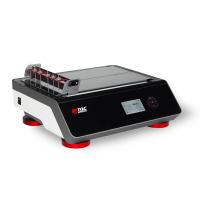
4. Drying time: If the surface dryness of the primer sample and topcoat sample is ≤ 8 hours, the solid drying of the primer sample is ≤ 24 hours, and the solid drying of the topcoat sample is ≤ 48 hours, it is considered to be up to the standard.
5. Applicable period: The testing standard shall be decided by both parties according to the actual requirements.
6. Bending test: If the topcoat sample is ≤3mm, it is regarded as up to standard.
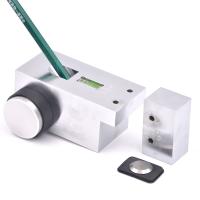
7. Pencil hardness: If the scratch level of the topcoat sample is HB, it is regarded as up to standard.
8. Abrasion resistance: under the test condition of 750g/500r, if the topcoat sample is ≤50mg, it is regarded as up to standard.
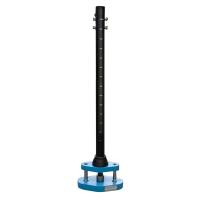
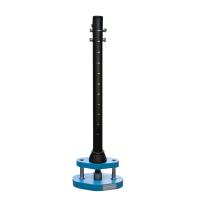
9. Impact resistance: the test condition of level I is 500g steel ball and 100cm in height, and the test condition of level II is 1000g steel ball and 100cm in height. By visually observing the sample, if there is no crack or peeling coating film on the surface coating Morbid phenomenon, it is considered to meet the standard.
10. Adhesion: Under standard conditions, if the primer sample and topcoat sample are ≥3.0MPa, it is considered up to the standard; under the condition of immersion in water, the primer sample is ≥1.5MPa, then it is considered up to the standard.
11. Water resistance: soak the topcoat sample in water for 240 hours, take it out and dry it, and observe it visually under scattered sunlight. If 2 of the 3 test panels do not show any abnormalities in the coating film such as blistering, cracking, shedding, powder dropping, obvious discoloration, and obvious loss of gloss, it is rated as "no abnormality".
12. Oil resistance: soak the topcoat sample in No. 120 gasoline for 120 hours, take it out and dry it, and observe it visually under scattered sunlight. If 2 of the 3 test panels do not show any abnormalities in the coating film such as blistering, cracking, shedding, powder dropping, obvious discoloration, and obvious loss of gloss, it is rated as "no abnormality".
13. Acid resistance: Immerse the topcoat sample in 50g/L H₂SO₃ solution for 48 hours, take it out and dry it, and observe it visually under scattered sunlight. If 2 of the 3 test panels do not show any abnormalities in the coating film such as blistering, cracking, shedding, powder dropping, obvious discoloration, and obvious loss of gloss, it is rated as "no abnormality".
14. Alkali resistance: soak the topcoat sample in 50g/L NaOH solution for 120 hours, take it out and dry it, and observe it visually under scattered sunlight. If 2 of the 3 test panels do not show any abnormalities in the coating film such as blistering, cracking, shedding, powder dropping, obvious discoloration, and obvious loss of gloss, it is rated as "no abnormality".

- 1Working principle and application of UV coating Cupping testing device
- 2Application of shakeout Tester in organic polymer film abrasion resistance testing
- 3Application of shakeout Tester in aluminum surface coating abrasion resistance testing
- 4Basic Principle and Application Analysis of Paints drying time Tester
- 5Waterborne architectural coatings detection method
- 6Paint film abrasion resistance and test method thereof
- 7Polyethylene (PE) coating indentation hardness inspection and its importance in pipeline corrosion protection
- 8Summary of drying time determination method for paint film and putty film
- 9Paint film abrasion resistance and its test method - rubber abrasive wheels method