What is Brinell Hardness?
What does Brinell hardness mean?
Brinell hardness indicates the ability of a metal to resist deformation by permanent indentation. Hardness shows a material's resistance to penetration by a spherical indenter under standard conditions. Since Brinell hardness is a mechanical property, it is also related to a material's resistance to wear and its ability to plastically or sustain deformation and the ability of a material to indent or abrade another material.
Brinell hardness is named after Swedish engineer Johan A. Brinell.
Brinell hardness
The Brinell hardness test is used to determine hardness and is performed by pressing a hard steel or carbide ball indenter of specified diameter onto a test metal surface under a specified load. The diameter of the indentation on the metal surface is then measured. Hardness is expressed as a Brinell value, obtained by dividing the load in kilograms by the indentation surface area in square millimeters.
Commonly used metals have Brinell values ranging from HB 15 to 750. Typical values include:
Pure Aluminum = 15
mild steel = 120
Hardened tool steel = 650–700
Hard chrome plate=1000
Diamond = 8000
The hardness of the material depends on the treatment the material has undergone. Testing hardness is much easier with simple and non-destructive tests than bending, torsion or tensile testing.
Brinell hardness is more important in structurally inhomogeneous materials, especially for heavy trucks and bulldozers, forgings and castings, engine blocks and heads, rear end housings, springs, and various large, rough surface parts. This is due to the fact that determining the hardness of these bulk or macrohard materials is the easiest and most reliable.
Metal hardness is one of the factors that contribute to sulfide stress cracking (SSC), and harder metals are more susceptible when used in acidic or corrosive environments. Therefore, the international standard stipulates that the maximum allowable Brinell hardness of welded joints is 200HBW. This is especially true when these materials are used in the corrosive environments of the oil and gas industry.
Brinell hardness provides useful information related to tensile strength, ductility, wear resistance and other physical properties of metallic materials and thus can be used for material selection and quality control.
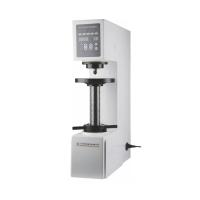

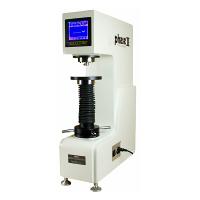

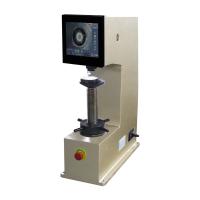
- 1Hardness conversion methods such as Rockwell Hardness and Brinell Hardness
- 2Measurement principle of Rockwell hardness and Brinell hardness
- 3What is the Brinell hardness test?
- 4Influencing factors and solutions for correct detection of Brinell Hardness Tester
茹强 - 《影响布氏硬度计准确测量的因素及排除方法》
- 5Application introduction of portable Brinell Hardness Tester
朱旭明; 李矛; 翁俊; 孙春宇; 孙桂清 - 《一种便携式布氏硬度计》
- 6FAQ analysis and solution of Brinell Hardness Tester application process
归峰 - 《检修布氏硬度计的心得体会》
- 7Brinell Hardness Tester
杨桂琴 - 《金属布氏硬度计检定规程》
- 8Brinell Hardness Tester structure and performance introduction
金学今 - 《布氏硬度计》