What is surface tension? How to measure surface tension?
Surface Tension
All liquids are made of combinations of submicroscopic atoms called molecules (very few liquids are made of unbonded atoms). All molecules that are close to each other attract. It is these mutual attractions that create the universal property known as surface tension. The unit is force/length: dyne/cm.
A drop of liquid suspended in space quickly becomes spherical. When surface molecules are pulled towards the molecules directly below them, a minimum surface area (sphere) is created. The spherical shape is the result of an uneven distribution of forces; molecules inside the droplet are attracted from all directions, while molecules on the droplet's surface are attracted only by those below them. All liquids try to form a minimal surface sphere. However, some counter-forces are coming into play. A liquid placed on a solid provides a liquid-solid interface. The importance of this type of interface to plastic decorators cannot be overemphasized, since liquid molecules are attracted not only to each other (intramolecular attraction), but to any solid surface they are in contact with (intermolecular attraction). We only need to focus on these two interactions; intra and intermolecular. A fundamental understanding of this interfacial interaction will allow decorators to optimize materials and processes.
Measuring Surface Tension
Every liquid has a specific surface tension value. Liquids with high surface tension, such as water (73 dynes/cm), exhibit high intramolecular attractive forces and a strong tendency to bead up (form spheres). Liquids with low values have a weak tendency to form spheres that easily overcome the reaction force. There are various methods for measuring the surface tension of liquids. There are also methods for determining the surface tension of solids, which is often referred to as surface energy. We need only consider methods for estimating surface tension and techniques for determining relative differences.
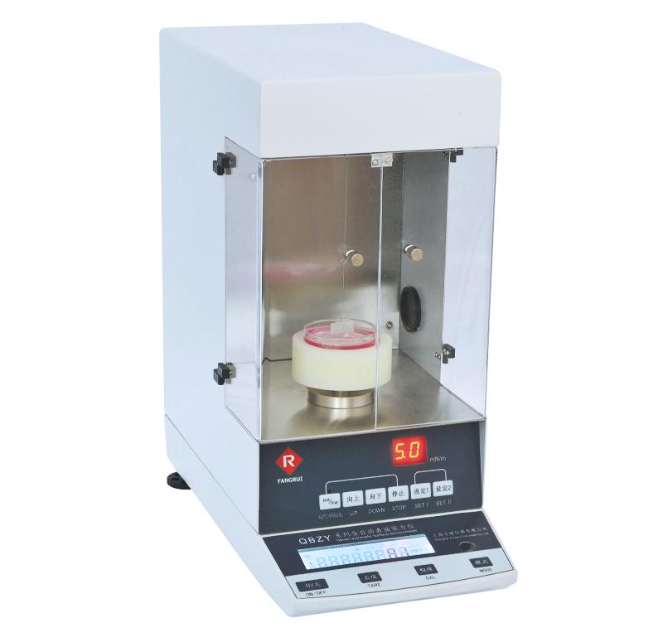





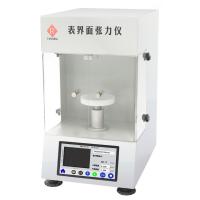
- 1Water surface tension measurement based on Electronic Balance
- 2Working principle of mechanical liquid meter interfacial tensIon Meter
- 3Comparison of Liquid Surface/Interfacial Tension Testing Methods: Plate vs. Ring Method
- 4Selection guide for Surface Tensiometers
- 5Application principle and precautions of platinum ring Surface Tensiometer
- 6Coating surface tension and its effects
- 7Coating process surface tension factor
- 8Three commonly used detection methods for surface tension
- 9Ceramic ink-jet surface tension, viscosity and solutions


