What is thixotropy? brief description of the principle
Thixotropy is an overused term in the coatings industry. In the review, we define the phenomenon of thixotropy as a special case of viscosity variation with time, i.e. its decrease in constant strain rate experiments. This time dependence manifests itself as a hysteresis in experiments involving increasing and decreasing strain rates. The area under the hysteresis loop has been used as a quantitative estimate of thixotropy, although its validity remains controversial. 18,19 Another attempt to quantify thixotropy involved the measurement of peak stress (σp) and long-term stress time (σ∞) in constant strain rate experiments. In this case, the thixotropy index β is defined as follows:
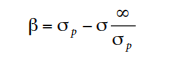
The utility of these different definitions remains unclear, and their relevance to coating phenomena is even less certain.
In a purely phenomenological sense, thixotropy can be studied by monitoring the time dependence of viscosity at a constant strain rate. However, the quantification of attributes is rather arbitrary.
The thixotropy coefficient β seems plausible and can be measured in torsional rheometers, such as those mentioned in Table 2.2. It should be noted that this index, as defined above, increases with increasing strain rate. Furthermore, thixotropic behavior is strongly influenced by the shear history of the material. In comparative measurements, care should be taken to ensure that all samples have similar or identical histories. The phenomenon of thixotropy is also responsible for the increase in viscosity after shearing ceases. If, after a constant strain rate experiment, the material viscosity is monitored using a sinusoidal technique, it will be found that the material viscosity increases to a value characteristic of low shear strain rate measurements.