What kind of adhesive bond strength is suitable and satisfactory?
So, how to explain the fact that theoretical or desirable bond strengths seem to be unattainable? The measured solid bond strengths are also much lower than theoretical values. Only whisker crystals such as silicon, graphite, and iron have achieved tensile strengths close to their theoretical tensile strength.
According to JJ Bikerman, all adhesives are defective and contain weak boundary layers and therefore, always fail to achieve their theoretical strength. No doubt this is often the case; but defects, at least serious ones, can be minimized, and weak boundary layer breaks that can be detected are not always observed.
All destructive tests, whether performed in tension, shear or peel, involve stress concentrations. Unless the stress is evenly distributed over a very small area, as in the "whisker" tensile strength test, the local stress will far exceed the average stress. It is well known that as the thickness of the adhesive increases, the average breaking strength of the adhesive to tensile failure decreases (Figure 5.5), and it can be seen that the tensile stress at the edge of the adhesive is higher than the internal stress. If a defect results in high local stresses, cleavage may initiate and proceed catastrophically.
A sheared chemical bond is not only subject to shear stress concentration, but also to tear stress.
Spalling is a deliberate stress concentration. Deformation and flow can also lead to stress concentrations and failure. It is advantageous to match the mechanical properties of the adhesive to those of the adhesive, but this is rarely feasible. Instead, adhesive designers resort to the expedient of toughening the adhesive, combined with materials that impede crack propagation, breaking the bond as much as possible.
Adhesion-adhesion interfaces are more accurately described as "interfacial forces" in many cases. A classic example is bonding aluminum to aluminum with structural glue. The surface of aluminum is actually alumina, and depending on how it is formed, will vary in strength and porosity. The adhesive penetrates and locks into the oxide film, and bond strength can be greatly improved by using surface treatments that produce a strong, well-bonded oxide layer.
The bond strength of the adhesive is usually enhanced by a primer. A classic example is the bonding of vulcanized rubber to steel, where the steel is first electroplated with a thin layer of copper and then the rubber compound is cured on the copper surface under heat and pressure. It is believed that the sulfur in the vulcanizing agent forms a strong bond with the copper through a chemical bond, which in turn forms a strong bond with the steel.
Primers are often used to bond adhesives to plastic films. For example, the first transparent pressure-sensitive tape consisted of a cellophane film with a natural rubber rosin adhesive that separated from the film under wet conditions. The solution to this problem is to first coat the cellophane with a thin layer of primer, which is a mixture of natural rubber and casein, and then apply an adhesive over the primer.
Difficult-to-bond surfaces such as polyethylene, polypropylene and Teflon are known to be modified by treatments such as corona, plasma or chemical treatments to make the surface more polar and possibly chemically reactive. These treatments can also remove weak boundary layers.
While strong, long-lasting adhesives are often the goal of adhesive technology, deliberate weakening of the adhesive is also required. This need arises in the pressure sensitive tape industry where there is a need for tapes that are easily unwound from rolls, especially where the pressure sensitive adhesive is to be transferred from a carrier film to another surface. Easily releasable surfaces generally have low critical surface energies and consist almost entirely of "dispersive energy". Furthermore, for the release coating to function well, adhesives without mutual solubility are required. Silicone release coatings, primarily composed of polydimethylsiloxane, provide the easiest release. Their critical surface energies are lower, but not as low as some fluorocarbon polymers.
They are also highly incompatible with pressure sensitive adhesives, from which they release well, but these criteria alone cannot account for the low levels of adhesion. Also, they differ from other release coatings by being soft and elastic rather than hard. This feature enhances stress concentration when the adhesive separates from the release liner.
In summary, bond strengths measured by destructive testing will never approach theoretical values, but intrinsic attraction forces can be manipulated through choice of materials and surface treatments to yield a wide range of practical bond strengths.



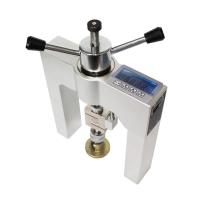

- 1Influence Factors and Test Methods of Bond Strength
- 2What is bond strength?
- 3What kind of standards should be met for the required performance subjects of architectural coatings for synthetic resin emulsions?
- 4Outdoor steel structure fireproof coating performance testing instrument scheme [mid-range version]
- 5What are the test performance requirements for paint in building elasticity?
- 6Destructiveness gluing tensile test