How does the paint industry measure color? Which measuring instruments are used?
Color is an important appearance in paint formulation, application or inspection. Color is also the most subjective parameter for visual representation, which is often performed under uncontrolled conditions, leading to poor color judgment. Proper viewing conditions require controlled lighting in an observation booth, which can be evaluated using different types of light sources such as simulated daylight, tungsten filament, and fluorescent light sources. Visual evaluation always requires a physical standard of comparison because the brain has a very poor "color memory" without one, but very good when two samples are compared together. Even with proper viewing conditions, it is often difficult to determine the direction and magnitude of the color difference between two samples. This process requires a trained colorist to evaluate.
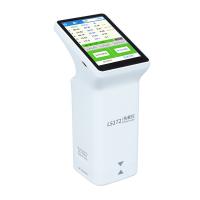
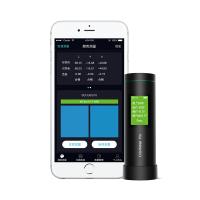
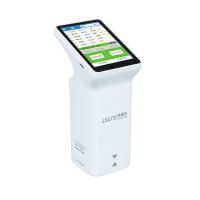
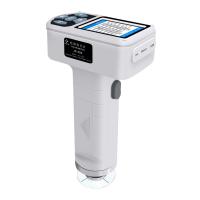
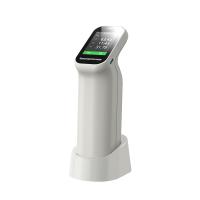
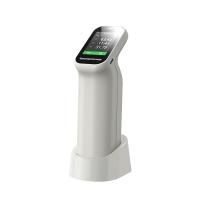
A more accurate and consistent way to assess color difference is to use a color measuring instrument. The two instruments used for this purpose are Colorimeters (color difference meters) and Spectrophotometer s. A Colorimeter uses optical filters to simulate the color response of the eye, and a Spectrophotometer divides the visible spectrum into intervals to mathematically simulate the color response of the eye. The advantages of using a Spectrophotometer to measure color difference lie in its accuracy, stability, and ability to simulate a wide variety of light sources. The new version of the instrument greatly reduces the cost and operational complexity of the Spectrophotometer .
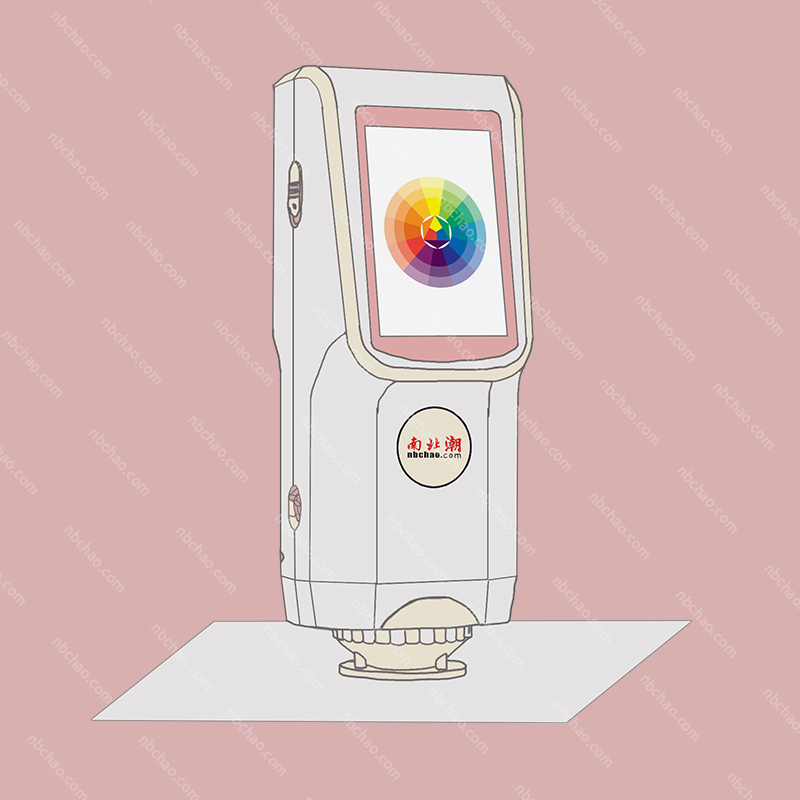
There are three different technologies used in modern industrial Spectrophotometer s: interference filters, light grids, and light-emitting diodes (LEDs). Interference filters require one filter per wavelength, typically 16 or 31 filters, depending on the resolution required. Grating-based instruments have diode arrays ranging from 20 to 256 elements, providing higher resolution for applications that require it. The advantages of interference filters are their ease of operation and their mechanical robustness. However, they are difficult to keep consistent and deteriorate over time. High-performance instruments often have gratings, which offer higher resolution and better consistency, but they are usually more expensive and complex to build and calibrate. A new market entrant for Spectrophotometer s is based on LEDs of different lighting colors. There are now up to 9 individually colored LEDs covering most of the visible spectrum. The instrument illuminates one LED at a time while measuring the reflected light. The advantage is that they can be made very small and are less expensive to manufacture. The downside is reduced accuracy and stability, but with newer leds the technology is improving and there are better ways to compensate.
There are several different measurement geometries: spherical, 45/0, and multi-angle. Spherical instruments illuminate the sample from all directions and view the sample near the normal or perpendicular. 45/0 illuminates the sample at 45 degrees from all directions and observes the normal of the sample. It can also be illuminated at 0 o'clock and viewed at 45 o'clock. The multi-angle approach illuminates at multiple angles for viewing at a fixed angle. It can also be illuminated at a fixed angle and viewed from multiple angles.

Using proper geometry is important for color formulas or color checks. A color formulation with a sphere geometry eliminates the need to characterize glossiness and mathematically eliminates glossiness independently of the color formulation. Color inspection usually requires instrumentation to be consistent with visual methods. A 45/0 instrument would provide a better visual assessment correlation as it better approximates the conditions of the viewing booth. Spherical instruments with specular exclusion can eliminate high gloss samples and thus obtain good visual correlation, but have difficulty with semi-gloss samples. Assessments can produce misleading information. This is very important when trying to match coated plastic molded parts.
Effect pigments, such as metallic, pearlescent, and interference materials require multiple angles of illumination and viewing to characterize color at different angles. Multi-angle instruments or gonioSpectrophotometer s measure 3 to 5 different angles. Usually at least three angles are required to characterize effect pigments: (1) near-specular gloss at 15 to 25 degrees, (2) 45/0, (3) gloss away from 75 to 110 degrees.
The type of Spectrophotometer to be used should be determined considering the type of sample to be measured. If the sample is too large to be brought to the instrument, the instrument needs to be portable. High-performance portable instruments are available for each geometry, but the correlation with laboratory instruments should be considered, as measurement data often needs to be communicated with color laboratories. If measuring very small samples, such as paint flakes or small color bars, the measuring aperture needs to be small. If the sample is not homogeneous, the pore size should be as large as possible. Many instruments have variable apertures that can be used for two samples simultaneously. Fluorescent paints require a Spectrophotometer and a carefully controlled lighting source, usually designated as daylight. Tungsten does not have the necessary UV rays and cannot be used as a good sun simulator. However, pulsed xenon is a very good solar simulator and can be tuned on some instruments to exactly match the spectrum of natural sunlight.
The tolerances required for color measurement are one of the important considerations when selecting a color Measurement Instrument. If the comparison is always to a physical standard, the formula is the same and a Colorimeter will suffice. When producing paint using numerical standards around the world requires high precision, only very high-end instruments can deliver results within acceptable visual consistency.

- 1Color difference meter and its application in Coating production
- 2Application of color reader in paper color difference control
- 3Principle, characteristics and application of Spinning & weaving precision color difference instrument
- 4Detection of film color retention with color reader
- 5Optical inspection structure for color readers: D/8 D/0 45 °/0
- 6Colorimeter Selection Guide [NBchao Brief Version]
- 7Application of color reader in inks industry
- 8What is the difference between tristimulus Colorimeter and Colorimeter?
- 9FAQ of computer color reader and its solution