What is the standard cold rolled steel plate? What are the specific applications?
There are a number of points to consider when preparing specifications for standardized cold-rolled steel test panels. The type of steel should be of standard grade and quality. The extensive use of steel is important. SAE 1008 and 1010 are examples of suitable grades of steel for test panel production. The steel used should also be free from rust and staining. Standardizing on specific grades of steel helps eliminate variability in chemical composition that can affect certain types of test results.
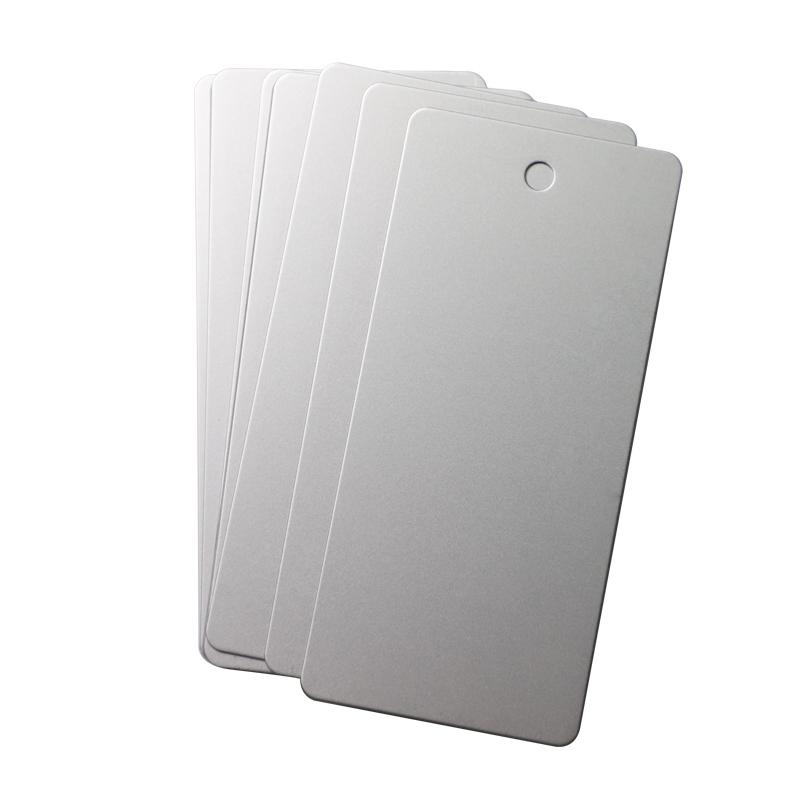
Designating a specific grade of steel may be a requirement in many industrial applications, but this is not the case when the steel is used to produce test panels. It is well documented that different batches of seemingly identical steel, even when produced by the same factory, can vary enormously in their performance under paint (see Figure 14.1). Over the years, several researchers have worked to explain the question of "good steel" and "bad steel". Many such studies have succeeded in isolating the factors contributing to this variability. Remember: the steel specifications used to manufacture the test panels take these factors into account.
surface profile
Surface roughness, waviness, and peak counts are some of the parameters that make up the surface profile of a steel plate. Surface profile is an important consideration when designing effective test panel specifications. Mills typically characterize the different finishes as matte, light matte, commercial gloss, etc.
These characterizations represent a fairly wide range in terms of surface profile. While these properties are likely to be suitable for most applications, the surface profile of the steel used to produce standardized test panels needs to be more strictly defined. For example, if the specification calls for a "matte" finish on the steel, the steel may be received with a surface roughness between 25 and 65 microns, or even higher. Different mills define a matte finish differently. Also, depending on the condition and wear of the finish rolls, the "matte" finish produced by a given mill may vary from shipment to shipment. For these reasons, the specifications for the steel used to produce the test panels need to specify a narrower defined range for surface roughness (ie, 35 to 45 μ inches). The actual range specified is not necessarily as important as the fact that the range is defined.
Some applications where surface profile is particularly important include appearance measurement and testing of phosphate coatings. The surface profile of the steel plate has an important influence on the appearance of the subsequent painting. Gloss, image clarity, and other appearance-related properties cannot be reliably evaluated if the consistency of the panel surface profile used in the evaluation is problematic. Similarly, steel test panels are often used to evaluate phosphate coating processes. Line technicians expect standardized test panels to accept coatings with given characteristics, assuming the phosphate process parameters are in order. However, normal mill variations in the surface profile of the steel may cause differences in phosphating properties. For example, a rougher steel surface has a greater surface area than a relatively smooth steel surface. This difference in surface area can result in a difference in coat weight. Surface profile is by no means a factor affecting the phosphatability of steel surfaces. However, it is an important factor that needs to be controlled as a source of variability.
surface carbon
Over the years, steel suppliers and automotive companies have funded numerous research projects aimed at identifying the origins of variation in properties between different varieties of seemingly identical steels. The results are not ambiguous. Study after study has shown that surface carbon is an important factor affecting changes in phosphatability and corrosion resistance under paint in commercial cold-rolled steel.
When cold-rolled steel sheets were phosphating and spray-coated under the same conditions and subjected to salt spray resistance testing according to ASTM B 117, there was a strong correlation between high surface carbon content and premature failure in the salt spray test. Surface carbon is a highly adherent material and cannot be removed by typical cleaning operations. Furthermore, it is impossible to determine the surface carbon level of a steel surface without a sophisticated and expensive laboratory evaluation. For these reasons, it is important to understand where surface carbon comes from and how to control it.
During cold reduction, stress is transferred to the steel plate, resulting in work hardening. This work hardening needs to be eliminated by annealing or holding at high temperature for a period of time. Annealing softens the metal, which improves formability. Rolling oil is applied to the steel surface during the cold reduction process. These oils act as lubricants during the rolling process. The rolling oil remaining on the steel surface after cold rolling will decompose under the high temperature of the annealing furnace, resulting in the deposition of carbon compounds on the steel surface. The carbon is baked into the surface by nature, so it is almost impossible to remove it without mechanical abrasion.
Since it is impossible for the test panel manufacturer to remove surface carbon by typical cleaning methods, it is necessary to purchase steel with a low surface carbon content. There are effective methods to limit surface carbon in rolling mills. It is important to ascertain the will and ability to develop these measures to control surface carbon. The valid specification for the steel used for the manufacture of the test plates shall include the maximum permissible surface carbon content. Various studies have shown that when the content of surface carbon is greater than 0.4 ~ 0.6 mg/ft2, surface carbon begins to have an adverse effect on phosphating and salt spray resistance.
surface treatment
When preparing test panels, it is important to standardize not only the materials used, but also the method of surface preparation. Many different surface preparation methods are discussed in ASTM D 609 and ISO 1514. These include alkaline cleaning, solvent cleaning, vapor degreasing and phosphate conversion coating.
Any preparation method described in ASTM D 609 or ISO 1514 is suitable for the preparation of test panels. An important consideration should be strict control of all process parameters of the chosen preparation method. Parameters that need to be controlled may include cleaning time, bath temperature, concentration, rinse water purity, and spray pressure. The relevant process parameters should be kept within narrowly defined ranges. Regardless of the preparation method chosen, the board should have no water breakage after processing. This can be determined by spraying a coat of distilled or deionized water on the cleaned surface. If the water forms a continuous unbroken film over the entire surface, without agglomeration into discrete droplets or other breaks, this should be taken as an indication that all organic soil has been adequately removed from the surface. A white cloth wipe test should also be performed to indicate whether the inorganic particulate soil has been adequately removed, as the water break test is not sensitive to the presence of inorganic soil on the surface.
Strict control of process parameters is especially critical when applying iron or zinc phosphate conversion coatings to prepare panels. Properties such as weight and topography of the coating are required. Close monitoring to ensure consistent test panel performance.
Application field
ASTM D 609 specifies three types of steel test panels. Below is a description of each type, along with some information about typical applications.
Type 1 steel plates are machined from matte steel. This type of finish typically represents steel and is used for painted surfaces on general sheet metal equipment. This type of surface is suitable for testing paint systems in these applications, as well as many automotive and general purpose applications. It is also suitable for testing zinc and iron phosphate coating systems. However, it is important to remember that coating properties on this type of surface can vary greatly if factors such as surface profile, surface carbon, and surface preparation method are not strictly controlled.
Type 2 steel plates have a flat polished surface. This kind of finish is not available from the factory. It is produced by removing the original abrasive surface during a controlled grinding or polishing process. The purpose of surface removal is to eliminate the normal variability between different surfaces. The grinding process effectively eliminates surface carbon and surface profile as variables, simply removing the ground surface completely. This type of surface is suitable for applications where repeatability is critical, since variations in surface properties cannot be tolerated. One problem with this type of surface is that while it is highly uniform and reproducible, it is not really representative of any surface that will have the coating applied in the field.
Type 3 steel plate has a smooth surface and is rolled with polished rolls. This type of finish is suitable for evaluating paint color, gloss, clarity of image and other appearance properties, as well as flexibility and adhesion. The surface finish of this type of steel is more easily controlled, resulting in less batch-to-batch variation in surface profile.

- 1Study on influencing factors of coil Coating T bending/cupping performance
周春利; 冯春苗; 吴奎录; 李大鸣 - 《涂料技术与文摘》
- 2The use process of furnace in the research and development of cold-rolled ultra-pure ferritic stainless steel
王鲁宁 - 《《冷轧超纯铁素体不锈钢441钢种的研制开发》》
- 3Effect of leveling fluid on corrosion resistance performance of Cold rolled steel plate
祁庆琚; 陈红星; 胡凡 - 《平整液对冷轧钢板表面耐蚀性能的影响》
- 4Corrosion behavior and surface oxide of Cold rolled steel plate
王印旭; 胡凡; 王佳 - 《冷轧钢板锈蚀行为及表面氧化物影响的研究》
- 5Cold rolled steel plate hot dip aluminum layer flaking analysis
杜安; 石坚; 曹晓明; 吕佳昕 - 《冷轧钢板热浸镀铝层剥落的研究》
- 6Graphic analysis of the relationship between surface morphology of Cold rolled steel plate and film freshness
孔宪梅; 宋强; 谢洪潮; 陈大融 - 《冷轧钢板表面形貌与漆膜鲜映性的关系研究》
- 7Preparation and performance analysis of Pottery and porcelain film on Cold rolled steel plate
王双红; 王磊; 刘常升 - 《冷轧钢板表面陶瓷膜的制备及其性能》
- 8Cold rolled steel plate surface defects analysis and countermeasures
董双鹏;宋进英;陈业熊;张秉青;陈连生;田亚强 - 《冷轧钢板表面缺陷的种类及形成原因》
- 9Discussion and analysis of electrolysis coating process of thin silica on the surface of Cold rolled steel plate
耿秋菊; 周荣明; 印仁和; 郁祖湛 - 《冷轧钢板表面电解涂覆薄层二氧化硅过程的研究 Ⅱ.机理研究 》