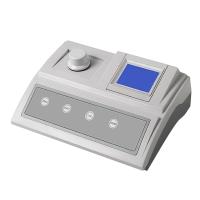
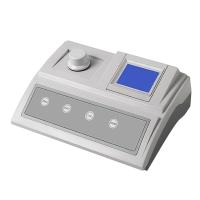
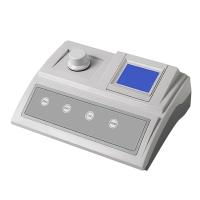
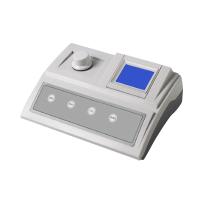
How does a water quality Tester measure turbidity?
Turbidity is one of the important parameters when using a water quality Tester to measure the water quality of the natural environment. However, many people do not fully understand the details of turbidity measurement. Here's how a water Tester measures turbidity.
The water quality in the natural environment is easily affected by some suspended particles, and these suspended particles can be measured by a water quality Tester to obtain a specific value, namely turbidity. Generally speaking, turbidity is closely related to climate or surface water conditions, so if you want to know whether the environmental conditions of lakes and rivers have changed, you can judge by measuring the turbidity of water.
Commonly used water quality testing instruments can analyze the parameters of suspended particles in water through the refraction of light waves, and the turbidity of water can be accurately obtained by calculating the obstruction rate of suspended particles to the light transmission effect. However, as long as it is a measurement, there will be interference. The interference in turbidity measurement mainly comes from the wavelength range of the light source, the bubbles in the water and the angle of light scattering, etc. But the northern and southern tides remind you: Turbidity measurement does not measure the total amount of suspended matter. Particles in water, but the light transmittance or refraction of suspended particles in water.
Turbidity measurement is an important indicator in many industries and applications, and it directly affects the output of industrial production. In fact, as an optical property of water, turbidity is one of the most difficult parameters to measure. Therefore, to obtain accurate turbidity, you need to rely on professional water quality Testers, rather than relying on visual subjective measurements. There are three modern methods of measuring turbidity, two of which are used to measure total suspended solids. Nephelometer and Doppler are commonly used, and their advantages are large range and high precision. Generally speaking, the turbidity parameters obtained by the water quality Tester can be used to evaluate the water quality or water filtration efficiency.
Of course, when measuring turbidity, it will also be interfered by some external factors. The following are three main factors that affect water quality turbidity measurement.
1. The process of measuring turbidity with a water quality Tester is the process of measuring the scattered light rate of suspended particles in a liquid medium. The intensity of scattered light depends on the particle concentration and the astigmatic effect of the particles, followed by the shape and size of the particles. The particles of visible light are smaller than 1/10 wavelength, and the scattered light is symmetrical. Larger particles (typically larger in diameter than the wavelength of visible light) scatter light asymmetrically. Therefore, in turbidity measurements, the scattering angle needs to be considered.
2. When we apply the turbidity measurement method of the water quality Tester, we can refer to a measurement range. For example, many breweries need to test the number of particles containing yeast in yellowish water, so the angle and absorption of the light source need to be considered when testing. While some light-absorbing substances or fluorescence present in the water can affect the measurement of turbidity, this interference can be minimized during operation by other rays longer than visible light waves such as <860nm near-infrared.
3. When measuring water turbidity, there will be bubble interference. In this case, attention should be paid to selecting the appropriate installation point of the water quality Detector to reduce the interference of air bubbles.
- 1Application of Water Quality Analyzer in Swimming Pool Water Quality Detection
- 2What is haze or turbidity?
- 3Chromaticity, turbidity, suspended solids detection