What is a pH electrode?
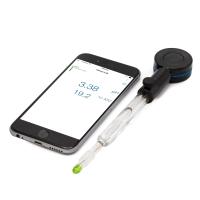
Industrial online pH measurement system generally consists of four parts: pH electrode (pH sensor), pH meter (pH transmitter), electrode sheath and cable. A pH electrode is the part of the pH meter that comes into contact with the substance being measured. It is used to measure electrode potential. There are generally two methods for measuring the pH value of an aqueous solution, namely the colorimetric method (pH test paper and cuvette) and the potentiometric method. The latter is one way to achieve continuous online measurement and process monitoring. In addition, it can obtain accurate and repeatable pH values. The electrodes used in the potentiometric method are called galvanic cells, a system used to convert chemical reaction energy into electrical energy, and the voltage of the galvanic cells is called electromotive force (EMF). An EMF consists of two half-cells, one of which is called the measuring electrode, whose potential is related to a specific ion activity. The other is the reference half-cell, and the electrode composed of a pH glass electrode and a reference electrode is called a composite pH electrode. Combination pH electrode If the housing is made of plastic, it is called a plastic combination pH electrode. If the housing is made of glass, it is called a glass combination pH electrode. The obvious advantage of the composite electrode is that it combines two electrodes into one, which is convenient to use.

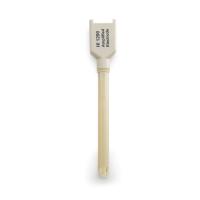
The combined pH electrode is mainly composed of electrode bulb, glass support rod, internal reference electrode, internal reference solution, shell, external reference electrode, external reference solution, liquid junction, electrode cap, electrode cable and socket.
Electrode bulb: made of molten lithium glass with hydrogen function in the shape of a bubble, with a film thickness of about 0.1~0.2mm and a resistance value of less than 250 megohms (25°C).
Glass Support Rod: The glass tube supports the electrode ball. .It is made of lead glass with excellent electrical insulation, and its expansion coefficient is consistent with that of electrode ball glass.
Internal reference electrode: Ag/AgCl electrode. Its main function is to apply an electrode potential. It should have stable potential and small temperature coefficient.
Internal reference solution: The internal reference solution, 7pH at zero potential, is a mixture of neutral phosphate and potassium chloride. The glass electrode and the reference electrode constitute the battery, and the pH value is zero potential. It mainly depends on the pH value and chloride ion concentration of the internal reference solution.
Enclosure: It is an enclosure that supports the glass electrode and the junction, containing the external reference solution. It is made of PPS/PC.
External reference electrode: Ag/AgCl electrode, its role is to provide and maintain a constant reference potential. It should have the characteristics of stable potential, good reproducibility, and small temperature coefficient.
External reference solution: potassium chloride gel electrolyte, the concentration is 3.3mol/L, no loss, no need to add.
Sand core liquid junction: The liquid junction is the connecting part of the external reference solution and the solution to be tested, and should have stable penetration.
Electrode cable: low-noise metal shielded wire, the inner core is connected to the internal reference electrode, and the shielding layer is connected to the external reference electrode.
- 1PH meter composite electrode type
- 2How to use and maintain pH electrodes?
- 3Ark custom PH electrode model Daquan
- 4Customized pH electrode structure, function and type [Common sense]
- 5How to choose the right PH electrode? [Selection Guide]
- 6Classification of pH Electrodes
- 7pH Electrode FAQ
- 8pH Electrode Routine Maintenance Guide
- 9Types and uses of pH electrodes