How does an ultrasonic Thickness Gauge work?
What is an ultrasonic Thickness Gauge?
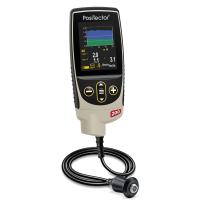
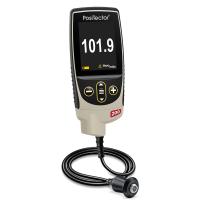
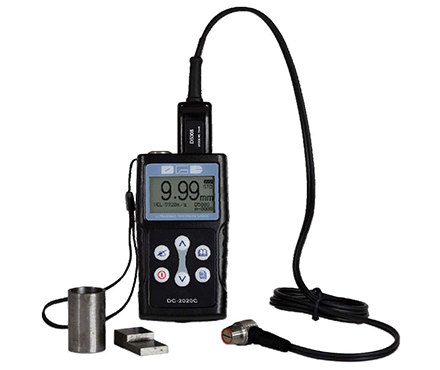
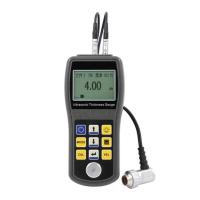
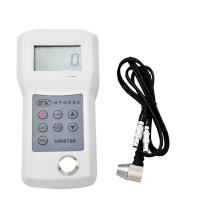
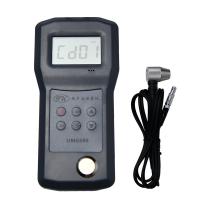
Ultrasonic Thickness Gauges are digital devices used by construction professionals to measure the thickness of materials. Thickness gauges provide fast, accurate measurements to within fractions of a millimeter, and they can be used with virtually any type of common building material.
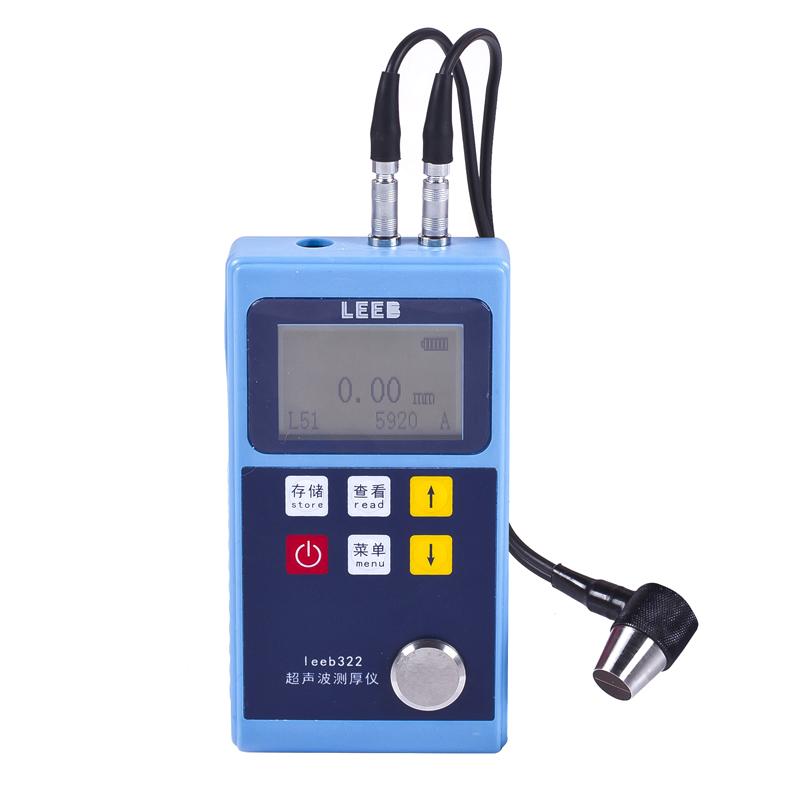
How Digital Thickness Gauge Works
Ultrasonic Thickness Gauges measure thickness by sending sound waves through a target material. Essentially, the device emits high-frequency sound waves -- which are much higher than humans can hear -- and the meter measures how long it takes for the sound waves to pass through the material and bounce back.
For example, if you are measuring steel pipe, the gauge sends a wave through the material and calculates the thickness based on the time it takes to receive the echo from the back wall of the pipe. Thanks to this technology, ultrasonic Thickness Gauges are extremely precise; some models can record accurate measurements to within a fraction of a millimeter.
Types of materials that can be measured with a Thickness Gauge
Commercial Thickness Gauges can be used to measure all types of materials, including common construction materials such as plastic, metal, fiberglass, and glass. Fortunately, you don't need a specialized meter for the type of material you're measuring.
A common application of ultrasonic gauges is to measure the thickness of metal. For example, building professionals often consult metal thickness charts that provide given thicknesses for different types of metals
Why is material thickness important? On the one hand, different ultrasonic measuring instruments are optimized for different types of materials.
Advantages of Ultrasonic Thickness Gauge
Ultrasonic Thickness Gauges offer several advantages over other precision measurement tools such as calipers and micrometers.
1. Ultrasonic gauges provide non-destructive measurements; they only require access to one side of the material to provide accurate measurements. This means they can fit in more places and don't require cutting material to gain access to.
2. Ultrasonic measuring instruments are very accurate. Depending on the type of gauge you use, you can determine the thickness of your material from a fraction of a millimeter to several hundred millimeters. Obviously, they are versatile and the new gauges are very accurate.
3. Finally, ultrasonic measuring instruments are easier than ever to use. For example, an automatic calibration function is provided. These devices can be easily programmed to measure different types of materials, allowing rapid switching between measurements. And they're easy to use; the operator points and fires and provides a measurement in seconds.
- 1Principle, Function, Application and Selection of Multifunctional Ultrasonic Thickness Gauge
- 2Principle, Application and Type Selection of Ultrasonic Thickness Gauge
- 3Principle, Application and Type Selection of Ultrasonic Thickness Gauge
- 4Principle, Application and Selection of Ceramic Ultrasonic Thickness Gauge
- 5The Principle, Application and Precautions of Copper Plate Ultrasonic Thickness Gauge
- 6Principle and Application of Ultrasonic Thickness Gauge
- 7Measurement principle and influencing factors of high temperature ultrasonic Thickness Gauge
- 8Principle of Portable Ultrasonic Thickness Gauge
- 9How to use an ultrasonic Thickness Gauge?