How are printing plates made?
In addition to press design, the importance of printing plates to flexo printing quality cannot be overemphasized. In order to better understand the whole flexo technology, some knowledge of printing plates and how they are made is required.
Rubber and photosensitive resin plate making
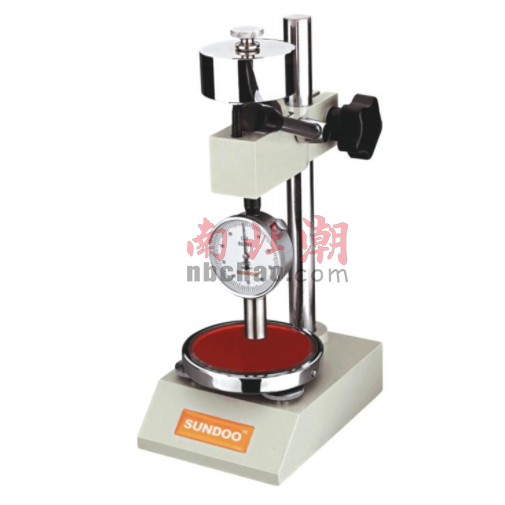
As with any other printing process, the importance of good artwork to a good rubber sheet cannot be overemphasized. A single negative is required for monochrome printing; for multicolor printing, one negative is required for each color, with successive tones divided into dots. Masters or metal etches were prepared from these negatives by photographic transmission using copper, magnesium or zinc. On the basis of these metal blocks, the so-called matrix is molded from plates impregnated with phenolic resin; this is done in special molding machines. After cooling, the molded matrix is used to make rubber sheets in the same press using natural rubber compounds with a thickness of 2 to 10 mm (typically 2.76 mm) and a Shore hardness (depending on the intended application) between 40° and 70 Between ° Shore A. Minor corrections to plate thickness are achieved by grinding the back of the plate. For physical printing, even today, printing plates are cut by hand from vulcanized rubber.
It takes less time and effort to make a photopolymer sheet than a rubber sheet because the former is prepared directly from the negative without the need for metal etching and matrices.
There are two types of photopolymer systems, solid and liquid, with solid systems clearly superior to liquid technology. Solid systems require a distinction between single-layer and multi-layer boards. This latter utilizes the soft base layer as a buffer layer for improved pressure compensation. On the back or in the middle, a mylar film is provided for dimensional stability. A photopolymer or relief layer sits on top and is covered with a protective film, which is removed before exposure.
The platemaking process begins with exposure of the backside to ultraviolet (UV) light to sensitize and polymerize the printing plate. Next, UV primary exposure occurs on the emulsion layer, through the negative film, which is held firmly to the plate surface by vacuum. Suitable determinants of polymerization of printed areas or image elements during exposure depend on the intensity and duration of the UV radiation. Subsequent final exposure ensures polymerization of the relief plate.
During subsequent processing using a special processing solution, the unexposed, non-polymerized photopolymer is dissolved and removed from the printing plate. The plate is then dried with hot air and post-treated in an acid solution to obtain the final plate surface, the final exposure of the plate increases its resistance to solvents. Photopolymer plates are available in many different thicknesses and variable relief depths to cover a wide range of applications. Hardness ranges from 45 to 60° Shore A.
Other plate-making methods are of lesser importance and will not be discussed here.
Printing plate installation and proofing
During production printing on a flexographic printing press, the finished printing plate is glued to the surface of the plate cylinder. This is mainly done using double sided tape and any auxiliary equipment or machinery will allow the actual printing plate to be mounted on the cylinder. The thickness of the adhesive film depends on the plate thickness; using a number of flexo printing presses, the total thickness is 3.0 mm. Other installation methods are also employed, but these are limited to special areas and therefore need not be discussed here.
Mounting of the printing plates is always done off-press. In order to avoid unnecessary downtime, the plate cylinders with the printing plates mounted on them go through proofs to start production. This is done using different methods and different equipment and machines. This proofing process is to prove and ensure that the printing plate has been installed correctly and perfectly, with accurate alignment and no blisters. After this, the plate cylinders for the proof can be installed in the flexo press for trouble-free production printing.
In the case of rubber, it is also possible to test the design of a new printing theme before making the plate.
In the case of printing plates, printing proofs can be produced from metal blocks by letterpress printing, while for photopolymer printing plates, high-quality color proofs can be prepared using a color proofing system from the negative.
If the plates are to be reused, the production run needs to be thoroughly cleaned and the print cylinder carefully peeled off after completion; they should be stored as flat as possible and, especially when photopolymer plates are involved, they need to be wrapped in light-tight in the material. It can, of course, also store complete cylinders with plates installed.


- 1What is pulsed jet printing and what are the advantages and disadvantages?
- 2What is inkjet printing?
- 3What are the printing substrates and printing inks?
- 4What is screen printing?
- 5Measuring the smoothness of paper during printing by water trace method
- 6RYDJ Printing Proofing Machine (Flexo Printing) Instruction Manual
- 7AYDJ Printing Proofing Machine (Gravure) Instruction Manual
现代环境
- 8Talking about the standardized management of gravure proofing
殷幼芳 - 《凹版打样规范化管理》