ASTM D522 Cone Shaft Bending Test Coating Crack Resistance
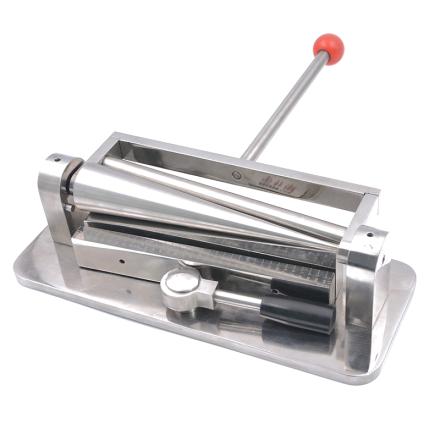
ASTM D522 is a Standard Test Method for Cone Mandrel Bend Testing of Adhered Organic Coatings. Once applied and cured on a sheet metal or other flexible material, it is used to qualify the coating's resistance to cracking when flexed.
Uses and factors to consider
Fully cured coated panels were bent on a cone mandrel and the cracking resistance of the coating was determined. In Test Method A, the coated panel is bent on a tapered cone shaft. In Test Method B, coated panels are bent on cylindrical tapered mandrels of different diameters.
When panels are bent during manufacturing or abused in use, the coating on the panels can be stretched. This elongation can lead to cracking if the coating/curing process is insufficient, causing problems ranging from poor appearance to premature corrosion of the panel substrate. ASTM D522 is used to evaluate a coating's ability to resist cracking when this occurs.
Typical Experimental Parameters for ASTM D522 Cone Shaft Test
Sample/Product Quantity: Method A: 3, Method B: 2
Substrate Thickness:
For coating elongation grades: 0.8 mm (1⁄32 in.) (22 gauge) thick cold rolled steel strip.
or
Ratings for coated materials: less than 0.8 mm (1⁄32 in.) for sheet metal or less than 13 mm (1⁄2 in.) for rubber-like materials.
Sample Size: 4” X 6”
Conditioning and testing temperature: 23 ± 2 °C
Conditioning and testing relative humidity: 50±5%
Other relevant test methods:
- 1Analysis of Conical Mandrel Test of ASTM D522 Film
- 2How to use TQC SP1830 cone shaft bending Tester
-
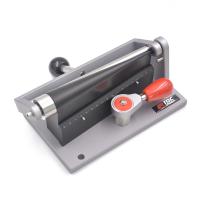
![TQC SP1830 Conical Mandrel Tester Pro]() TQC SP1830 Conical Mandrel Tester Pro$ 2992.00
TQC SP1830 Conical Mandrel Tester Pro$ 2992.00 -
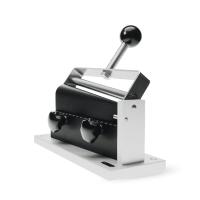
![TQC SP1831 Conical Mandrel Tester, Basic]() TQC SP1831 Conical Mandrel Tester, Basic$ 1896.00
TQC SP1831 Conical Mandrel Tester, Basic$ 1896.00 -
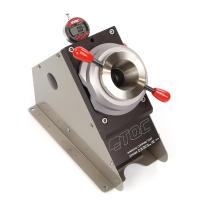
![Cupping test machine, TQC SP4400 digital display manual cupping machine]()
-
![MODERNER TCJ-II 1m Elastic Impact Tester Paints, varnish Dry-Film cracking performance]()