The principle, function and use of centrifuge
What is centrifuge?
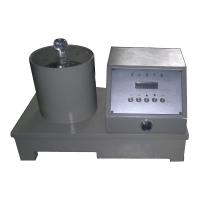
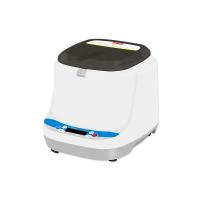
A centrifuge is a machine that uses centrifugal force to separate the contents of a sample based on the Density of the sample. When the centrifuge swirls/spins, it creates a strong centrifugal force. Although separation occurs naturally under Earth's gravity, centrifuges provide quick results for laboratory and Miscellaneous applications.
There are many types of centrifuges, which vary depending on the intended use and rotor design. Centrifuge types include:
Desktop centrifuge
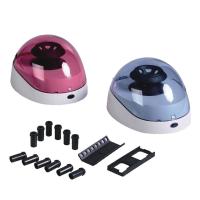
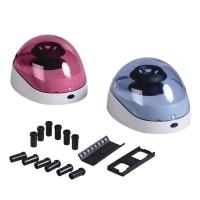
Micro centrifuge
Floor type
Large capacity
Statistics
refrigerated
high speed
Ultra-speed centrifuge
What is centrifugation?
Centrifugation is a process of concentrating natural forces acting on particles of all different Density to accelerate the natural separation process. It is done by separating particles by Density in the testtube. Centrifugation can be performed using filtrate or sedimentation methods. Filtrate uses a mesh screen to block solid components and allow liquid components to flow through. Filtrate cannot be used to centrifuge blood samples because blood components are too small.
In either method, the particles are suspended in a liquid and separated in a centrifuge. Separation occurs due to centrifugal force, which pushes objects outward - towards the tip of the tube in the case of blood vessels - as they swirl/spin around a circle.
centrifugation principle
At the heart of centrifugation is separation by sedimentation. The denser particles sink to the bottom of the container, while the lighter particles remain suspended. Centrifugation will displace particles with even slightly different densities and is affected by the following four factors:
Density of sample and solution
Temperature and viscosity
Distance of particle displacement
Swirl/spin speed
Relative centrifugal force (RCF) or G force is a measure of acceleration applied to the sample. When the RCF exceeds the buoyancy and friction in the sample, the particles will move away from the swirl/spin axis and cause sedimentation.
What is the centrifuge used for?
Because centrifuges excel at separating particles by Density, they are often found in laboratory environments where certain biological components need to be separated for testing. For example, in a blood sample, red blood cells and plasma are mixed together. After centrifugation, red blood cells will be at the bottom of the testtube and plasma will be at the top.
Centrifugation is necessary for the study of specific components, such as separating plasma for testing, separating DNA, and even separating urine sediments.
How to use centrifuge?
Although the working principle of the centrifuge is complex, operating the machine itself is very simple. Use the centrifuge:
Insert the testtube sample into one of the portals
If necessary, insert a testtube filled with water to equilibrate depending on the number of samples you are testing
Secure the lid and select the desired settings
Start the centrifuge and wait for it to complete the cycle
When the centrifuge stops swirling/spinning, remove the balance and sample
Each sample will now be divided into different components and ready for analysis
Understanding how centrifuges work is the key to using them properly.
Equilibrating centrifuge
When using centrifuges, it is necessary to equilibrate your samples. Equilibrate centrifuges by:
Make sure all testtubes are evenly filled with liquids of similar Density
Make sure the tubes mass within 0.1 g of each other
Place the tubes inside the machine opposite each other to keep gravity in the center
Equilibrate may not be established when you test an odd number of testtubes. In these cases, fill another testtube with water and equilibrate based on Density and Mass.

- 1Principle and Application of Upper Suspension Centrifuge
- 2Centrifuge Types and Precautions for use
- 3How to operate a large-capacity high-speed centrifuge correctly? [How to use]
- 4What is a centrifuge?
- 5How to choose a centrifuge?
- 6How to test the critical pigment volume concentration of ink?
- 7What is the difference between RCF and RPM in a centrifuge?
- 8How to choose a good centrifuge?
- 9Laboratory Centrifuges: How and Types of Analyzers Work
-
![CHINA ZY-LX-1 Centrifuge]() CHINA ZY-LX-1 Centrifuge$ 494.00
CHINA ZY-LX-1 Centrifuge$ 494.00 -
![HUXI HL-25W Microporous Plate Centrifuge]()
-
![YIHENG BLF-10K Centrifuge]() YIHENG BLF-10K Centrifuge$ 272.00
YIHENG BLF-10K Centrifuge$ 272.00 -
![YIHENG BLF-7K Centrifuge]() YIHENG BLF-7K Centrifuge$ 236.00
YIHENG BLF-7K Centrifuge$ 236.00