Some common sense about Thickness Gauges
The device and working principle of the Thickness Gauge
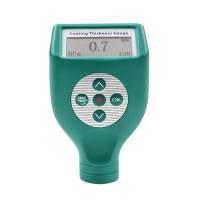
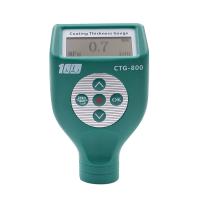
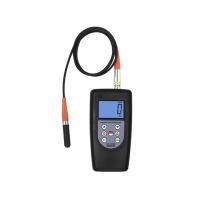
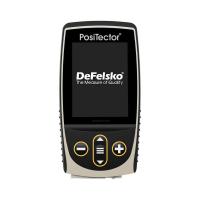
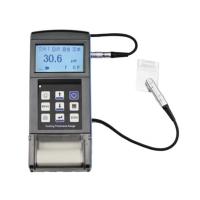
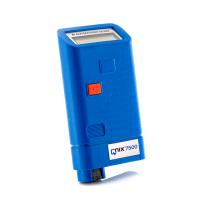
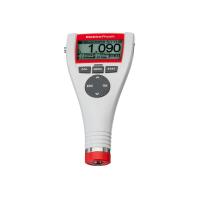
Most thickness gage models are compact handheld devices with external controls, remote sensing elements for gauging, and displays for information output. The method of fixing the thickness of the material depends on the type of probe - ie a coil, which allows you to determine the distance between extreme points of the material under study. For example, to measure coatings made of varnish or paint, a magnetic phantom is recommended.
How to use a Thickness Gauge for paint and varnish layers with a magnetic device? To do this, it is enough to bring the sensitive element to the coating and activate the mode of operation. Such devices are known as magnetic devices, but they are specifically designed for non-magnetic coatings applied to metal surfaces.
The eddy current model is used for surfaces that can conduct electric current. Again, this surface should not be magnetized, as the device will evaluate thickness based on its own magnetic field and high-frequency current characteristics. The better equipment in this field is typified by ultrasonic models, these are general purpose equipment that allow you to determine the thickness of coatings and substrates.
What can I check with a Thickness Gauge?
The range of orientations in which the Thickness Gauge can be used is virtually unlimited. Everything depends only on the capabilities of the particular device. However, the more common tasks have long been established and tool manufacturers are mainly geared towards them. In particular, the testing of paint coatings is considered one of the more popular types of such tasks, if not more . Check the paint of the car body, the paint of the exterior wall lining, primer, putty, etc. In public service, the device is used to assess the condition of water or gas mains. In this case, it is not the paint that is evaluated, but a special anti-corrosion coating. For this purpose, contact Thickness Gauges are usually used.
How to use this model? During operation, the operator needs to firmly attach the sensor element of the sensor to the surface being analyzed. Also, experienced employees of municipal utilities recommend supporting the sensor with the second hand so that minute vibrations are not reflected in the received data.
Like any high-precision device, a Thickness Gauge requires careful inspection of the sensing element (in this case, the feeler gauge), housing, and display. Test measurements will allow to estimate whether the internal filling of the device is working correctly. In this case, it is necessary to have a set of template blanks already prepared, whose characteristic data are known. Usually, such samples are included in kits with equipment - they are made of aluminum and steel.
How you charge your gage plays a huge role in how you use it. Even before work begins, it is necessary to check that the battery pack is fully charged - this type of battery is more commonly used. A level of no lower than 60-70% is desirable, otherwise incorrect measurements may occur. If all the conditions for preparing the equipment are met, you can proceed to the next stage - surface preparation.
Prepare to measure the target surface
Values close to the actual coating thickness can only be obtained on flat surfaces. In all cases, dirt, debris, oil and foreign matter should be removed. As a better cleaning agent, glycerin or motor oil can be used. Practice has shown that the traces of these tools do not affect the quality of the data, which reflects the Thickness Gauge. How to use the equipment if the surface texture is rough? In this case, it is mainly the employees of the metallurgical industry who need to fix the parameters for processing corroded substrates.
There is no limit to this measurement, but it is important to keep in mind a large margin of error. In any case, the unevenness of the structure will lead to a deviation in the calculated value, so the control object needs to be associated with the passport data in advance, where the specific deviation value is fixed. Such passports of different types of metals are also attached to the instrument specifications, not to mention the documentation of rough workpieces.
Thickness Gauge Working Instructions
Operation begins by switching on the device with the corresponding OFF/ON button. At this point the sensing element needs to be directed into the air. At the same time, the display is activated and the indicator lights up, indicating that it is ready for metering. The sensor is then applied to the target area.

- 1Application, Principle Introduction and Precautions for Selection of Pipeline Thickness Gauges
- 2Principle, Characteristics and Application of FISCHER Coating Thickness Gauge
- 3Application of Film Thickness Gauge in automobile paint thickness measurement
- 4Paint layer Thickness Gauge unknown selection skills
- 5Selection points that cannot be ignored for coating Thickness Gauges
- 6What should I do if there is a negative number when the customer reports the Thickness Gauge measurement?
- 7Frequently Asked Questions for Thickness Gauges in 2022
- 8Definition and Applicable Criteria for Dry Film Thickness
- 9Characteristics of Solvent-Based Acrylic Coatings