Differences and advantages and disadvantages of viscometer and viscosity cup testing
Two common methods of measuring viscosity, especially for conformal coating materials, are:
Static: Dynamic shear stress per unit area measured using a laboratory viscometer
Kinematics: Resistance to flow under the influence of gravity, measured with a Flow Cup
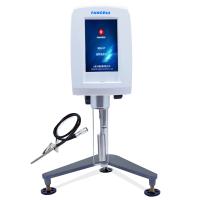
Viscometer
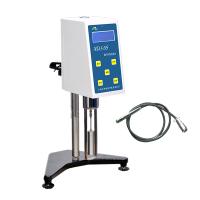
A viscometer is generally considered to be any rotating device capable of measuring torque and relating it to a given viscosity, although there are other forms of this device. These can be laboratory versions as well as industrial and continuous measurements. They typically have a built-in temperature probe that is connected to an external temperature-controlled circulation system that maintains the temperature of the test liquid sample for highly accurate and repeatable measurements.

The measurement involves placing a liquid sample in a small Test Chamber consisting of a stainless steel cylinder and attaching the specific spindle selected for the viscosity range being measured to the viscometer. The Test Chamber is then connected to the viscometer and the rotor is immersed in the liquid sample. The viscometer will then give a direct centipoise reading.
Benefits of using a viscometer:
Can be set to measure various viscosities
Provides accurate and repeatable measurements
single or multiple measuring points
Measuring Viscosity at a Specific Temperature Using an External Bath
Disadvantages of using a viscometer:
Requires a dedicated area with flat benches and trained personnel
Depending on calibration, viscosity measurements may vary from viscometer brand to brand.
Initial investment and regular service add to cost of ownership
Flow Cup
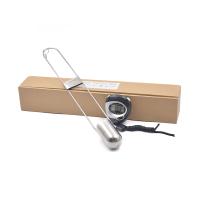
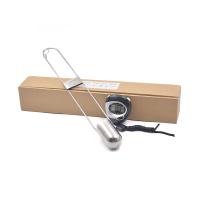
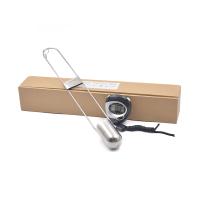
Flow cups are stainless steel or treated aluminum instruments consisting of a volumetric cylinder with a central drain hole. Depending on the viscosity range and measurement method, Flow Cups are available in different styles and with different orifice sizes. This image shows an example of a Flow Cup.
These are also known as dip cups and their function is to immerse themselves in a liquid material (for example, pressurized jars or open containers used to dilute solventborne conformal coatings to a specific viscosity range).

Benefits of using Flow Cups:
Ease of use and maintenance
Fast viscosity measurement directly in the pressure tank
long lasting
Challenges of using Flow Cups:
Extra care is required during cleaning, especially the orifice. Do not use sharp metal tools
Accuracy and repeatability of viscosity measurements are directly related to operator experience and reaction time
Interpretation of start and stop times is up to the operator
Variations in temperature in the coating area have a direct effect on the viscosity measurement
The viscosity conversion table gives the range of seconds of measurement in centipoise, but does not give the exact viscosity. Often when ambient temperature is difficult to control, historical data measurements from the same operator are required to create process controls for monitoring viscosity trends
in conclusion
The importance of accurate and reliable viscosity measurement in a laboratory environment and in maintaining process control and quality during the use of coatings and adhesives cannot be overemphasized. We describe two popular and commonly used methods of viscosity measurement: viscometers and Flow Cups.
Viscometers are usually more accurate (+/- 0.1%) and can account for things like temperature, while application methods depend on exact viscosity (eg +/- 5%), but can be expensive and not always durable enough, Can be used in industrial environments. Flow cups sacrifice accuracy (+/- 12%) but are much simpler to use as low cost basic process measurement devices.
Which method to use will of course depend on your specific situation, and it is not uncommon to have both a Flow Cup in an industrial setting and a viscometer in the lab for finer measurements.
-
![NDJ-5S Digital Rotational Viscometer with RTD temperature probe]()
-
![LLOYDS T203 Automatic Viscosity Cup Timer]()
-
![TQCsheen VF2199 Lory Viscosity Cup]() TQCsheen VF2199 Lory Viscosity Cup$ 457.00
TQCsheen VF2199 Lory Viscosity Cup$ 457.00 -
![FANGRUI instrument NDJ-5T Digital Rotational Viscometer with PT100 temperature probe]()


- 1Viscosity of polypropylene (PP) amide measured by NDJ Viscometer
- 2Which Viscometer to Choose for Licorice Extract Viscosity Testing? How to Test?
- 3Application of Rotational Viscometer in juice viscosity test
- 4Coating viscosity determination - viscosity cup Yiwen
- 5Working Principle, Classification and Application of Capillary Viscometer
- 6Principle, application and selection of ZAHN5 viscosity cup
- 7Corrugated fibreboard starch viscosity cup its principle, application and selection introduction
- 8Decryption paints original juice viscosity cup, principle, application and selection
- 9Wood lacquer viscosity cup, principle, application and selection introduction