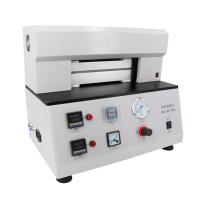
Frequently Asked Questions about Heat Seal Tester
What is the effect of heat sealing temperature on heat seal strength?
The heat seal strength is greatly affected by the sealing temperature. The effectiveness of the heat seal layer depends largely on the thickness of the film used in it.
When the weather is cold, the heat seal layer will melt. The top of the heat seal layer is also melted. This means that the contact temperature is low.
When the temperature is too high, it will melt the film of the heat-sealing layer or cause the heat-sealing layer to peel off from the base layer. This means that both the base layer of the upper and lower film will become part of the heat seal, which weakens it. Therefore, when we heat seal the film, we need to choose the appropriate heat sealing temperature, not too high or too low.
What effect does heat sealing time have on heat sealing?
The speed of your automatic packaging machine or old bag making machine determines how long it takes to heat seal. In the case of constant heat sealing temperature and pressure, the longer the heat sealing time, the stronger the interlayer bonding. However, if the heat-sealing time is too long, the heat-sealed part of the composite film will be wrinkled and uneven, which will greatly affect the appearance of the product.
What effect does heat sealing pressure have on heat sealing?
The speed of the machine determines how long it takes to heat seal on an automatic wrapping machine or an old bag making machine. In the case of constant heat sealing temperature and pressure, the longer the heat sealing time, the stronger the bonding force between the heat sealing layers. However, if the heat-sealing time is too long, the heat-sealed part of the composite film will be wrinkled and uneven, which will greatly affect the appearance of the product.
What are the reasons for uneven heat sealing pressure?
Heat-sealing knives are curved: Heat-sealing knives are mostly made of aluminum or copper and are good at moving heat. Both materials are very soft. So when you put the seal knife in place, if you don't tighten the set screw properly, the force on the seal knife will be uneven, and if you change tools frequently, the seal knife will bend.
Heat-sealing knives are not made with great precision: The surface of the heat-sealing knife is uneven because the machine that made it isn't very good at its job. This will make the heat-sealing pressure uneven and affect the heat-sealing strength of the composite packaging bag.
Dirty or damaged surface of the heat-sealing knife: The surface of the heat-sealing knife is dirty or bruised or scratched, which will also cause uneven heat-sealing pressure. In addition, the molten resin sticking to the surface of the heat-sealing knife is not cleaned up in time, which also weakens the heat-sealing performance.
-
![JINGWEN JW-RF330S Digital display heat sealer, room temperature~ 300 ℃]()
-
![JINGWEN JW200SP Heat Sealing Tester 230 ℃]()
-
![GERUISI GRS-RY200 hot press shaping machine, soft pack lithium battery hot press shaping]()
-
![JINGWEN JW-RF330SW Heat Sealing Tester]() JINGWEN JW-RF330SW Heat Sealing Tester$ 2201.00
JINGWEN JW-RF330SW Heat Sealing Tester$ 2201.00 -
![WSH-05 heat seal Tester, single heating/double heating]()
-
![DRICK DRK133 Five-point heat Sealing Tester]()
-
![DRICK DRK133 Heat Sealing Tester]()
-
![JINGWEN JW200CWG five-point heat seal Tester]()
-
![JINGWEN JW200CWP five-point heat seal Tester]()



- 1What are the applications of heat seal Tester?
- 2What are the factors that affect the heat seal strength of composite film bag making?
- 3How to observe the heat sealing test of flexible packaging films?
-
![Chinese NBC-ST10 Heat Sealing Tester]() Chinese NBC-ST10 Heat Sealing Tester$ 1608.00
Chinese NBC-ST10 Heat Sealing Tester$ 1608.00 -
![JINGWEN JW-RF330S Digital display heat sealer, room temperature~ 300 ℃]()
-
![JINGWEN JW200SP Heat Sealing Tester 230 ℃]()
-
![CHINA ZY-RF heat Sealing Tester, heat sealing temperature, heat sealing time, heat sealing pressure]()
-
![JINGWEN JW-RF330SW Heat Sealing Tester]() JINGWEN JW-RF330SW Heat Sealing Tester$ 2201.00
JINGWEN JW-RF330SW Heat Sealing Tester$ 2201.00 -
![CHENCHI STH-3 Heat Sealing Tester room temperature + 10~250 ℃]()