How does powder coating thickness affect coating effectiveness?
Powder coating is a popular form of metal finishing that handles a wide variety of product types and materials across several industries. A key aspect of effective powder coating is ensuring that the thickness is appropriate for the application at hand. Technicians typically take thickness measurements before and after the curing process to evaluate powder coatings.
Thickness requirements may vary from product to product, but they are always a critical part of powder coating effectiveness.
How to determine the powder coating thickness?
Optimum powder coating thickness can vary from 2 mm to more than 8 mm. Powder coating manufacturers provide recommendations based on the characteristics and performance requirements of the metal to be treated.
During the powder coating process, the product is sprayed with powder through an electrostatic field. Powder particles become charged before reaching grounded coated components. As they cure, the particles fuse into a cohesive film that covers the entire substrate.
When measuring the coating thickness of an item, you need to consider several main properties. Evaluate these properties of the item to be coated:
Coating Thickness Range
coating type
equipment cost
Substrate
Part size and shape
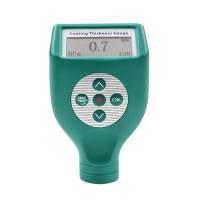
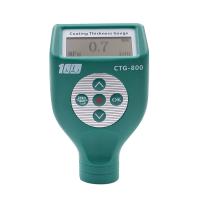
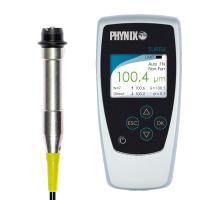
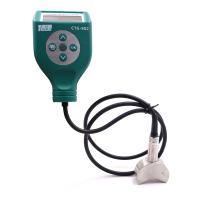
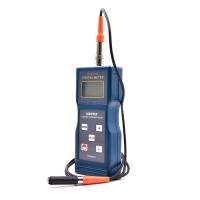
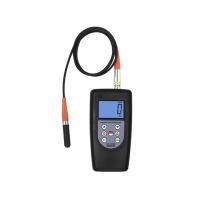
Manufacturers can use ultrasonic instruments to perform thickness measurements on uncured powders. These tools display the predicted cured thickness, and they allow coating evaluation before curing without damaging the surface. After the curing process is complete, manufacturers can apply magnetic or eddy current instruments to metal products to assess the thickness of their final cured coating. The ultrasonic principle is typical for non-metallic post-cured items.
The following is the real shot of Defelsko's non-contact coating Thickness Gauge test

How does thickness affect the durability of the coating?
The thickness of a powder coat can significantly affect its performance, so the importance of knowing the necessary extent of a component cannot be overemphasized. Thicker layers are required for items that will be exposed to the elements or potentially corrosive conditions, as they can help protect underlying components. However, the importance of avoiding coatings in excess of the manufacturer's recommended thickness cannot be overstated. Overcoating can lead to delamination, improper curing and other performance issues.
What makes coating thickness effective?
Ultimately, the determining factor in product performance is whether the coating thickness is within the supplier's recommended range. In order to provide optimized performance, a product needs to obtain a coating thickness suitable for its material, shape and future application.
For example, military equipment should meet MIL-DTL-53072 and MIL-PRF-32348 standards to support better performance and corrosion resistance. Also, products including metal window frames, railings, railings and other architectural features should meet AAMA 2604 or 2605 standards for powder coatings. These requirements contribute to the durability and weatherability of the product.
- 1Nondestructive measurement Coating thickness
- 2Principle, application and selection of traffic coatings Coating Thickness Gauge
- 3Principle, Application and Selection of Eddy current Coating Thickness Gauge
- 4Principle, Application and Type Selection of Electronic Coating Thickness Gauge
- 5Explore the principle, application and selection of phosphating layer Coating Thickness Gauge
- 6Principle, Application and Type Selection Analysis of Chrome Coating Thickness Gauge
- 7Principle, Application and Selection of Coating Thickness Gauge for inner wall of small pipe
- 8Basic principle and application scenario of steel Coating Thickness Gauge
- 9Principle and Application Analysis of Coating Thickness Gauge