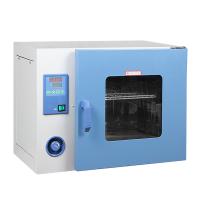
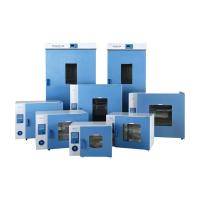
Types and uses of laboratory ovens
Types of Laboratory Ovens
heavy duty oven
These rugged ovens are used in industrial applications with heavy-duty fittings and furniture to withstand drying and curing purposes.
Standard digital display oven
Standard digital ovens are designed for general use such as heating and drying to provide accuracy, control and safety.
Hot Box Oven
Designed for environments where absolute accuracy is not required but proper toasting of the sample under test is expected.
wax furnace
For melting and holding waxes for the purpose of histology (the study of the microscopic anatomy of cells and tissues of plants and animals).
high temperature oven
Tailored to meet the specifications required by their respective laboratories, the high temperature ovens feature additional insulation in the doors and cabinet walls as they are exposed to temperatures up to 500°C. Widely used in aerospace industry.
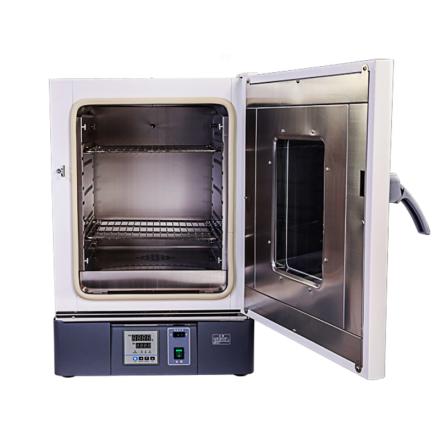
Uses of laboratory ovens
annealing
The annealing process involves heating and then cooling a material, such as glass or steel, to reduce hardness and increase ductility. High temperature ovens are used in this process, commonly used in metallurgy, medical device manufacturing and materials science industries. These annealed materials can be cut and shaped more easily to produce items such as syringes and catheters.
Chip curing
Through a combination of drying and baking, laboratory ovens cure substances to harden their chemical composition. It is a method of making epoxies, glues, plastics and rubbers used in polymer research, nanotechnology and the semiconductor industry. The increased adhesive strength is also very useful for adhering components directly to circuits, many of which are used in military, space and medical systems.
drying
A necessity in many environmental, biological and clinical laboratories; gravity convection, forced air and vacuum ovens are used to dry samples to remove moisture from samples.
Forced-air and vacuum ovens are good for samples that are prone to decomposition because they remove moisture and lower the boiling point of water, allowing samples to dry at lower temperatures.
Meanwhile, gravity convection ovens are often used to dry fine particles, which are easily dispersed under high airflow and require more natural airflow to protect these delicate samples.
polyimide baking
Added in liquid form to the oven and then thermally bakes the polyimide to form films or layers for a variety of uses, including stress buffer coatings for redistribution layers, adhesion, die bonding, and more .
sterilization
At its most basic, laboratory ovens can also be used to sterilize laboratory equipment and glassware. Carried out in a hot Air Oven, a good temperature needs to be at least 160°C and monitored at this heat for 45 to 60 minutes.
A slow cool-down period is needed because removing items directly from the oven can cause them to crack, whereas gradual cooling prevents potentially harmful air containing contaminating organisms from entering the oven.
In addition, all items that need to be sterilized also need to be dry - using a temperature of 60°C is considered acceptable when using glassware routinely.
Other uses
In addition, laboratory ovens are used for material testing, analyzing properties such as determining tensile strength, deformation and elasticity of finished products, soldering strength of circuit boards, etc.
Laboratory ovens are also used in biological, forensic and environmental laboratories for more specialized purposes. In forensic laboratories, specially configured vacuum ovens are used to develop fingerprints, while biological laboratories use gravity convection ovens to remove microbial contamination from laboratory equipment and vacuum ovens to adhere substrates to filter surfaces. Elsewhere, environmental laboratories weigh samples before and after drying to determine their moisture content.
- 1Laboratory oven type principle fault problem maintenance
- 2Principle, application and selection of Electric Oven
- 3Principle, application and selection of Electric Oven
- 4Principle, application and selection of ozone sterilizing oven
- 5Principle, application and selection of tunnel oven
- 6Working principle and application analysis of laboratory oven
- 7Hot Air Oven FAQ and its solution
- 8Precision oven FAQ and its solution
- 9Oven FAQ and its solution