What are whiteness and yellowness?
When determining the whiteness index of a carrier, a range of concepts, such as shading or yellowing, need to be considered.
The whiteness of the "shadow" part. supporting representation
Shade (shade o shading) is basically a subcategory of whiteness. While manufacturers can sometimes define whiteness using a percentage grade, other companies identify it by a name that describes the species of white.
There are three basic categories of shadows. Now, since there is no standard, these categories are given different names:
Usually it uses white blue because humans think it is whiter. Blue and white paper absorbs yellow and warmer wavelengths and reflects blue or cooler wavelengths.
On the other hand, very good cream papers (Cream White) have a yellowish tint because they absorb blue and cool colors and reflect yellow and warm colors. Milky white can also be called warm white.
Supports that reflect all wavelengths equally are called TrueWhite. These types of media, under the correct lighting conditions, will appear absolutely white. TrueWhite true white, also known as balance white.
Currently, blue-white is common in print and art media, as more and more designers use this hue of media. Previously, however, the common hue used to be TrueWhite. Trends have changed, and today a crisp, bright white is opted for over a warmer, more natural white.
Carriers with blue-white tints have a greater color range, reproduce more colors and shades, brighter shades, and from a manufacturing point of view, allow for the manufacture of less costly papers that provide higher quality through whitening a feeling of.
whiteness and yellowness
As mentioned above, whiteness can be said to be the property by which the color of a perceived material is judged to be close to a preferred white or set of whites.
As such, yellowness or yellowness index is determined from colorimetric or spectrophotometric data and indicates the degree to which a colored object deviates from colorless or from a defined white to yellow.
In this regard, gloss coatings should be considered when visually assessing whiteness, as the appearance of the paper is altered by the additional reflective surface.
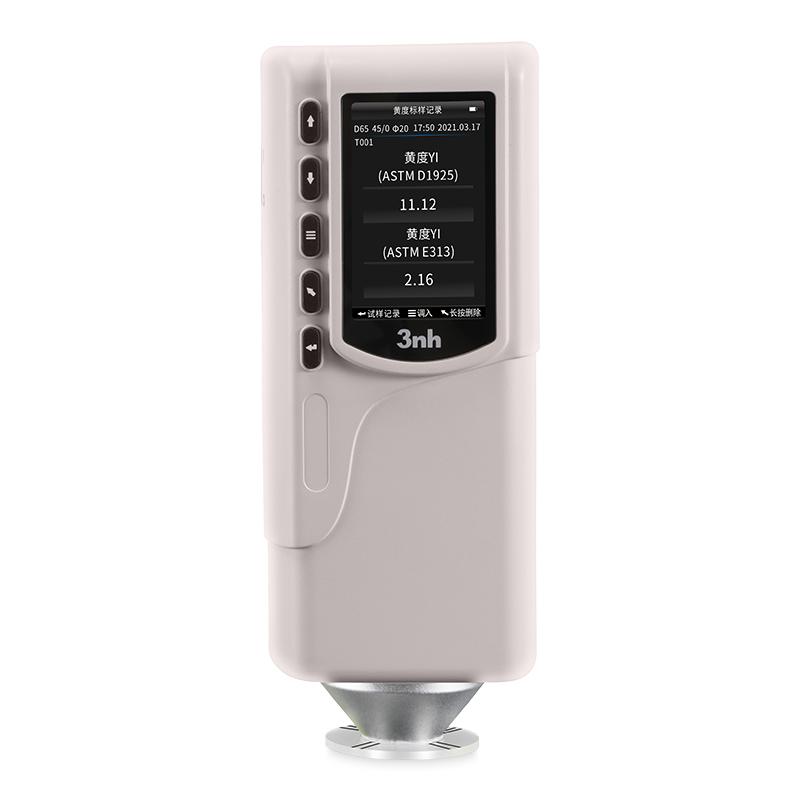





- 1What is the whiteness index?
- 2How can the paper industry achieve greater whiteness?
- 3What properties should letterpress printing paper be tested for? What are the specific requirements?
- 4Opacity and Transparency Test Methods
- 5The working principle and operation method of Whiteness Meter
- 6What are the common physical properties of paper?
- 7The difference between paper whiteness, brightness and shadow
- 8Paper Brightness, Whiteness and Shadow: Definitions and Differences
- 9How to Measure Paper and Board Whiteness by Diffusion/Vertical Method


