What data is the surface roughness mainly evaluated by?
Height characteristic parameter
Contour Arithmetic Mean Deviation: The arithmetic mean of the absolute value of the contour deviation within the sampling length (lr). In actual measurement, the more measurement points, the more accurate Ra will be.
Profile maximum height: the distance between the peak line of the profile and the bottom line of the valley.
Ra is preferably within the common range of the amplitude parameter.
Spacing Feature Parameters

Average width of outline cells. The average value of the microroughness spacing of the profile within the sample length. The microroughness spacing refers to the length of the profile peaks and adjacent profile valleys on the centerline. In the case of the same Ra value, the Rsm value is not necessarily the same, so the reflection texture will also be different. Surfaces that pay attention to texture usually pay attention to two indicators, Ra and Rsm,
The Rmr shape feature parameter is represented by the contour support length ratio, that is, the ratio of the contour support length to the sampling length.
The contour support length is the sum of the section lengths obtained by intersecting the contour with a line parallel to the midline and at a distance c from the peak line of the contour within the sampling length.
- 1Influence of surface roughness of parts
- 2High-precision roughness instrument measures the surface roughness of plastic materials Case sharing [Video demonstration]
- 3How to measure concrete surface profile (roughness) quantitatively
Defelsko
- 4Evaluation of steel surface roughness
- 5The relationship between abrasive and surface roughness
- 6Surface roughness of metal
- 7Roughness and Surface Roughness
- 8Which industries need to use surface roughness meters?
- 9Surface roughness measurement
-
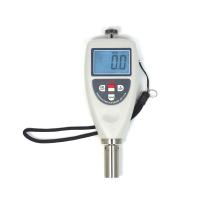
![Sand blasting shot peening Roughness Gauge AMITTARI AR-131A shot peening sand blasting, printing anti-corrosion and other industry tests]()
-
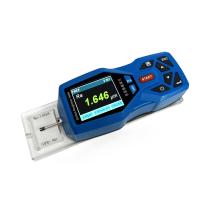
![KAIRDA NDT151P Roughness Gauge]() KAIRDA NDT151P Roughness Gauge$ 810.00
KAIRDA NDT151P Roughness Gauge$ 810.00 -
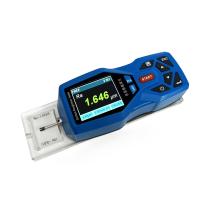
![KAIRDA NDT151 Roughness Gauge asperity Measurement Instrument]()
-
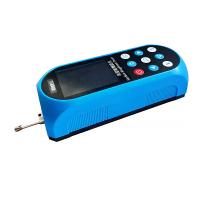
![KAIRDA NDT130 Portable Color Screen Roughness Gauge Roughometer]()
-
![LEEB462 surface roughness multiparameter measurement supports bluetooth printing and mobile app]()
-
![LEEB432 Surface Roughness Tester multiparameter measurement Measurement range 160μm]()