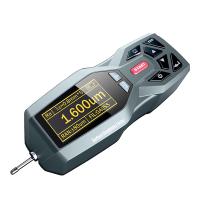
What are the main manifestations of the influence of surface roughness on parts?
Affect wear resistance
The rougher the surface, the smaller the effective contact area between the mating surfaces, the greater the pressure, the greater the friction resistance, and the faster the wear.
Affect the stability of the fit
For clearance fit, the rougher the surface, the easier it is to wear, so that the clearance gradually increases during the working process; for interference fit, due to the flattening of the microscopic peaks during the assembly process, the actual effective interference decreases. connection strength.
Affect fatigue strength
There are large troughs on the surface of rough parts, which are sensitive to stress concentration such as sharp notches and cracks, thus affecting the fatigue strength of parts.
affect corrosion resistance
The rough surface of the parts is easy to make corrosive gas or liquid penetrate into the metal layer through the microscopic valley erosion on the surface, causing surface corrosion.
affect tension
Rough surfaces do not fit snugly, and gas or liquid can leak through the gaps between the contacting surfaces.
contact stiffness
Contact stiffness is the ability of the joint surface of a part to resist contact deformation under the action of external force. The stiffness of a machine largely depends on the stiffness of the contact between the individual parts.
Affect measurement accuracy
The surface roughness of the measured surface of the part and the measuring surface of the measuring tool will directly affect the measurement accuracy, especially in precise measurement.
In addition, surface roughness can have varying degrees of impact on coatings, thermal conductivity and contact resistance of parts, reflectivity and radiation performance, resistance to liquid and gas flow, and current flow on conductor surfaces.

- 1Influence of surface roughness of parts
- 2High-precision roughness instrument measures the surface roughness of plastic materials Case sharing [Video demonstration]
- 3How to measure concrete surface profile (roughness) quantitatively
Defelsko
- 4Evaluation of steel surface roughness
- 5The relationship between abrasive and surface roughness
- 6Surface roughness of metal
- 7Roughness and Surface Roughness
- 8Which industries need to use surface roughness meters?
- 9Surface roughness measurement
-
![Sand blasting shot peening Roughness Gauge AMITTARI AR-131A shot peening sand blasting, printing anti-corrosion and other industry tests]()
-
![KAIRDA NDT151P Roughness Gauge]() KAIRDA NDT151P Roughness Gauge$ 810.00
KAIRDA NDT151P Roughness Gauge$ 810.00 -
![KAIRDA NDT151 Roughness Gauge asperity Measurement Instrument]()
-
![KAIRDA NDT130 Portable Color Screen Roughness Gauge Roughometer]()
-
![LEEB462 surface roughness multiparameter measurement supports bluetooth printing and mobile app]()
-
![LEEB432 Surface Roughness Tester multiparameter measurement Measurement range 160μm]()