What is the difference between Rockwell hardness and Vickers hardness?
introduce
Rockwell hardness
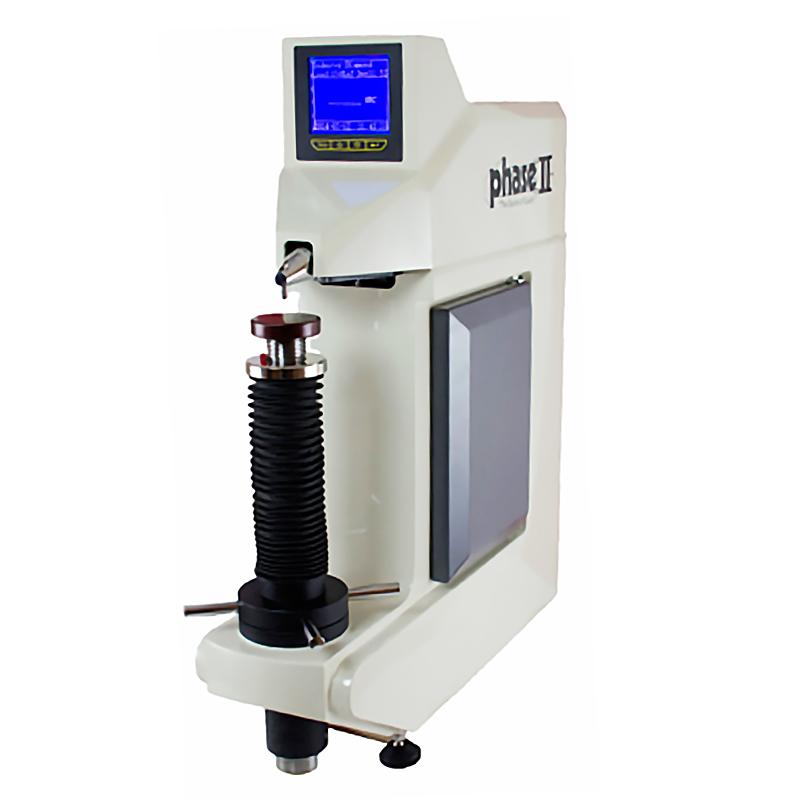
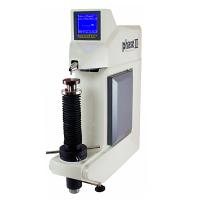
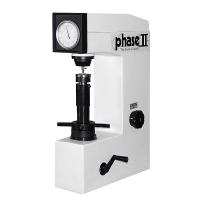
Rockwell hardness is an index to determine the hardness value through the depth of indentation plastic deformation, with 0.002mm as the hardness unit, expressed as HR. Using different indenters and different test forces in the Rockwell hardness test produces different combinations (HRA to HR45Y), corresponding to different scales of Rockwell hardness. There are three commonly used scales, and their applications cover almost all commonly used metal materials.
The three grades are A, B and C, namely HRA, HRB and HRC. According to the hardness of the experimental material, choose a scale with different hardness ranges to represent:
HRA is the hardness obtained using a 60Kg load and a diamond cone indenter for materials with higher hardness. For example: steel plate, hard alloy.
HRB is the hardness obtained using a 100Kg load and a hardened steel ball with a diameter of 1.5875mm, and is used for materials with lower hardness. For example: low carbon steel, non-ferrous metals, annealed steel, etc.
HRC is the hardness obtained using a 150Kg load and a diamond cone indenter for materials with higher hardness. For example: hardened steel, cast iron, etc.
Vickers hardness
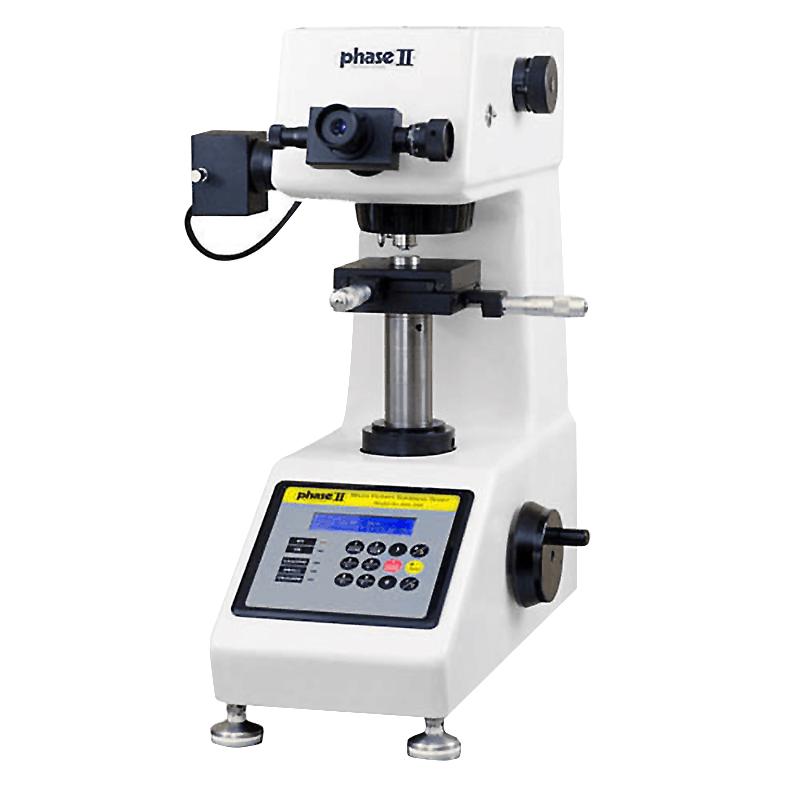
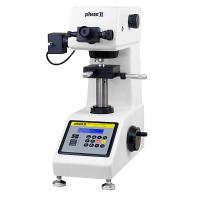
Vickers hardness represents a standard of material hardness. It was first proposed by British scientist Vickers and expressed as HV. Vickers hardness test is mainly used for small load Vickers hardness test in material research and scientific testing. Hardness, hardness near the cutting edge, hardness of dental materials, etc. Due to the small test force and small indentation, the appearance and performance of the sample are not affected.
The Vickers Hardness Tester has a wide measuring range and can measure almost all metallic materials used in industry, from very soft materials (a few Vickers units) to very hard materials (3000 Vickers units).
The value in front of HV is the hardness value, and the latter is the test force. If the test force hold time is not the usual 10-15 seconds, the hold time should be marked after the test force value. For example: 600HV30/20 means to use a test force of 30 kgf for 20 seconds to obtain a hardness value of 600.
the difference
Rockwell hardness is large, easy to operate, can be read directly, and the indentation is small, suitable for batch and finished product production, but multi-point testing is required to ensure accuracy. Vickers hardness testing covers a wide range of materials from softer materials to ultra-hard materials.
Rockwell hardness is suitable for metals with higher hardness, such as various alloy steels after heat treatment, which require higher test surface flatness. Vickers hardness is suitable for accurate measurement of hardness of micro-areas. It is commonly used to detect the effectively hardened layer after carburizing of metals. The test surface requires a very high level of flatness and needs to be a polished surface.



- 1Types of Vickers Hardness Testers and selection of test force
- 2Hardness conversion methods such as Rockwell Hardness and Brinell Hardness
- 3Measurement principle of Rockwell hardness and Brinell hardness
- 4What is Rockwell Hardness?
- 5What is Vickers Hardness?
- 6Why use the Vickers hardness test?
- 7How Rockwell Hardness Testing Works for Metals
- 8Hardness inspection of coating