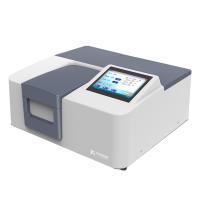
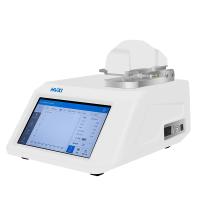
What is UV-Vis spectrophotometry used for and how does the measuring device work?
use
food industry
If we focus on the food industry, we can find various applications of this technology. This device is commonly used to control the quality of food through its content of hydroxyproline, starch, or nitrite in meat and meat products; lactose in food and alcoholic beverages; or furanosides in milk.
Additionally, the technology is used to control trimethylamine, histamine, domoic acid or phosphorus in fishery and aquaculture products.
Also, juices are commonly measured with this device to control citric acid, phosphorus, L-malic acid, D-isocitric acid, glucose, fructose, and sucrose.
Likewise, in honey and bee products, hydroxymethylfurfural (HMF) can be measured using this technique.
UV-Vis spectrophotometry is also used to determine volatile acidity, sulfur dioxide, acetic acid, L-malic acid, tartaric acid, D-gluconic acid or the intensity of color and hue in wine.
In the olive industry, this technique is used to determine the so-called olive oil K-factor, which measures the extinction coefficient of fat and is directly related to the quality of the oil.
As such, in animal feed, UV-Vis spectrophotometry is used to detect urea or nitrite in feed.
Water Control and Treatment
In addition, public health entities and companies responsible for water control and treatment use, for example, UV-Vis Spectrophotometer s to detect anionic detergents, cyanide, ammonium, nitrite, chromium or residual chlorine in drinking and bottled water.
Environmental Quality Control
On the other hand, the use of this technique to control environmental quality is often common in entities and laboratories conducting tests, for example, to determine the presence of formaldehyde, anionic surfactants, phosphorus, phosphate, nitrite, nitrate, Amounts of nitrogen, ammonium, chromium, phenols or sulfides. Its use is also common, to measure the levels of certain compounds and chemical elements in wastewater and seawater; or to determine the amount of Kjeldahl nitrogen in soil, sediment and sludge.
Materials industry
But the use of UV-Vis spectrophotometry touches many more industries, so it is possible to find applications for this technique in the materials industry. For example, a typical test for alumina and hydroxide is the determination of silica by UV-Vis spectrophotometry.
textile industry
Other tests are carried out in the textile industry, some of which are for example the following: Cr(VI) by UV-Vis spectrophotometry on textile materials and made textiles, metal fittings for textile clothing, metal fittings for textile clothing, painted and coated surfaces, Coated and laminated fabric or plastic materials.
how to work?
Spectrophotometers are optical devices that evaluate how much light is absorbed, transmitted, or reflected by a material (solid or liquid) at each wavelength.
These devices consist of illumination systems, monochromators and Detectors.
Lighting system
Illumination systems typically have hydrogen or deuterium sources for the ultraviolet spectral region, and tungsten sources for the visible and NIR spectral regions. In the case of UV-Vis Spectrophotometer s, they cover the range from 200nm to 900nm, which includes the ultraviolet, visible and some infrared regions.
monochrome
On their own, a monochromator splits the spectrum of illumination and provides an energy beam of a specific wavelength. Therefore, if the wavelength is of no importance or affects the measurements being made, then this part of the equipment, or the same part, needs to be calibrated for a wavelength calibration, which checks the difference between the wavelength waves measured by the device and those of the reference pattern used. difference.
Detector
The Detector is responsible for converting the signal (photons) it receives and converting it into an electrical signal. Therefore, depending on the strength of this signal, it can be recorded by a system that provides transmittance and absorbance or OD values.
Calibration of Detectors, also known as absorbance and transmittance scales, is of great importance in understanding the deviation of the device from these amplitude values at each wavelength. The importance of the accuracy of these values cannot be overstated as they allow comparison of spectra of different materials or solutions at different concentrations. Specifically, absorbance calibration is performed at all necessary wavelengths. To calibrate the scale, measurements of different absorbance values are usually made for each wavelength. Subsequently, the difference between the value measured by the device and the certified value of the standard used is evaluated.



- 1Application of Flame Atomic Absorption Spectrophotometry in Detection of Food Talc Powder
- 2Talking about the performance test of epoxy resin film coated on PET
- 3Spectrophotometer principle, structure and application do you know geometry?
- 4Principle, characteristics and application of ultraviolet Spectrophotometer
- 5Spectrophotometer Color Measurement Fundamentals
- 6Differences between visible, ultraviolet-visible, infrared, fluorescent and atomic absorption Spectrophotometer s
- 7Detection of nicotine content by Spectrophotometer
- 8How to detect the color difference of fluorescent color-changing materials?
- 9Liquid color difference detection solution
-
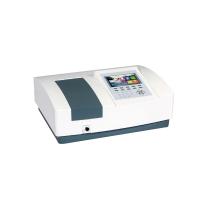
![YueFeng 752N Ultraviolet-visible Spectrophotometer]()
-
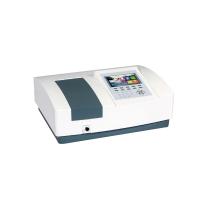
![YueFeng 721 Single beam of light Visible Spectrophotometer Test Transmittance/Absorbance]()
-
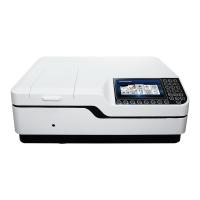
![JINGHUA H300 Dual beam of light Spectrophotometer Wavelength range 190nm-1100nm]()
-
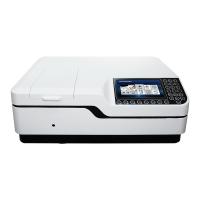
![HUXI Nano-900 UV-Visible, ultra-micro Spectrophotometer Light spectrum instrument]()
-
![JINGHUA JH752 Benchtop UV-Visible Spectrophotometer Bandwidth 4nm]()
-
![YUEFENG FP6428 Flame photometer Na/Ca]() YUEFENG FP6428 Flame photometer Na/Ca$ 1450.00
YUEFENG FP6428 Flame photometer Na/Ca$ 1450.00