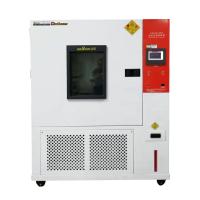
What is the role of the environmental Test Chamber?
3 Ways to Use a Climate Chamber/Environmental Chamber
Testing products in their real-world environment provides critical feedback on how they will perform under real global conditions in all weather extremes. Climate/environmental chambers provide this feedback by exposing interior materials to stresses such as vibration, sunlight, extreme temperatures, extreme humidity/moisture, etc.
Will the product survive these conditions, or will it break down sooner than expected? Climate/environmental chambers can:
Helps assess product quality and reliability, and identify manufacturing defects and weaknesses
Shows the process of product decay and degradation and helps predict its potential lifespan
Evaluate the response of materials (including biological, industrial and electronic) to selected conditions
While there are various types of environmental chambers on the market, some of them include constant climate chambers, temperature and Humidity Chambers, controlled environment chambers, benchtop Humidity Chambers, and climate simulation and light stability chambers. Consider all the methods you need to test your product or material before making your selection.
Environmental chambers allow manufacturers to stress their products in a single environment, allowing products to be tested in continental-type climates with cold winters and hot summers, as well as in warmer Mediterranean climates. When properly calibrated, an environmental chamber produces reliable results, simulating how a product will perform over its real life cycle.
The conditions that an environmental chamber can replicate are: temperature set point (or change), relative humidity or moisture in the form of rain, electromagnetic radiation, sunlight exposure/UV degradation. The type of testing involved will determine the chamber type; chambers come in a variety of sizes and are designed with different capabilities and options.
Floor-standing and bench-top chambers are widely used. While most chambers are made of steel, the materials used for their inner and outer walls vary by application. The intended application of the chamber also affects the types of heaters, coolers, condensers, evaporators, controllers, sensors and other modules used. Test chambers have evolved to keep pace with product testing requirements such as biological and military applications. These chambers are often customized to meet all required environmental testing requirements, and the equipment used for the measurements is very accurate and reliable.
- 1What are the FAQs of the Environmental Test Chamber? How to calibrate?
- 2How to use an environmental Test Chamber for rust resistance and durability testing of metal coatings?
- 3What is the correct analysis idea for coating defects?
- 4The reason for the coating defects caused by the aging of the paint film turned out to be...
- 5Precautions for temperature and humidity control of environmental Test Chambers
- 6How to choose the right environmental Test Chamber according to your needs?
- 7How to measure humidity in an environmental Test Chamber?
- 8Working principle and technology of temperature and humidity Test Chamber in industrial laboratory
- 9Precautions for purchasing environmental Test Chambers