What safety standards should be paid attention to in the temperature and humidity Test Chamber?
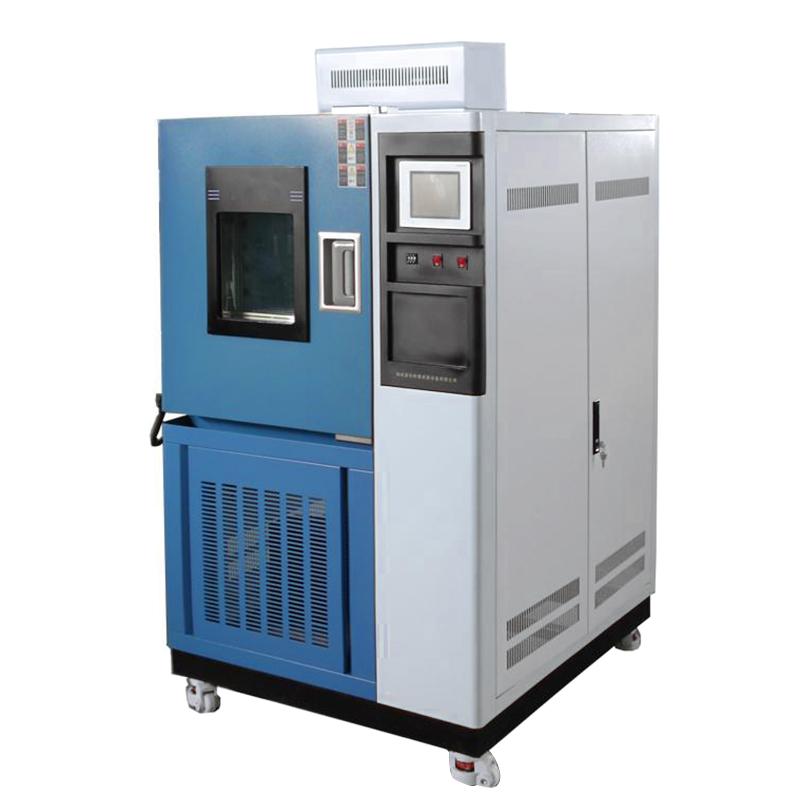
When choosing a temperature and Humidity Chamber, please be aware of some common safety requirements.
Gas monitors and fire detection systems are examples. These sensors sound an alarm if the indoor temperature is too high or too low. Flush systems can also be used to remove by-products and reduce the risk of fire. Some chambers even have reinforced floors to prevent burns, and an internal cooling system will help maintain a stable cell and pack temperature.
Temperature and humidity Test Chambers are also important in the medical industry as they can provide real-time information on the durability of components. Data obtained during high-temperature testing will be used to determine the reliability of medical products before they are released to the public.
Regardless of the industry, temperature and Humidity Chambers need to comply with strict regulations set by local and national governments. Common types are desktop and floor-standing. The material used for its walls will also be determined by the application. Glass doors are likely to be found in pharmaceutical and food packaging rooms. The type of test equipment used will also be determined by the product. Measuring equipment is also usually very accurate.
A temperature and Humidity Chamber needs to have the following essential features: non-sparking fan blades, an intrinsically safe barrier against the ingress of large voltage pulses, and internal lights.
Temperature and Humidity Chambers are available in a variety of configurations. For small-scale studies, benchtop and drive-through models are a cost-effective option. They can be as small as 0.89 cubic feet and have a temperature range of -68 to 180 degrees Celsius. The latter is more powerful and has a smaller footprint. These chambers are typically equipped with a PID temperature control system with a temperature range of -68°C to 180°C.
What do you need in a temperature and Humidity Chamber?
The main function of the temperature and humidity Test Chamber is to simulate the real world environment. It allows companies to test the strength of their products, whether for manufacturing or medical applications, by simulating different climates and temperatures. The temperature in the Incubator varies by manufacturer and product. In addition to temperature, humidity levels are also an important factor. Temperature chambers are very useful in the medical field when these variables are considered. Thermostats provide instant information on the durability of components, allowing manufacturers to determine whether a product is reliable before it is released to the public. In many industries, including the medical industry, Incubators are subject to strict guidelines.
Humidity change characteristics shall be included in the temperature chamber. Humidity is an important consideration in product storage and transportation. An accurate humidity Test Chamber can help you determine if your product will be damaged in this way.
Pressure valves, overheat protection sensors and warning lights are also important safety features to consider. These functions should function normally and are designed to keep the chamber safe. Also check for false positives, as these devices can cause dangerous situations.
If not, you should choose another model. In addition, the safety system of the temperature and humidity Test Chamber should be checked regularly . A Test Chamber equipped with a pressure relief valve is more likely to protect the entire facility, which is required for some applications.
- 1How to choose a temperature and humidity Test Chamber?
- 2How does relative humidity affect the performance of the temperature and humidity Test Chamber?
- 3Several common problems of temperature and humidity Test Chamber
- 4Main parameters and operation of temperature and humidity Test Chamber
- 5Types of temperature and humidity Test Chambers
- 6What should I pay attention to when choosing a temperature and humidity Test Chamber?
- 7What are the classifications of temperature and humidity Test Chambers?
- 8How to control the temperature and humidity Test Chamber?
- 9What components does the temperature and humidity Test Chamber consist of?