New technology for automobile painting construction--partial putty scraping method
 It is more suitable for the scraping of partial putty, whether it is a molded car body or a hand-made car body. In terms of the use of putty types, it also has a wider range than vehicle scraping putty, such as water putty, oily putty, perchlorethylene putty, etc. are more suitable. Taking the local scraping putty of large and medium-sized long-distance buses as an example, several scraping methods are introduced.
1. Partial scraping and coating of water quality putty
First take out the original bucket of water-quality putty and place it on the floor or a putty tank, and mix it well. If the putty is too thick, add an appropriate amount of warm water and stir until it is very uniform. After that, place the adjusted putty on the putty board, and use a wide copper scraper to scrape and smooth the uneven parts such as the front and rear walls, the large boards on both sides, and the top and bottom. For the four corners of the front and back, and the oval parts , it can be scraped continuously until it is smooth, but the thickest layer should not exceed 4 mm, so as not to affect the drying, it should be scraped in several layers. Roughly scrape each place until it is basically flat, and then use a scraper to gently smooth it out, especially for rough scratches, scrape it lightly and carefully, and clean up the residue in time. For the unevenness on the large surface, due to the large area, it is difficult to match the flatness of the large surface after scraping with a copper plate alone. You can use a copper scraper to smooth it first, and then use a self-made 50-60 cm The wide thin wooden scraper is gently flattened from top to bottom, so that the flatness of the putty after scraping is consistent with the flatness of the large board. After the large surfaces on each side are scraped flat, use a copper scraper to scrape and smooth the surroundings of the windows, the front and rear windshield frames, etc., and collect the residue.
The water-quality putty has excellent scraping properties. Within 10 to 20 minutes after scraping, it can be scraped, repaired and repaired, and sand holes or numbness are not easy appear. After scraping the putty on the whole car, conduct a comprehensive inspection again. The missing scraped parts should be repaired and smoothed , the scratches on all sides should be flattened, and the residue should be cleaned up before drying.
2. Partially scrape and apply oily putty
The difference between partial scraping oily putty and partial scraping watery putty is that oily putty contains volatile solvents (such as No. 200 gasoline, etc.), and during scraping, with the volatilization of the solvent, the surface of the putty is prone to slight Oxidation, this kind of oxidation usually has no obvious signs within 5 minutes after the putty is scraped on the object, but within 5 to 10 minutes, the oxidation phenomenon (slight dryness of the skin) is more obvious, especially in summer with high temperature and dryness Under certain conditions, the oxidation phenomenon of the epidermis is more obvious. Therefore, when scraping, the speed of scraping each side should be controlled within 5 minutes, that is, within 5 minutes, the putty on this part should be quickly scraped, flattened, Clean the residue to prevent sand holes or pockmarks from oxidation of the epidermis. For parts with a large area, it should be carried out in sections. After each section is flattened, the scratches and residues should be collected in time. For the overlap of the scraped coating, gently scrape and close it, and avoid the scraper from contacting other scraped coatings. As long as you master this essentials, it is easy to scrape the oily putty well. For the scraping method, you can refer to the local scraping water putty method.
3. Partial scraping and coating of vinyl chloride putty
Since perchlorethylene putty dries faster than oily putty and water-based putty, it should be scraped quickly when scraping to prevent sand holes or pitting caused by dry skin. Generally speaking, the thickness of each layer of perchlorethylene putty is preferably 0.5-1 mm, otherwise the drying time will be too long and the production progress will be affected. Therefore, for the deeper parts of the recess, it should be scraped several times, that is, first scrape about 1 mm thick, and after the greasy layer is dried for 1 hour, use a gray knife or steel scraper to scrape off the burrs on the surface of the greasy layer. Gently clean it flat, and then scrape it down again, and scrape it around in this way one by one.
In the scraping operation, generally only 1-2 back and forth can be quickly applied to each place, and it is not allowed to scrape back and forth too many times, otherwise, pitting and sand holes are prone to appear.
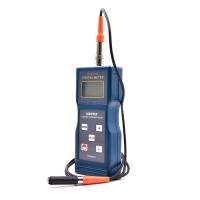
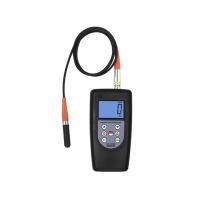
For local scraping of ester glue, phenolic and alkyd putty, refer to the scraping method of oily putty. If putty or nitro putty is required for partial putty, quick scraping method should also be adopted. That is, after each place is scraped flat, immediately collect the surrounding residues to prevent the residues from drying out and affecting the speed and quality of scraping. Especially for nitro putty that dries faster, more attention should be paid. However, it should be noted that although nitro putty dries quickly, its adhesion and temperature resistance are poor, and it cannot be applied too thickly (instrument: wet film wheel ), usually about 0.5mm is suitable, otherwise the putty layer is easy to crack and the durability is poor .
- 1Overview of resistant coatings
- 2Characteristics and construction points of corrosion resistant Coatings
- 3Application of corrosion resistant coatings on reinforced concrete surfaces
- 4Technological development and application of heavy anticorrosive coatings
- 5Application and performance analysis of silicon diffusion coatings
- 6Research and application of chromium diffusion coatings
- 7High temperature oxidation and corrosion resistance performance and application of aluminum diffusion coatings
- 8Zinc diffusion coating performance process and application
- 9Chromate coating technology and its application