New technology for automobile painting construction----brushing technology
1. Primer brushing method
In addition to dipping or spraying, brush coating is often used in the primer coating of automobile workpieces or parts. For example, the skin of the large and medium-sized passenger car body, before welding to the skeleton, the inside of each piece of skin should be coated with an iron red phenolic or iron red alkyd antirust paint, after the antirust paint is dry, the painted side (inside) is welded to the skeleton, and the whole body is welded, and then the outside is sprayed with iron red primer. From this point of view, brushing primer is a very necessary job in the automotive industry, especially in the bus manufacturing industry. This work is easy to operate, does not require equipment, and is not limited by the work site.
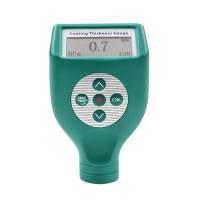
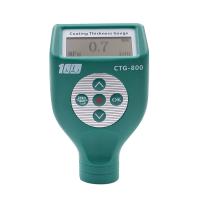
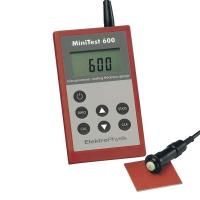
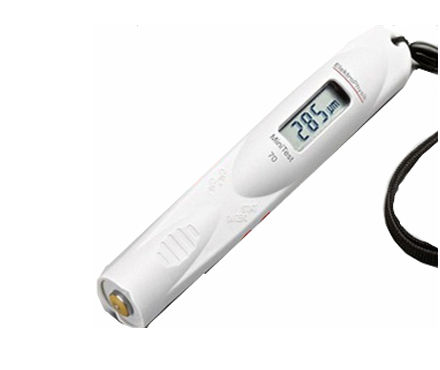
In order to paint a good primer, in addition to choosing the right brush, you should also have a skilled brushing skill. Otherwise, not only will the brushing speed be slow and the quality will be poor, but at the same time, the paint will be wasted (the amount used is large), and the production cost will be increased. For example, if the primer of the skin is brushed, if you do not pay attention to the operation skills, it is easy to expose the bottom, flow and sag. In order to improve the brushing speed and quality of the primer, first of all, the brush with appropriate width and narrowness should be selected according to the structural shape and area size of the workpiece or parts, and then the appropriate brushing method should be adopted, which will make the brushing construction progress fast, good quality, timely drying, and material saving. For example, when brushing workpieces or workpieces with complex shapes and small coating surfaces, you can use a small brush, and use the brushing method of first inside and then outside, first up and then down, first left and then right, first difficult and then easy. After each item is brushed, a comprehensive inspection should be carried out, and when there are undesirable phenomena such as missing brushes, exposed bottoms, uneven thickness of paint film (measuring instrument: coating Thickness Gauge), flowing and sagging, etc., they should be repaired and brushed evenly in time to collect the net paint. At the same time, in the painting process, it is necessary to check while brushing to ensure the quality of brushing.
For the painting of large-area workpieces such as skin, use a large wide brush, and after each side is full, quickly brush the paint film horizontally and vertically, and brush it vertically and vertically, so that the paint film will be evenly and flat. If the feel is too heavy (the feel is laborious), it proves that the paint is too thick, and it is easy to flow and sagging after brushing, so an appropriate amount of thinner should be added to re-dilute. If the feel is too labor-saving when brushing, it means that the paint quality is too thin, the paint film after brushing is too thin, and the hiding power is poor, which affects adhesion and rust resistance. Therefore, special attention should be paid.
Second, damping paint brushing method
Damping coatings are often sprayed in high-volume automobile production and coating, and spraying damping coatings requires the use of special spraying equipment and special Spray Guns (special Spray Guns) to complete the spraying application. However, for small batches of automobile production plants or automobile modification plants, in order to save equipment investment, the brushing method is mostly used.
When brushing the damping coating, the original barrel damping paint should be taken out first, and it should be fully stirred evenly. If the paint is too thick, you can add an appropriate amount of tap water (5~10%) to dilute it, and then brush it. Generally, the brush thickness of the damping coating is required to be 2~3 mm. Therefore, the damping coating should not be adjusted too thin, otherwise, it is difficult to achieve the thickness of the brush, so that the coating can not play the expected anti-vibration and noise reduction effect. Therefore, when brushing, it is recommended to dilute the damping paint without adding water to ensure the thickness of the brush when brushing evenly. If the inside of a large and medium-sized passenger car is painted, a large brush with a width of 7.5 cm or 10 cm should be used, dipped in the damping paint (do not add water), and the top should be painted with a thickness of & "' mm at one time, and then the left and right sides and the front and back sides should be evenly painted with a thickness of 2~3 mm. Because the skeleton structure in the passenger car is all format shapes, so when brushing each grid, the gaps around the profiles should be filled and brushed flat, and then the leather surface of the grid should be painted to the required thickness. Apply like this to fill in the gaps. It not only makes the damping coating play a role in anti-vibration, sound reduction and heat insulation, but also plays a role in preventing leakage (rain leakage) for the large top (inner upper top). For the plane of the skeleton profile, if the residue is contaminated due to painting, the ash knife should be cleaned in time to prevent the internal decoration from being affected.
Other parts or workpieces of the car, such as the hood, the bottom of the pedal, the bottom of the cargo compartment, the inside of the fender of the freight car, the fender before and after the wheel, etc., should be painted with a thickness of 2~3 mm at a time. The drying of damping paint is usually in summer!$ " #% hours can be dried, and it takes about 48 hours in other seasons, and it can be dried if baked at 120 °C ~ 1.5 hours.
3. Topcoat brushing method
The topcoat introduced here mainly refers to the interior of the passenger car, the pedal and other parts, or other minor decorative parts of the topcoat. These topcoats are often brushed, the purpose of which is to save equipment such as spraying, air supply, and power supply, and at the same time save labor and materials. Because these topcoats are generally sprayed and dried on the top coat of the whole vehicle before they can be applied. For example, the foot pedals of automobiles are usually painted in black or other dark colors, while the paint film color of the whole vehicle is mostly light or medium color. e.g. overcoat color for coaches and city buses (excluding ribbon color)(Measuring instrument: Colorimeter), mostly white or creamy yellow, while trucks and light vehicles have green, blue or egg blue topcoats. For the pedals of these cars, if spraying is adopted, it is necessary to cover the light-colored topcoat around it with paper and stick it firmly with tape before construction, otherwise it will pollute the surrounding topcoat when spraying, which brings a lot of trouble to the painter and is not cost-effective. If the brushing method is used, the application can be completed in a few minutes, which greatly improves production efficiency. When brushing these parts, it can be brushed at one time or twice according to the requirements of the production schedule. The one-time brushing method is to brush a thin brush first, and then brush an even one; The second brushing method, that is, brushing one first, and then brushing one after drying. When brushing, pay attention to the surrounding area of the part, and brush it neatly and evenly, without staining other paint surfaces.
For the interior topcoat of large and medium-sized buses, if there are no spraying facilities, the brush coating method can also be used. For example, the floor of a certain passenger car is often brushed by the method of brushing, and the brushing is carried out first inside and then outside, and the brushing is carried out in sections. After each section of brushing, the edges on both sides should be carefully cleaned and cleaned, and the lap joints should also be repaired evenly, and there should be no obvious lap marks.
- 1Nondestructive measurement Coating thickness
- 2Principle, application and selection of traffic coatings Coating Thickness Gauge
- 3Principle, Application and Selection of Eddy current Coating Thickness Gauge
- 4Principle, Application and Type Selection of Electronic Coating Thickness Gauge
- 5Explore the principle, application and selection of phosphating layer Coating Thickness Gauge
- 6Principle, Application and Type Selection Analysis of Chrome Coating Thickness Gauge
- 7Principle, Application and Selection of Coating Thickness Gauge for inner wall of small pipe
- 8Basic principle and application scenario of steel Coating Thickness Gauge
- 9Principle and Application Analysis of Coating Thickness Gauge