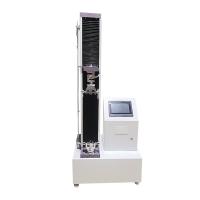
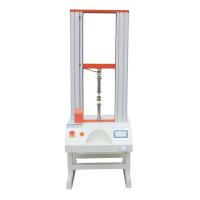
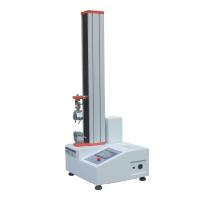
What are the application industries of Tensile Testing Machines?
Automotive Manufacturing
In order to verify the rationality and safety of automotive design, Tensile Testing Machines focus on multiple aspects such as material stiffness, component testing and joint technology, fatigue and material forming.
Engines and drivetrains require testing of clutches and chains, as well as hot materials and crankshafts, respectively. Bodywork requires testing of steering columns and linkages, as well as suspension components such as springs and shock absorbers. Interior design requires seat belt tension, head restraint, car seat stiffness and durability testing. For electronic component design, it is necessary to test the reliability of buttons and switches, soldering and PCB boards, wire insulation, etc.
Engineers in the field of civil construction
When working in civil engineering or construction, mechanical testing is required to ensure materials are safe and sound, and within their design limits.
A variety of materials are used to construct structures including highways, bridges and other civil engineering buildings and dwellings. Several forms are employed in their production, including granules, powders, bulk materials, foils, panels and stones. Concrete, rebar, beams and other construction tensile materials require compression, tension, fatigue or fracture testing in servo-controlled testing.
electronic product
Mechanical strain and fatigue life tests use tensile test equipment for circuit devices and circuit boards. Validating designs, improving production and ensuring product reliability all rely on mechanical testing of electrical components and assemblies.
Adhesive and splice, connection and packaging testing can all be performed with this device. In addition, components are subjected to various stresses, including abrasion and microbending, as well as die-shear testing.
Pack
Compression, vibration, shock, and changing weather conditions are common stresses and stresses that packaging and packaging materials are exposed to throughout their transportation. To ensure the safety of items during transport, the Tensile Testing Machine provides the strongest possible packaging.
A Tensile Testing Machine is required to test a wide range of items and materials for this purpose. Cardboard, paper, plastic, wood, foam, metal, boxes, crates, strapping, insulation, tape and pallets are some examples. Each of these things has advantages and disadvantages, and only thorough testing can tell whether they are effective in protecting products from harm during shipping.
Biomedical Science
The performance and compatibility of new biomaterials and enhanced medical devices can be improved with tensile testing equipment. Tensile testing machines are frequently used by researchers in biomedical and medical device development.
It can test the mechanical properties of various materials, such as rubber, foam and plastic; wire and cable; safety belt; safety belt; leather and composite materials; steel pipe; stainless steel; casting; steel plate; non-ferrous metal wire and other materials.
Adhesive
If you want to join two dissimilar materials together, you need to use adhesives. Many adhesives can be used, from glue to mucilage to paste laminate to paste cement to paste mortar.
Shearing, stretching, peeling, or any combination of these stresses are common causes of adhesive failure in construction. These are stresses commonly encountered in adhesives. Therefore, it is necessary to evaluate these forces using tensile testing equipment to determine the strength of the adhesive.
ceramics
Materials used to make ceramics include metallic and nonmetallic compounds, as well as crystalline and partially crystalline forms. Brittleness, complexity, and compressibility describe ceramics that are weak in shear, tension, and impact. These materials can be made to be electrically insulating and selectively conductive.
As a rule of thumb, ceramic testing covers the mechanical properties of many materials, including extreme mechanical properties such as tensile strength, yield and yield, and high-end mechanical properties such as maximum mechanical properties. We can predict the predicted behavior of ceramics during application and prove whether it will succeed or fail using test data provided by tensile testing equipment.
To build a composite, two materials are needed: a matrix and a reinforcement. A polymer matrix or resin material is usually used for composites, but reinforcements such as fibers or crushed minerals can also be used.
As an example of composite materials, Tensile Testing Machines are commonly used to test many types of epoxy/polyester/vinyl ester/shape memory polymer resins, etc. In addition to Kevlar, standard fibers include glass, carbon, and Kevlar. In a layered or laminated structure, fiber reinforced composites may include short fiber reinforcements and continuous fiber reinforcements.
Geotextile
Geotextiles are geosynthetics made from water permeable fabrics. Geotextiles are commonly used in civil engineering projects, including the construction of roads, sidewalks, bridges, dams and retaining walls, to prevent soil and rock erosion after construction alters the environment. Soil and other things cannot pass through them.
The suitability of a geotextile material for a particular application needs to be verified using tensile testing equipment. Tension and puncture are common forces they encounter when working with geotextiles. There are a variety of factors that can cause a geotextile to fail prematurely, which can have disastrous consequences.
Glass
Soda lime glass, borosilicate glass, acrylic glass, sugar glass and alumina are just a few of the many types of glass commonly found in windows, bottles, electronics and eyeglasses, among other everyday items.
Plastics and resins, as well as amorphous solids, are sometimes referred to as glasses. Glass-reinforced polymers, glass-reinforced concrete-reinforced fibers, optoelectronic materials, laboratory equipment, and flat glass all fall into this category. Using data from tensile testing equipment, the mechanical properties of glass materials can be determined.
Metal
Due to its inherent properties as a combination of flexible, fusible and malleable materials, metal can be formed into almost any desired shape.
Impact modulus, shear strength, flexural strength, fatigue strength, and time-dependent properties such as creep and stress relaxation are common tests used to evaluate metallic materials. Using tensile testing equipment, you may gain insight into how metallic substances behave under various loading conditions.
in conclusion
Tensile testing machines are used in several industries and materials, this page details the various applications and classifications of Tensile Testing Machines.
Tensile testing machines are used in a variety of industries and on a variety of materials. Metrology and quality inspection, civil aviation, automobile production, machinery manufacturing, electronics, electrical appliances, etc. are just a few industries where Tensile Testing Machines are widely used.
Tensile or pull testing is one of the commonly used mechanical testing methods. A material's response to stress is measured using a Tensile Testing Machine, which applies tension to the material until it breaks. Material strength and elongation can be assessed by doing this test, which can also be used for other purposes.

-
![CHINA NBC-1024-2 Tensile Tester 5T]() CHINA NBC-1024-2 Tensile Tester 5T$ 6635.00
CHINA NBC-1024-2 Tensile Tester 5T$ 6635.00 -
![Lugong STX5000 Digital Display Single Arm Tensile Tester Microcomputer-controlled Electronic Universal Testing Machine 5000N]()
-
![Lugong STX2000 Digital Display Single Arm Tensile Tester Microcontrol Electronic Universal Testing Machine 2000N]()
-
![Lugong STX500 Digital Display Single Arm Tensile Tester Microcomputer-controlled Electronic Universal Testing Machine 500N]()
-
![Lugong STX200 Digital Display Single Arm Tensile Tester Microcontrol Electronic Universal Testing Machine]()
-
![Lugong STX100 Digital Display Single Arm Tensile Tester Microcomputer-controlled Electronic Universal Testing Machine]()
-
![SHUCHANG SC-LL-20KN Double column tensile machine, computer servo system Universal Testing Machine]()
-
![DUBAN UTTM7-DB25-207FM-100N Universal Tensile Tester Range +/- 98N]()
-
![DUBAN UTTM7-DB25-207FM-50N Tensile Tester Range +/- 49N]()


- 1Tensile machine application in various industries
- 2Technical analysis of key parameters of Tensile machine: Scientific selection from force measurement accuracy to Power system
- 3Tensile machine purchasing guide [dry version]
- 4Talking about the performance test of epoxy resin film coated on PET
- 5ASTM D5019 Single-layer roofing film reinforced CSM board (chlorosulfonated polyethylene (PE)) standard interpretation
- 6Common problems and solutions in tensile testing
- 7What is tensile strength testing and which products can be tested?
- 8Factors Affecting the Performance and Accuracy of Tensile Testing Machines
- 9Classification of Tensile Testing Machines
-
![Patek Jushi LY-7012C Tensile Tester 1000KG]()
-
![BaidaJUSHI LY-7012A Small Tensile Testing Machine 200KG]()
-
![CHINA NBC-1024-2 Tensile Tester 5T]() CHINA NBC-1024-2 Tensile Tester 5T$ 6635.00
CHINA NBC-1024-2 Tensile Tester 5T$ 6635.00 -
![CHINA NBC-6820 Ring type initial tacking machine Tensile Tester]()
-
![CHINA NBC-1023-1 Computerized Double Column Tensile Testing Machine]()
-
![CHINA NBC-1021 Touch screen single column Tensile Strength Tester 10KG]()