Surface roughness measurement
Surface roughness measurement refers to comparing the surface roughness comparison sample with the measured surface through visual and tactile senses, judging which value the measured surface roughness corresponds to, or measuring the change of its reflected light intensity to evaluate the surface roughness.
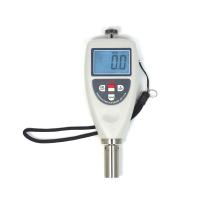
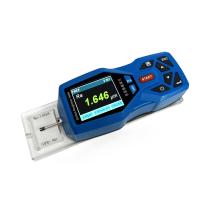
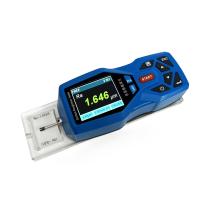
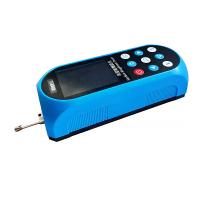
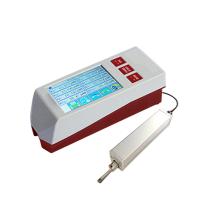
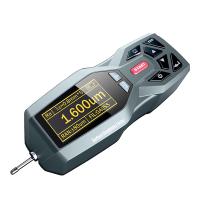
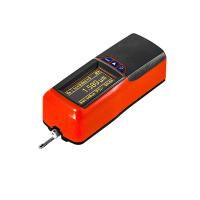
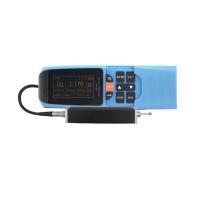
Stylus measurement is a commonly used measurement method. The stylus surface roughness Tester is an easy-to-use and effective surface roughness measurement tool.
A diamond stylus with a tip curvature radius of about 2 microns is used to slide slowly along the surface to be measured, and the up and down displacement of the diamond stylus is converted into an electrical signal by an electrical length sensor. After amplification, filtering and calculation, the surface roughness is indicated by the display instrument. The Recorder can also be used to record the profile curve of the measured section.
Generally, the measuring tool that can only display the surface roughness value is called a surface roughness measuring instrument, and the one that can record the surface profile curve is called a surface roughness profiler (referred to as a profiler)
These two measurement tools have electronic calculation circuits or electronic computers, which can automatically calculate various evaluation parameters such as the arithmetic average deviation Rα of the contour, the ten-point height RZ of the microscopic roughness, and the maximum height Ry of the contour. It has high measurement efficiency and is suitable for measuring Rα. 0.025-6.3 micron surface roughness.

- 1Influence of surface roughness of parts
- 2High-precision roughness instrument measures the surface roughness of plastic materials Case sharing [Video demonstration]
- 3How to measure concrete surface profile (roughness) quantitatively
Defelsko
- 4Evaluation of steel surface roughness
- 5The relationship between abrasive and surface roughness
- 6Surface roughness of metal
- 7Roughness and Surface Roughness
- 8Which industries need to use surface roughness meters?
- 9What are the application fields of surface roughness meter?
-
![Sand blasting shot peening Roughness Gauge AMITTARI AR-131A shot peening sand blasting, printing anti-corrosion and other industry tests]()
-
![KAIRDA NDT151P Roughness Gauge]() KAIRDA NDT151P Roughness Gauge$ 810.00
KAIRDA NDT151P Roughness Gauge$ 810.00 -
![KAIRDA NDT151 Roughness Gauge asperity Measurement Instrument]()
-
![KAIRDA NDT130 Portable Color Screen Roughness Gauge Roughometer]()
-
![LEEB462 surface roughness multiparameter measurement supports bluetooth printing and mobile app]()
-
![LEEB432 Surface Roughness Tester multiparameter measurement Measurement range 160μm]()