What is surface finish?
To understand surface finish, first we need to know a little about surface finish. When the surface roughness Ra of the workpiece is below 0.8 microns, it is called a mirror surface.
About the meaning of RMS
It is short for root mean square. The so-called root mean square: the square root of the mean of the sum of squares of a set of statistics, this roughness is actually Rq.
Since the RMS system is an imperial unit, generally: RMS*25.4/1000=RA Example: RMS64=64*25.4/1000=RA1.6 Note: The unit behind RMS is microinches, (one microinch=, one inch=25.4* 10mm, therefore, 1=25.4*10.) Judging from the information available now, the conversion formula of point 2 is generally used in "foreign coating processing drawings", and the unit is mostly "micro-inch".
RMS is equivalent to Rq. There is no fixed conversion relationship between Rq and Ra. In general, the value of Rq/Ra will vary according to different surface treatment methods. (RMS40 is basically about Ra0.8um). Regarding the processing technology, there is an article saying: Generally, when the processing method of the metal surface is different, the ratio of Rq/Ra is also different. For example, the ratio of EDM is 1.24-1.27, the ratio of surface grinding is 1.22-1.27, the ratio of shot peening is 1.24-1.28, and the ratio of turning is 1.17-1.26. ----- This view also has related papers, journals and artwork. Such drawings are generally marked with surface treatment methods.
in conclusion
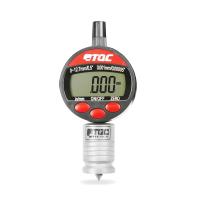
RMS and Ra are essentially two data processing methods in statistics. Ra is the average value, and RMS is actually Rq, which is the root mean square value. These are actually two methods of expressing surface roughness, and the specific conversion should be comprehensively considered from the unit and processing technology. To determine the level of surface finish, a surface roughness meter is often used.
RMS 63 is a smooth surface finish, RMS 100 is an average manufactured surface and RMS 25 is a very clean smooth surface finish.