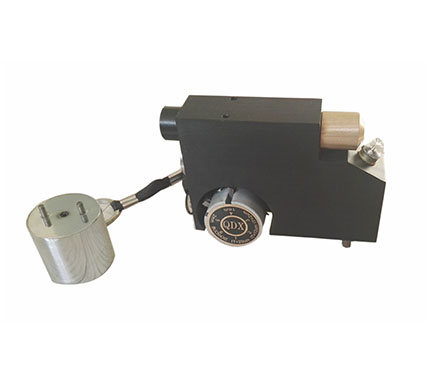
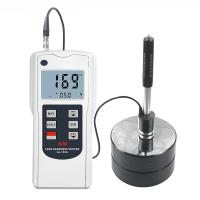
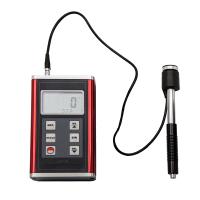
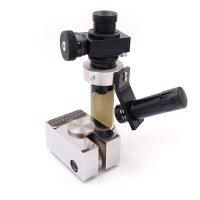
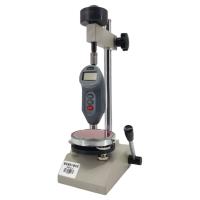
How many Hardness Testers do you know?
Classification
According to the degree of complexity: simple Hardness Tester, complex Hardness Tester
According to the measured hardness unit: Rockwell Hardness Tester, Vickers Hardness Tester, Micro Hardness Tester, Brinell Hardness Tester, Shore Hardness Tester, Barcol Hardness Tester, Leeb Hardness Tester, Webster Hardness Tester, Shore Hardness Tester Tester, Brockwell Hardness Tester
By usage: portable Hardness Tester, desktop Hardness Tester
use
Rockwell Hardness Tester is used to measure the Rockwell hardness value of cast iron and other workpieces
Vickers Hardness Tester for Vickers Hardness Measurement of Thin Workpieces
The Brinell Hardness Tester is used to measure the Brinell hardness of workpieces with higher hardness
The Leeb Hardness Tester is a portable Hardness Tester used to measure the hardness value of products that are not suitable for disassembly or have a large volume
Shore Hardness Tester is used to measure the Shore hardness value of rubber products
Webster Hardness Tester is used to measure the Webster hardness value of aluminum alloy products
Barcol Hardness Tester is used to measure the Barcol hardness value of FRP products
The Hardness Tester is used to measure the hardness value under various hardness scales
MicroHardness Tester is a kind of Vickers Hardness Tester, which is used to measure the Vickers hardness value of extremely thin workpieces.
Shore Hardness Tester is used to determine the Shore hardness value of ferrous and non-ferrous metals
Brinell/Rockwell/Vickers Hardness Tester for determining the hardness of ferrous metals, non-ferrous metals, cemented carbide, carburized and chemically treated layers
Hardness requirements: HS<100, HB<500, HRC<70, HV<1300, HRA(80~88), HRB(85~95), HRC(20~70)
In Rockwell hardness, A, B, and C in HRA, HRB, and HRC are three different standards, called scale A, scale B, and scale C.
The Rockwell hardness test is one of several common indentation hardness tests in use today. The initial pressure of the three scales is 98.07N (10kgf), and the hardness value is calculated according to the indentation depth. Ruler A uses a diamond indenter, and then pressurizes to 588.4N (60kgf); ruler B uses a steel ball with a diameter of 1.588mm (1/16 inch) as the indenter, and then pressurizes to 980.7N (100kgf); and ruler C uses the same diamond as ruler A as the indenter, but the force after compression is 1471N (150kgf). Therefore, scale B is relatively soft. Practice has proved that there is an approximate correspondence between the hardness value and the strength value of various hardness values of metal materials. Because the hardness value is determined by the initial plastic deformation resistance and continuous plastic deformation resistance, the higher the material strength, the higher the plastic deformation resistance and the higher the hardness value. However, the conversion relationship of various materials is not consistent.


- 1Frequently Asked Questions about Hardness Testers in 2022
- 2Test method for roll hardness
- 36 Tips for Using a Hardness Tester
- 4ASTM D2240 Rubber Properties, Hardness Testing
- 5ASTM D2240 Rubber Properties, Hardness Tester Hardness Testing
- 6What are the test subjects for perchlorovinyl resin anti-corrosion coatings?
- 7Controlling Variables Affecting Screen Printing Ink Deposition
- 8The principle and subdivision type of Vickers Hardness Tester
- 9Requirements for the hardness of the scraper plate and testing equipment