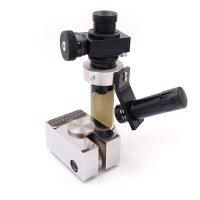
What is hardness and how to measure it
Hardness measurement
Application of hardness measurement: hardness measurement is simple and fast; the sample is not damaged (non-destructive testing); hardness can comprehensively reflect the strength of the material and other mechanical properties; hardness is directly related to wear resistance, the higher the hardness, the better the wear resistance. Therefore, hardness measurement is widely used, and hardness is often marked on drawings as the main basis for parts inspection and acceptance.
Measurement methods
Indentation method, bombardment method, scratch method and other measurement methods can be used. The pressing method (Brinell hardness method, Rockwell hardness method, Vickers hardness method, etc.) is commonly used in production.
Brinell hardness: HB (Brinell hardness) (HBS, HBW)
Measuring principle: Use a spherical indenter with a diameter of D to press into the surface of the material with the corresponding test force F, remove the test force after the specified holding time, measure the average diameter of the residual indentation with a reading microscope, and use the ball to press The pressure per unit surface area of the indentation represents the hardness value. The actual measurement can obtain the hardness value by looking up the table after measuring the d value.
HBS (HBW) = F/S = 2F/π D[D - (D2-d2)1/2]
HBS——Indicates the Brinell hardness value measured with a hardened steel ball indenter. Scope of application: below 450;
HBW——Indicates the Brinell hardness value measured with a cemented carbide indenter. Applicable range: 450~650

Representation: The number before the symbol HBS or HBW represents the hardness value, and the number after the symbol represents the ball diameter, load and load holding time respectively. For example: 120HBS10/1000/30 means that the Brinell hardness value measured by a steel ball with a diameter of 10mm under a load of 1000kgf (9.807kN) for 30s is 120.
Features: The measurement value is stable and accurate, which can more truly reflect the average hardness of the material; Disadvantages: Large indentation, slow operation, not suitable for mass-produced finished parts and thin parts.
Measuring range: used for hardness measurement of raw materials and semi-finished products, can be used to measure cast iron; non-ferrous metal (non-ferrous metal), steel with low hardness (such as annealed, normalized, quenched and tempered steel).
Rockwell hardness
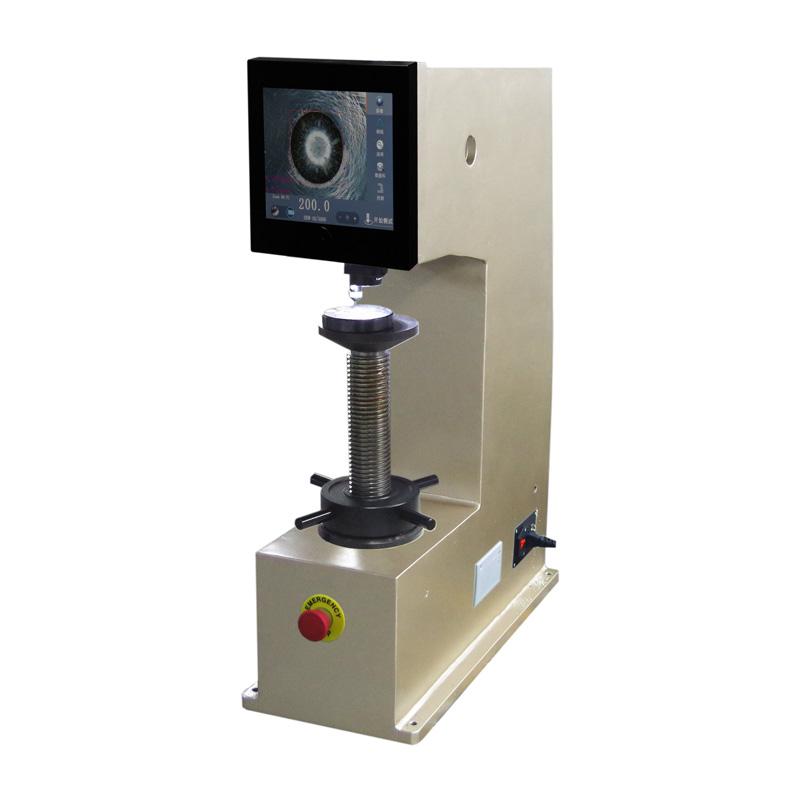
Measuring principle: Use a diamond cone or a quenched steel ball indenter to press the indenter into the material surface under the action of the test pressure F. After the specified time, remove the main test force and keep the initial test force. The hardness value of the residual pressure is Computed by tracking depth increments. During actual measurement, the Rockwell hardness value can be read directly through the dial of the testing machine.
HR = K - h/0.002; K - constant, the value of the diamond indenter is 100, and the value of the spherical indenter is 130.
Measuring conditions: Rockwell hardness can measure a wide range of hardness values from soft to hard. Different indenters and test forces can be selected according to the hardness value of the measured object.
Features: Quick and easy measurement, small indentation, and large hardness measurement range; Disadvantages: Data accuracy, stability, and repeatability are not as good as Brinell hardness.
Measuring range: It can be used for finished products and thin parts, but it is not suitable for measuring materials with rough structure and uneven structure (as shown in the table above).
Vickers hardness: HV (diamond penetration hardness)
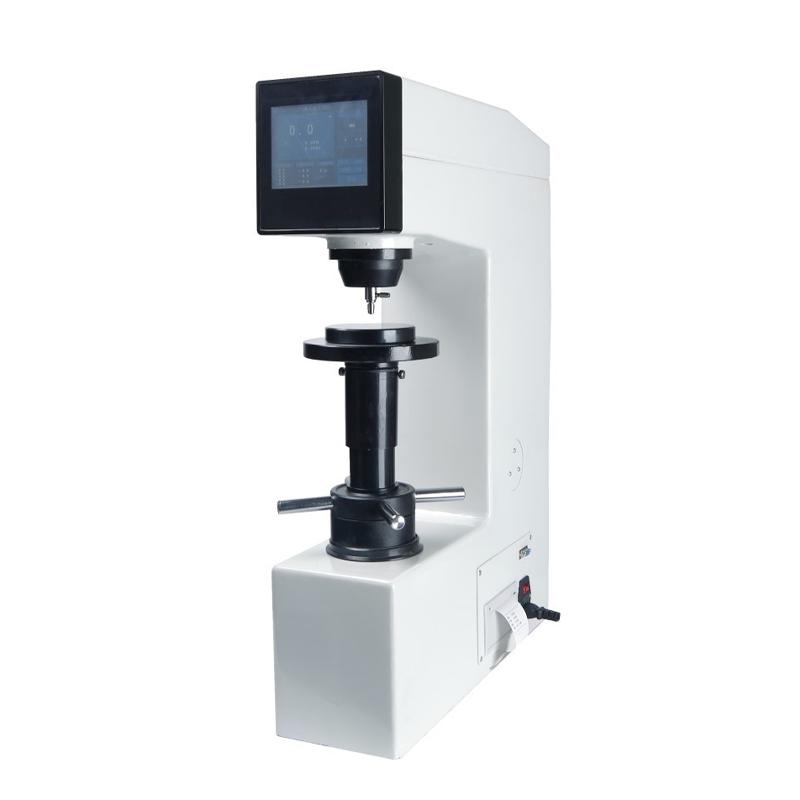
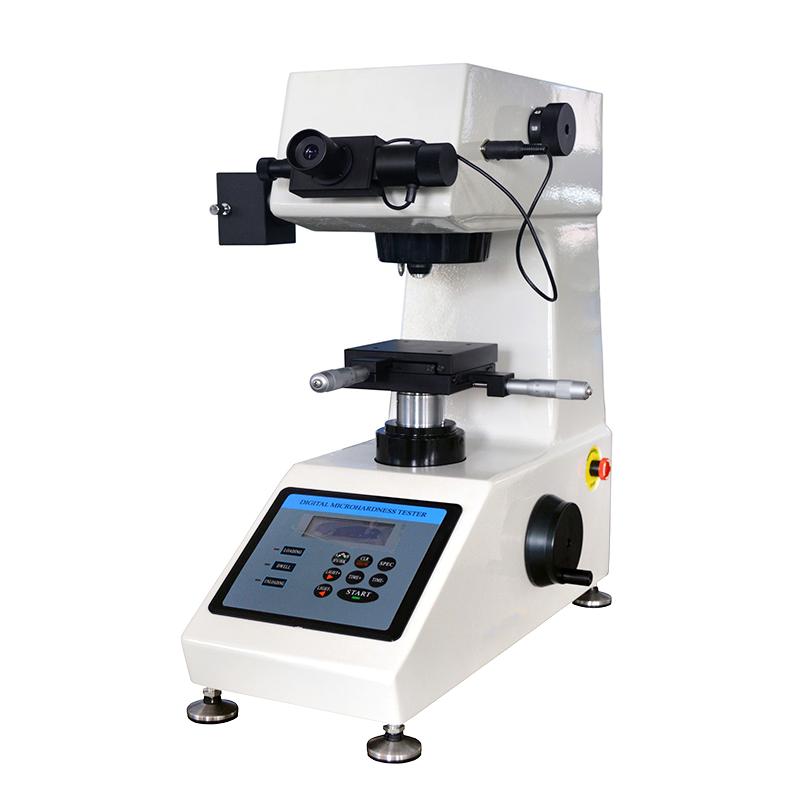
Measuring principle: similar to Brinell hardness. Use a diamond square pyramid indenter with an angle of 136 degrees to press into the surface of the material with a specified test force F, and remove the test force after a specified period of time. The average pressure of the hardness represents the unit surface area of the square pyramid indentation value.
Features: Large measurement range, can measure materials with hardness in the range of 10~1000HV; a small amount of indentation.
Application: It can measure thinner materials and surface hardening layers such as carburizing and nitriding.


- 1Are hardness and wear resistance the same?
- 2What are the hardness test methods?
- 3Factors to Consider in Hardness Testing
- 4What is Vickers Hardness?
- 5Performance subjects that must be inspected in the production process of water-based wood coatings? What are the indicators?
- 6What are the characteristics of unsaturated polyester Varnish and how to use it?
- 7Mixed paint is divided into magnetic and oily mixed paint, what is the difference between them?
- 8Introduction to the correct application of Leeb Hardness Tester
芦金萍; 陈子敏 - 《浅议里氏硬度计的正确使用》
- 9What problems should be paid attention to in the daily application of Leeb Hardness Tester?
刘吉萍 - 《里氏硬度计使用时应注意的几个问题》