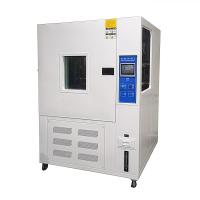
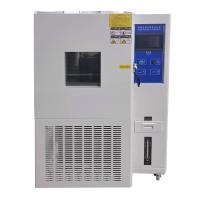
Some common sense about reliability constant temperature and humidity Test Chamber
Confirming the reliability and durability of your products is an important part of bringing them to market. A stabilization chamber for steady-state testing can be an important part of your effective testing. You can determine how your product will perform and withstand the various thermal and climatic conditions it will face during transportation, storage and use.
It helps optimize temperature and Humidity Chambers for stability testing. Here's what you need to know about stabilization chambers.
What is a constant temperature and humidity Test Chamber?
As the name suggests, a constant temperature and Humidity Chamber maintains stable, specified temperature and humidity conditions in a controlled environment.
Whether for pharmaceuticals, cosmetics, textiles, food and beverages, or electronics, stability testing (also known as steady-state testing) is one of the processes companies use to determine the safety and functionality of their products while stored on the shelf or under certain environmental conditions.
There is almost no industry that does not need a constant temperature and humidity Test Chamber. While focused on evaluating the durability of the product, stability testing is also used to evaluate the accompanying packaging.
These products change hands and environments throughout the chain of custody. They should be kept safe and protected during transport, storage and intended use.
How does the constant temperature and humidity Test Chamber work?
Constant temperature and Humidity Chambers rely on a combination of heating and cooling applications and water to simulate conditions within a controlled workspace. Heat is applied to a water source, usually stored in a vessel attached to the chamber, to turn it into steam, which is then pumped into the sealed workspace. Temperature-only chambers bypass this humidification step.
Heated air and steam continue to be fed into the chamber at a steady rate. Depending on the performance level of the chamber, referenced to its compressor power, it may take some time for the temperature to rise to the level required for a given test.
These levels are maintained for an extended period of time to assess how well a product or DUT (Device Under Test) will withstand simulated conditions it may encounter after it enters the market or is stored somewhere.
In addition to heating, the constant temperature and humidity Test Chamber also has a cooling function that simulates a colder environment. These test conditions are achieved with a fan blowing cool air into the workspace.
What are the characteristics of an excellent temperature and Humidity Chamber?
Well-regulated temperature reliability is at the heart of steady-state testing. If you are not confident that humidity and temperature will remain constant through shelf life or durability testing, you are wasting valuable time.
An efficient chamber should be equipped with a heating system equipped with an open ceramic core nichrome heater to ensure that temperature control is maintained within ±0.5°C.
The temperature range within the chamber shall accommodate test conditions between -20°C to 94°C (-4°F to 201°F).
Humidity capacity should be between 20% and 95% RH (relative humidity). Some chambers include optional features such as a high humidity sensor to extend your humidity range up to 98% RH. On the other hand, a desiccant air dryer can be installed to help your chamber achieve humidity levels as low as 5% RH.
The cooling system in the constant temperature and humidity Test Chamber usually consists of an independent, compact, mechanical, single-stage refrigeration system.
Precautions for purchasing a constant temperature and Humidity Chamber
Size does matter. This will determine what you need in the chamber if you are testing many products at the same time or a large product.
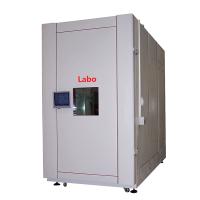
See, if you need a walk-in room, you need a walk-in room.
Another consideration is the type of testing you anticipate doing. For example, if you need stability testing in addition to temperature cycling (or other iterative testing), investing in a chamber with power components is a good option.


- 1GB/T 10586-2006 Detailed explanation: Core technical indicators and acceptance specifications for damp heat Test Chamber
- 2Humidity chamber core components dismantling: how to select compressors/Sensors
- 3Inaccurate lab data? 90% of people ignore Test Chamber calibrating issues
- 4Chip high-low temperature heat and humidity performance test
- 5Application of Humidity Chamber in building materials and flooring industry
- 6Principle, application and selection of programmable Humidity Chamber for die casting
- 7Humidity Humidity Chamber principle, application and selection
- 8Principle, application and selection of field effect transistor programmable Humidity Chamber
- 9Principle, application and selection of luggage Humidity Chamber