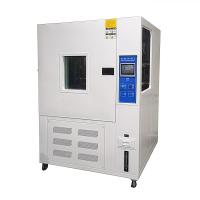
Application of walk-in constant temperature and humidity Test Chamber in environmental testing of skin care products
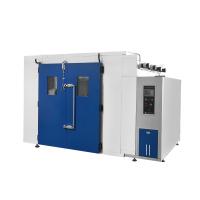
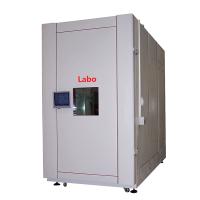
For women, skin care products are much more important than bags and clothes. In addition to efficacy, the skin care industry actually has relatively strict quality indicators, such as shelf life, storage environment, etc., which require clear labels. If you want to understand these data, you need to test in advance. The constant temperature and humidity Test Chamber is one of the commonly used test methods in the research and development of skin care products.
1. The principle of skin care products walk-in room
Most skincare products have a three-year shelf life, so how did you come to that conclusion? It is not possible to observe product changes during the development process. At this time, the role of environmental simulation testing comes in handy.
The research and development of skin care products usually use equipment such as constant temperature and humidity Test Chambers to conduct accelerated constant temperature tests. In a short period of time, the change of the product over several years is simulated by accelerating the simulated temperature change, while simulating high-low temperatures.
2. Use a walk-in Test Chamber to test the temperature resistance of skin care products (emulsion)
1. Heat resistance test:
(1) Equipment: constant temperature and humidity Test Chamber;
(2) Temperature requirements: temperature control accuracy +19°C;
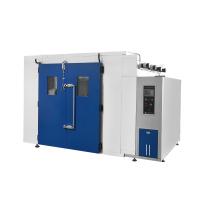
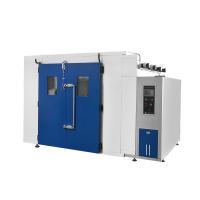
(3) Test method: Put the sample into 2 clean and dry medicinal plastic bottles, tighten the bottle caps, and put 1 bottle into a walk-in test box with a pre-adjusted temperature of 48±1°C. After 48 hours, take it out, return to room temperature, and compare it visually with another bottle.
(4) Inspection standard: There will be no oil-water separation after the paste returns to normal temperature.
2. Cold resistance test:
(1) Equipment: constant temperature and humidity Test Chamber;
(2) Temperature requirements: temperature control accuracy 2°C;
(3) Test method: put the sample into two clean and dry medicinal plastic bottles, tighten the bottle caps, put one bottle into a walk-in test box with a pre-adjusted temperature of -18±1°C, 48 Take it out after 1 hour, and after returning to room temperature, make a visual comparison with another bottle.
(4) Judgment criteria: After returning to room temperature, there is no significant difference in performance from before the test.



- 1GB/T 10586-2006 Detailed explanation: Core technical indicators and acceptance specifications for damp heat Test Chamber
- 2Humidity chamber core components dismantling: how to select compressors/Sensors
- 3Inaccurate lab data? 90% of people ignore Test Chamber calibrating issues
- 4Chip high-low temperature heat and humidity performance test
- 5Application of Humidity Chamber in building materials and flooring industry
- 6Principle, application and selection of programmable Humidity Chamber for die casting
- 7Humidity Humidity Chamber principle, application and selection
- 8Principle, application and selection of field effect transistor programmable Humidity Chamber
- 9Principle, application and selection of luggage Humidity Chamber