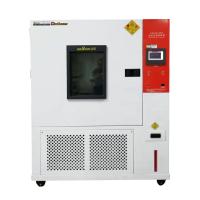
How to choose the right environmental Test Chamber according to your needs?
How to choose the right environmental Test Chamber according to your needs
Environmental testing, a type of reliability testing equipment, has evolved as a way to predict how the environment in which a product will be used affects performance and functionality. That is, before the product is put on the market, the degree of impact of the product on the environment is evaluated through environmental testing; when the function of the product is affected, the cause is found out through environmental testing and measures are taken to protect the product from environmental impact, so as to maintain the reliability of the product. These experiments have far exceeded their purpose. Now it is widely used in the development of materials and products, various inspections in the production process, inspection before transportation and quality control after transportation.
Environmental reliability test items:
Low temperature storage test, high temperature storage test, temperature cycle/shock test, low temperature durability test, high temperature durability test, damp heat test, salt spray test, vibration test, impact test, durability test, dust-verification test, simulated packaging and transportation test, etc. Environmental equipment includes:
1. Climate environment test equipment
The environmental factors simulated by climate environment equipment are mainly natural environmental factors, such as temperature, humidity, wind, rain, thunder, electricity, sunshine and so on. There are also some environmental factors, such as dust, fire, etc.
2. Mechanical environment test equipment
Mechanical environment test equipment, most of the simulated environment is an induced environmental factor;
3. Electromagnetic environment test equipment
Electromagnetic compatibility test is a set of electromagnetic compatibility tests, which are used to test the electromagnetic interference intensity of the product to the surrounding environment and related equipment, the sensitivity of the product to the electromagnetic environment, and the adaptability of the product to power changes. supply.
- 1What are the FAQs of the Environmental Test Chamber? How to calibrate?
- 2How to use an environmental Test Chamber for rust resistance and durability testing of metal coatings?
- 3What is the correct analysis idea for coating defects?
- 4The reason for the coating defects caused by the aging of the paint film turned out to be...
- 5Precautions for temperature and humidity control of environmental Test Chambers
- 6How to measure humidity in an environmental Test Chamber?
- 7Working principle and technology of temperature and humidity Test Chamber in industrial laboratory
- 8What is the role of the environmental Test Chamber?
- 9Precautions for purchasing environmental Test Chambers