How to solve the problem of flow mark defects in film?
In the process of spraying and drying, the phenomenon that the coating film on the vertical or inclined surface forms a flow mark from the top to the bottom or the thickening of the bottom edge is called sagging. According to the shape of flow marks, sagging can be divided into sinking, sagging, dripping, flowing and so on.
sink
During the period from painting to drying, the coating will hang down locally, showing semicircle shape, ice lump shape and wave shape with uneven thickness.
Sagging
A phenomenon in which too much paint accumulates near the vertical surfaces and edges of the object to be coated, solidifies and adheres firmly. Paint flow marks produced in dip coating and curtain coating.
trickle
Drop-like flow marks appear in the coating film on the vertical surface of the object to be coated.
vertical flow
A large area of sagging of the coating film on the vertical surface of the object to be coated.
secondary flow mark
During the drying process of the electrophoretic coating film, the phenomenon of paint liquid flow marks occurs from the crack structure of the object to be coated.
Bottom sag
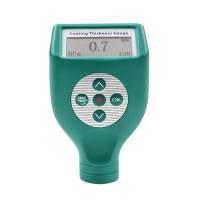
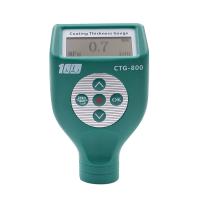
The sagging of the primer layer (primer layer and middle coat layer) is caused by improper solvent selection or too thick application (North and South Chao recommends that you use a paint Film Thickness Gauge), and the flow marks are more conspicuous after the topcoat is applied.
Uneven twist
When spraying metallic color paint, due to improper selection of solvent or too thick spraying, the parallel arrangement of aluminum powder pigments is uneven, and it is in the shape of flow marks (usually easy to occur on the end faces of the front fender and front door panels). Coating film defects are called "uneven twist".
slip marks
The paint accumulated on the bottom of the dipped or lacquered parts or the car door, etc., and after curing, the flow marks in the shape of "ice slippery" are called slip marks.
1. Etiology
1) Improper spraying operation, the Spray Gun is held too close to the sprayed surface, the movement is too slow, and the spraying is too thick at one time.
2) Improper setting of the Spray Gun, use a nozzle with a large paint output and an air hole with a low air output. Spray air pressure too low. The spray pattern has been reduced without a corresponding reduction in paint output.
3) The thinner used is not compatible with the paint, the volatilization is too slow or the moisture-proof agent is used too much, and the viscosity of the paint is too low.
4) Poor spraying environment, lack of proper air flow and temperature. The ambient temperature is too low or the solvent gas content in the surrounding air is too high.
5) Insufficient drying time between wet-on-wet spraying.
6) The spraying is uneven, and the surface of the thick part is slow to dry. If the lower part is thin, it is easy to form sagging.
7) When the paint is sprayed on a polluted or oiled surface, or on a smooth old paint film, it is also prone to drooping.
2. Prevention
1) Apply the correct spraying technology, first spray a thin coat, and then spray the second coat normally after the surface is dry.
2) Set the Spray Gun correctly, check the Spray Gun to ensure that it is functioning normally. Improve the proficiency of spraying operation, and it is not suitable to spray too thick at one time (generally, it is better to control it at about 20 microns).
3) Check the viscosity of the paint and the spraying air pressure.
4) Increase the air temperature in the spray booth (keep above '( )) to ensure normal wind speed.
5) Select the correct matching thinner specified by the paint factory or a qualified thinner that evaporates quickly. Avoid excessive use where moisture-proofing agents are used.
6) Make sure the surface to be painted is effectively cleaned before spraying, and the smooth paint surface should be pre-polished.
3. Remedy
Allow the film to dry effectively, then wet sand and buff with very fine sandpaper, or wet sand with fine sandpaper and respray.
1) If the underlying paint film is still soft after the initial smoothing, it should be allowed to dry completely before continuing to repair.
2) If the vertical flow is still wet and the next layer can be sprayed, use a soft brush to gently brush the vertical flow, and then spray, it can also get the effect.
- 1Polyurethane-graphene composite prepative film
- 2Nondestructive measurement Coating thickness
- 3Principle, application and selection of traffic coatings Coating Thickness Gauge
- 4Principle, Application and Selection of Eddy current Coating Thickness Gauge
- 5Principle, Application and Type Selection of Electronic Coating Thickness Gauge
- 6Explore the principle, application and selection of phosphating layer Coating Thickness Gauge
- 7Principle, Application and Type Selection Analysis of Chrome Coating Thickness Gauge
- 8Principle, Application and Selection of Coating Thickness Gauge for inner wall of small pipe
- 9Basic principle and application scenario of steel Coating Thickness Gauge