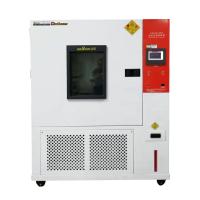
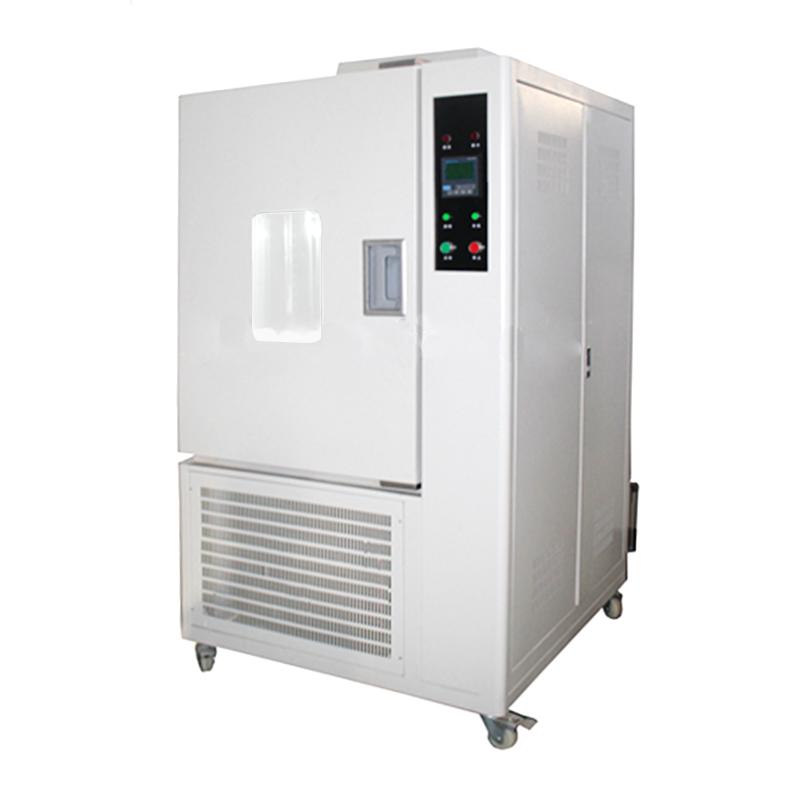
Introduction of the main components of the high-low Temperature Test Chamber and its compressor
Composition of high-low Temperature Test Chamber
The high-low Temperature Test Chamber has one host and one auxiliary unit. When the cooling rate is large, the two sets of units work at the same time, and at the beginning of the temperature maintenance stage, the two sets of units still work at the same time. If the low temperature of the high-low Temperature Test Chamber cannot be controlled, first check the refrigeration compressor, electrical system, and refrigeration system.
The reason why the high-low Temperature Test Chamber cannot be kept at a low temperature
Analysis of the electrical system of the refrigeration compressor: first observe whether the refrigeration compressor can be started when it is running in a high-low Temperature Test Chamber. If the high-low Temperature Test Chamber of the compressor can be started during operation, it means that the electrical line from the main power supply to the compressor is normal, and there is no problem with the electrical system.
Refrigeration system analysis: first check that the two sets of refrigeration compressors are in the high-low Temperature Test Chamber. If the discharge and suction pressures of the low-temperature stage compressor are lower than normal, and the suction pressure is in a vacuum state, it indicates that the refrigerant of the main refrigeration unit is obviously insufficient.
Then touch the exhaust pipe and suction pipe of the R23 compressor of the main engine of the high-low Temperature Test Chamber with your hands. If it is found that the temperature of the exhaust pipe is not high and the temperature of the suction line is not low (not frosted), it also means that there is a lack of R23 refrigerant in the main engine of the high-low Temperature Test Chamber.
When the temperature of the high-low Temperature Test Chamber is initially stable, the auxiliary unit will stop working, and the main unit will keep the temperature down and stable. If the R23 of the main engine of the high-low Temperature Test Chamber leaks, the cooling effect of the main engine will not be great. Since the two units work at the same time during the cooling process, there is no phenomenon that the temperature cannot be stabilized, but the cooling rate is reduced.
In the temperature maintenance stage, once the auxiliary unit stops working and the main engine has no cooling effect, the air temperature in the high-low Temperature Test Chamber will rise slowly. When the temperature rises to a certain level, the control system will start the auxiliary unit to cool down again, and then the auxiliary unit of the high-low Temperature Test Chamber will stop working again. If this operation is repeated, there will be a failure phenomenon that the low temperature cannot be maintained.
- 1Application and structure principle of low/high Temperature Test Chamber
- 2Principle, application and selection of low/high Temperature Test Chamber for plastic belt
- 3Principle, application and selection of fire-proof coatings low/high Temperature Test Chamber
- 4Principle, application and selection of ultra low/high Temperature Test Chamber
- 5Principle and application of desktop low/high Temperature Test Chamber
- 6Application of FRP low/high Temperature Test Chamber
- 7The working principle and application scenario of non-standard high-low-Temperature Test Chamber
- 8Application of programmable low/high Temperature Test Chamber NBC-CDW-150M in luminaire testing
- 9What are the reasons why the high-low temperature alternating heating and Humidity Chamber cannot be thermostatic?