Plastic wire anti-ultraviolet aging test
The plastic is aging tested to achieve a satisfactory pass rate. Almost all plastic products need to be aged before leaving the factory. One reason for aging is to increase product reliability. So far, there is no other choice. For new products, the performance of new parts or complete units needs to be evaluated, and the aging index is high. Expose the defects of aging products before leaving the factory, such as solder joint reliability and defects in product design, materials and processes; make the performance of aging products before leaving the factory enter a stable range and reduce the repair rate.
When plastic is heated, it softens or melts. Especially when exposed to high temperature, it will be slowly oxidized by oxygen in the air. Thermal decomposition occurs not only in air but also in vacuum when exposed to high temperatures above the melting point. Plastic is known to deteriorate rapidly when exposed to direct outdoor sunlight, and the stomach is most affected by the UV rays from the sun and the oxygen in the air. However, taken alone, it would be weaker.
Outdoor exposure and aging are the result of major factors such as UV radiation energy and actual usage conditions such as moisture, ozone, oxygen and heat. Considering the complex aging mechanism, it is necessary to conduct a comprehensive evaluation after having a basic understanding of the influence of various main factors on polymers. Therefore, in order to explain the complexity of the stability of polymers under the influence of various parameters, more basic information needs to be accumulated and efforts should be made to establish practical accelerated aging test methods.
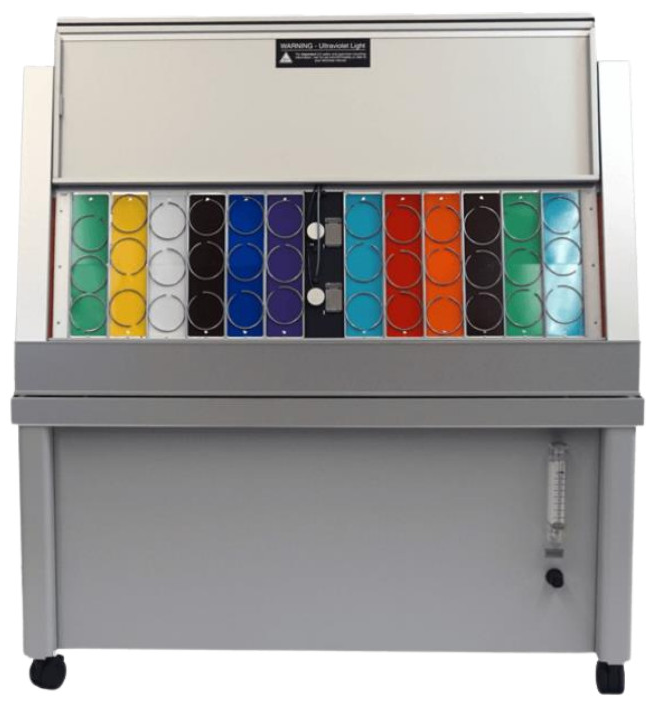
- 1The working principle and application of rubber UV aging Test Chamber
- 2Application of UV aging Test Chamber in mobile phone shell
- 3UV aging Test Chamber for sealant aging test
- 4Application of UV aging Test Chamber in silica gel test
- 5UV UV aging Test Chamber for weathering test of exterior-wall latex paint coatings
- 6How does UV aging Test Chamber test the ageing resistance of exterior paints?
- 7Purpose and method of durability testing of building materials
- 8Coil coatings aging test
- 9Correct calibration method and process for UV aging Test Chamber