Take care of nutrition by controlling sugar in food
Since the World Health Organization recommended reducing sugar intake in Western Europe to 25 grams per day, there have been initiatives to create awareness of the need for this reduction and dietary sugar control is one of the immediate priorities that needs to be imposed on the industry .
The risks of consuming too much sugar - diabetes, overweight, cardiovascular problems, tooth decay and even dependence - and information about the sugar content of the food being prosecuted has been the subject of numerous information and complaint actions by the media and associations.
Furthermore, the Ministry of Health, Consumer and Social Welfare will soon implement frontal nutrition labelling, which, according to the ministry itself, aims to promote healthier eating through consumer information through the so-called Nutriscore five-color code.
Another initiative promoted by the Ministry in this regard is the agreement with food sector associations to gradually reduce the amount of added sugar, salt and saturated fat in more than 10 products on average until 2020 until 3.500 years.
However, the food industry will have to adapt the concentration of sugars contained in processed products to new legislation and market requirements.
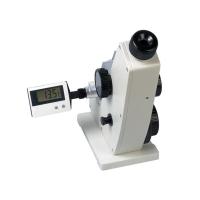
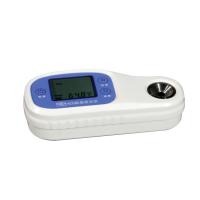
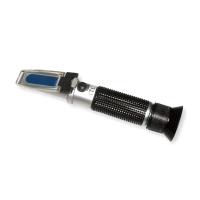
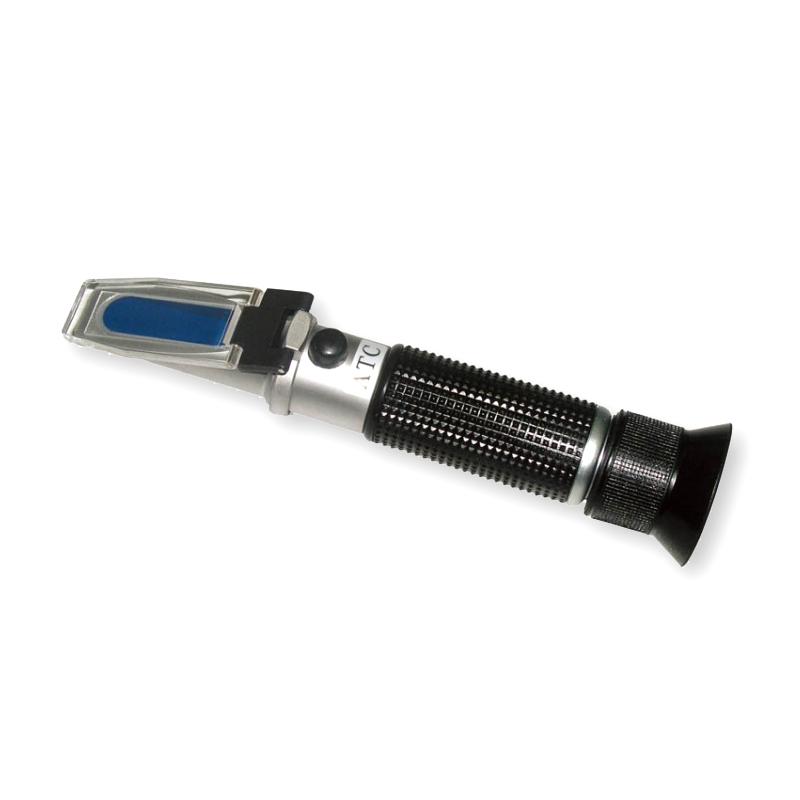
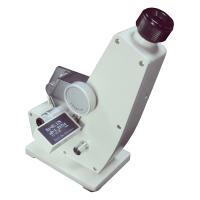
In food processing, it is common practice to know the concentration of sugar in a product with a refractometer that determines the Brix of a solution, since there is a correlation between refractive index and sugar concentration.
One of the assurances that consumers have is that the manufacturer needs to ensure that the product complies with the regulations and that the information provided to the consumer is true, for which measuring instruments need to be regularly calibrated by accredited laboratories.
- 1Color measurement of tomatoes
- 2How to use a portable refractometer?
- 3How to properly calibrate a handheld refractometer?
- 4Refractometer User Guide
- 5Application of refractometer in honey moisture measurement
- 6 What is the application value of refractometer for grape planting?
- 7Experimental working principle and common refractive index of refractometer
- 8What is a refractometer?
- 9Solid substance refractive index
-
![INESA WYA (2WAJ) Abbe refractometer for determination of refractive index and average dispersion]()
-
![INESA WZS 90A Handheld sugar meter 0~90% (1 ranges)]()
-
![INESA WZB S1 handheld digital refractometer salinity/refractive index/whiteness]()
-
![INESA WYA-2S digital Abbe refractometer]() INESA WYA-2S digital Abbe refractometer$ 1700.00
INESA WYA-2S digital Abbe refractometer$ 1700.00 -
![INESA WZS S1 Handheld Salinometer salinity Tester]()
-
![INESA WZS 80 Handheld sugar meter 0~80% (1 ranges)]()