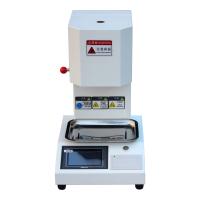
5 Simple Steps to Operate a Melt Flow Rate Meter
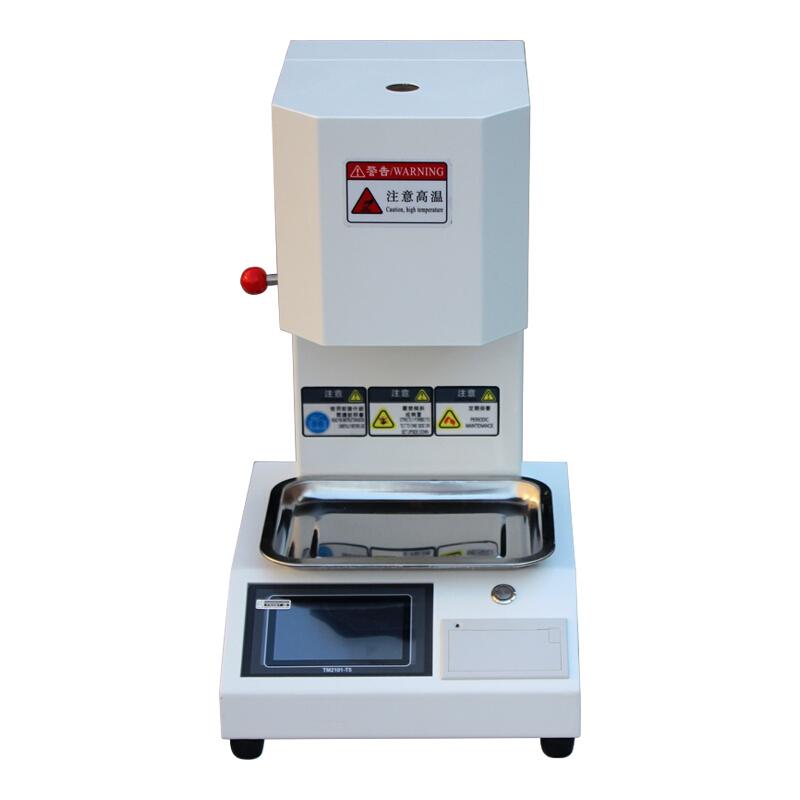
A melt flow rate meter helps you measure a polymer's resistance to flow when it melts at a specific temperature. We all know that plastics are widely used in various industries, and measuring the melt flow rate of these plastics will help you determine their quality. Melt flow index is the main characteristic of plastics, which determines the physical and chemical characteristics of these materials. The melt flow index Tester is an excellent testing machine, which is very helpful for accurately analyzing the melt flow index of different types of plastic pellets.
introduce
We all know that polymers play an inescapable role in our daily life. Measuring the resistance of these materials to flow is therefore essential to determining their mass. That's why melt flow rate meters are here to make sure you'll get highly accurate test results. The machine comes with a timer that can be used to set the test time to 999 hours. Its stainless steel inner body with a corrosion resistant finish will offer automatic and manual operation for sample cutting.
How to operate a melt flow rate meter in a fail-safe manner?
If you intend to operate this test instrument effectively, then we recommend that you follow these 5 simple steps. These steps will help to operate your test instrument without any failure.
In order to obtain accurate test results, it is necessary to ensure that the machine is leveled. You can do this . Now check the verticality of the plumb line in relation to the ground. If the plumb line is perfectly perpendicular to the ground, it means the machine is level.
You can then start the machine by plugging the machine's main socket into a 3 pin 15 amp outlet. A PID controller will display some readings on PV (process value) and SV (set value) . Set the SV value on the PID controller.
After setting the temperature and time. Wait for the reading in the PV display in the PID controller to reach the value of the SV display. After reaching the temperature required for the test, fill the barrel of the machine with the plastic pellets to be tested.
After inserting the pellets into the bucket, poke the pellets with the plunger. This will ensure tight packing of the particles and eliminate air between the particles. When pellets are inserted into the barrel, the PV value on the PID monitor will drop slightly. Wait for this value to reach the SV value again. We also need to warm up the pellets before starting the test. Once the PV and SV values are the same, place the plunger that came with the machine and the dead weight on it into the bucket.
After the plunger is placed, there will be extrudate coming out of the die/orifice placed at the lower end of the barrel. When the time cycle on the digital timer is complete, the cutter will automatically cut . It can also be done manually if the machine is set up for manual operation. The first extrudate cut by the knife was discarded. Subsequent extrudate cuts should be considered for testing .
In this way, you can operate this test machine with little effort. Weigh the extrudate cut from the barrel using a digital balance. This weight will be used to calculate the melt flow index of the sample.
-
![YOUKE YK3650 Melt Flow Indexer]() YOUKE YK3650 Melt Flow Indexer$ 964.00
YOUKE YK3650 Melt Flow Indexer$ 964.00 -
![YOUKE YK3654 melting point Tester]() YOUKE YK3654 melting point Tester$ 635.00
YOUKE YK3654 melting point Tester$ 635.00

- 1Do plastic materials need to measure melt viscosity?
- 2Knowledge of Melt Flow Index Tester
- 3How to judge the mechanical properties of plastics with melt flow rate meter?
- 4How it works to measure the flow properties of plastics and resins
- 5Why test the melting properties of plastics?
-
![CHINA NBC-5605 Melt flow rate meter, touch screen Melt Flow Indexer]()
-
![SHUCHANG SC-MI-B Melt Flow Indexer 4.3 inch touch screen model]()
-
![YOUKE YK3650 Melt Flow Indexer]() YOUKE YK3650 Melt Flow Indexer$ 964.00
YOUKE YK3650 Melt Flow Indexer$ 964.00