Determination of Ash and Pigment Base Ratio in Electrophoretic Coatings
The ratio of pigment to substrate in electrophoretic coating refers to the ratio of pigment to substrate (resin) in electrophoretic coating, plating solution or paint film. The determination of pigment alkali ratio includes solvent method and ash content method. In addition to carbon black, the pigments used in electrophoretic coatings are generally non-combustible inorganic pigments. Therefore, the ash content is usually used to calculate the pigment content. The method is simple and convenient.
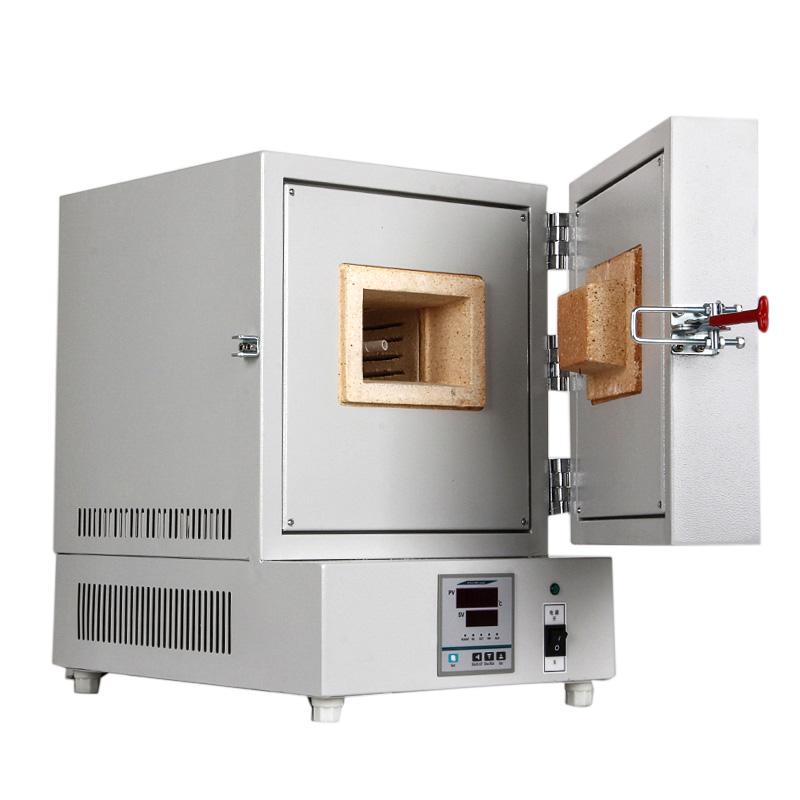
(1) Testing instruments and materials
① Crucible and muffler
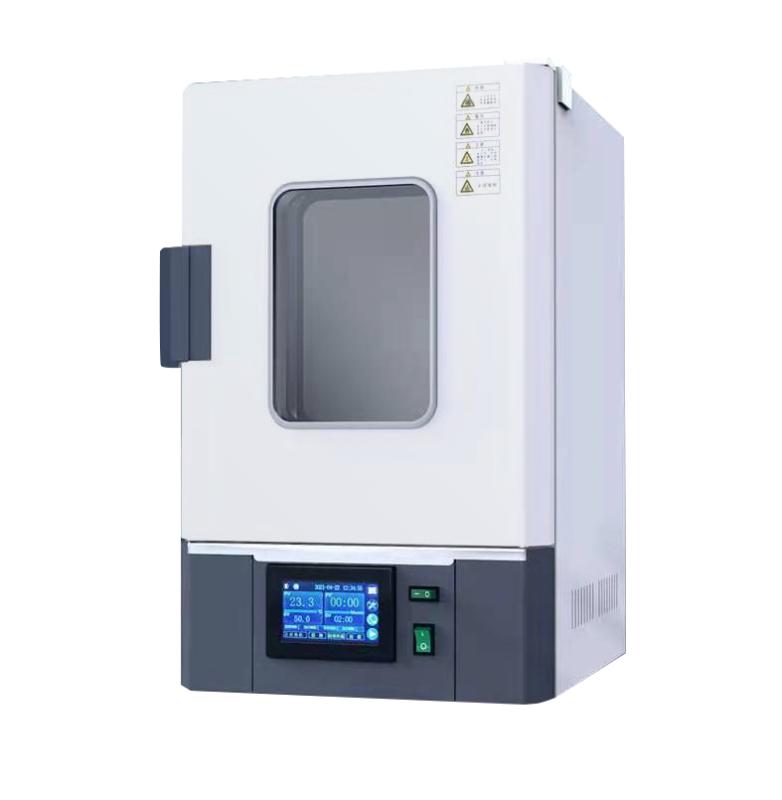
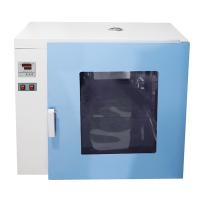
②Constant temperature oven
(2) Measurement method
① Weigh a quantitative (about 10g) paint sample or tank liquid sample into a weighing crucible;
② Bake at 110±5°C for 1 hour, then bake at 200-250°C for 1 hour, bake at 400-450°C for 0.5 hour, and calcine at 800°C for 0.5 hour;
③Weigh the crucible again after cooling;
④Calculation:
Ash = (CA) × 100/[(BA) × (D/100)]
Color base ratio (P / B) = (c - a) / K (KD (B)——(c - a))
Place:
A crucible weight (g)
B crucible plus sample weight (g)
C The weight of the sample added to the crucible after calcination (g)
D paint sample solids (%)
K is the correction coefficient of carbon black, K=1.15 in black paint


- 1Principle, application and selection of vertical Electric Forced Air Drying Oven
- 2Principle, application and selection of pigment Drying Oven
- 3Principle, application and selection of electric heating air Drying Oven
- 4Principle, application and selection of vacuum electric Drying Oven
- 5Principle, application and selection of nitro paint Drying Oven
- 6Principle, application and selection of industrial hot air circulation Drying Oven
- 7Principle, application and selection of small Drying Oven
- 8Principle, function and application of thermostatic Drying Oven
- 9Principle and application of muffle furnace