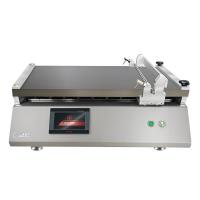
Laboratory Coating Machine Case | Sewage Treatment Flat Membrane/Vinylidene Fluoride PVDF Preparation
With the rapid development of the chemical and metallurgical industries, the treatment of heavy metal sewage is also a social and environmental issue that has attracted more and more attention. Therefore, many scientific researchers are constantly studying new technologies to improve the efficiency of sewage treatment. The preparation case of the membrane coating machine in this laboratory is the preparation of a flat filter membrane for sewage treatment, a flat ultrafiltration separation membrane with adsorption function for heavy metal ions prepared by compounding polyvinylidene fluoride membrane material and attapulgite. Used to improve the efficiency of sewage treatment.
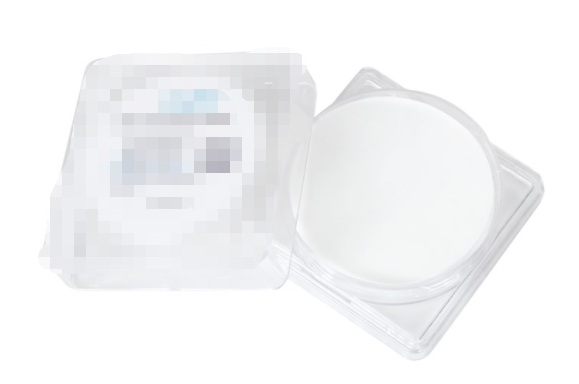
The specific operation method of extracting papers is as follows:
The modified ultrafiltration membrane used in this experiment is a laboratory-made membrane. The modified membrane uses polyvinylidene fluoride (PVDF) as the base membrane material, and the preparation method is the immersion precipitation phase inversion method. At room temperature in the laboratory, put a certain mass ratio of PVDF powder in a beaker, pour a certain volume of N, N-dimethyl ethylene glue (DMAc) solution, stir well, and pour it into the PVDF casting solution Add a certain mass ratio of polyvinylpyrrolidone (PVP) and graphene oxide, stir evenly, place in a constant temperature Water Bath at 40C for heating and stirring in a Water Bath for 2, and perform ultrasonic treatment for 1h at a Water Bath temperature of 40C, and then let stand for 24h Let it fully mature and defoam. Control the speed of 0.839m/min on the film coating machine to scrape the film on the glass plate, control the film thickness to about 0.2mm, and then control the glass plate to enter the water at a direction of 30°~60°, and spread the casting liquid The glass plate is quickly immersed in deionized water, and after the Water Bath is solidified to form a film, the new film is separated from the glass plate. The prepared new membrane needs to be rinsed with deionized water, and then soaked in deionized water for more than 24 hours. These processes are mainly to remove the residual solvent in the membrane pores.
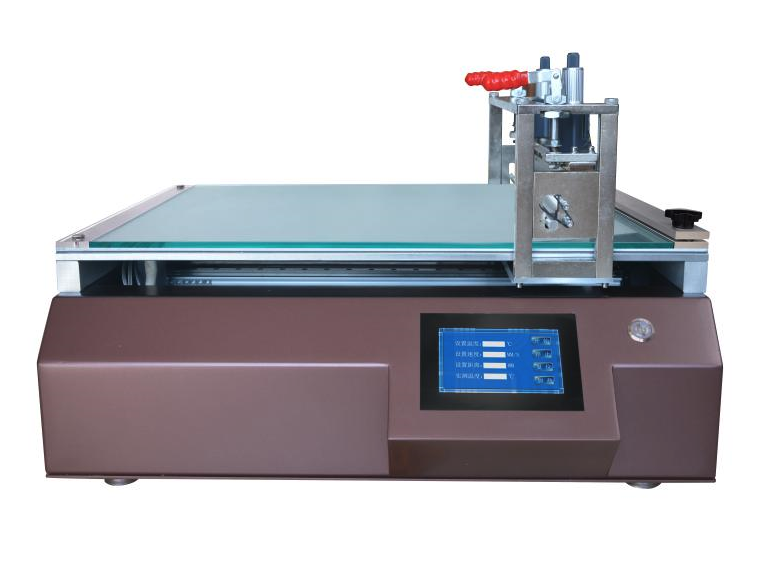
From the information of the preparation experiment, we can see several key points in the selection of the film coating machine. First, the base material is on a glass plate, so there is no need for a vacuum adsorption plate; second, a scraper should be used for scraping coating , the thickness of the scraped film is about 200 μm, which is relatively thick, and can be prepared with an adjustable scraper ; third, this experiment does not require a heating function;
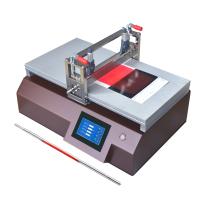
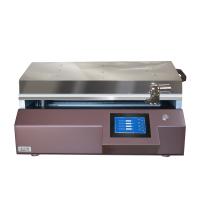
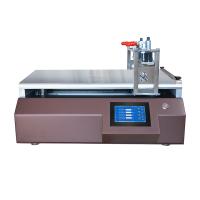
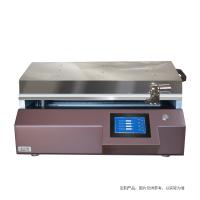
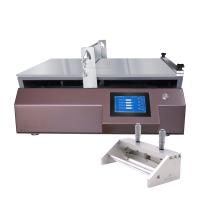
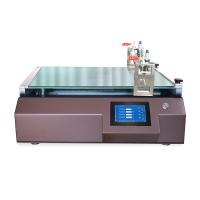
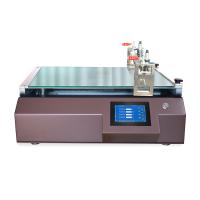
According to the requirements of the experiment, we technically recommend the scraper integrated film coating machine to the customer. The scraper is an adjustable film thickness scraper, which can be freely adjusted from 0 to 10mm to meet the experimental needs of more film thickness. The specific parameters are as follows:
| Membrane Proofing- Membrane | |
 | Domestic TBJ-B1 scraper coating testing machine |
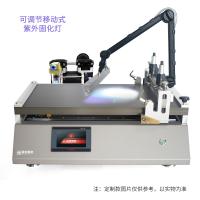
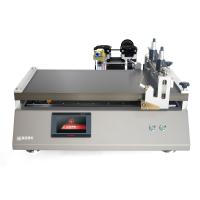
| Specification parameters: coating precision ±0.003mm, coating thickness range 0.01~10mm, coating speed 2~200mm/s, coating width 300*400mm, digital display of coating time, different speeds, distance precision control, scraper Length 400MM Material/stainless steel, main engine power supply 220V 50HZ, external dimensions 626*410*520mm, net weight 45KG, speed control stepless speed change, bottom plate material glass plate, optional accessories leakage tank, substrate fixing fixture, fine-tuning level height support feet Device, glass plate, silicone pad and weight (for the application of uneven thickness of coating substrate), coating film width control baffle, customizable function air jet system device, UV solid containing device, automatic ink filling system | |
The above parameters are for reference only. According to different actual experiments, with further targeted selection of appropriate configuration, it can communicate with the North and South tide technology.


- 1Kinetic control of silicon carbon cathode Spreader drying: key technology to solve crazing and powder drop
- 2How Flat Film Applicators Can Build a New Generation of Functional Materials on Fabrics
- 3NVP anode film FAQ and solution
- 4Application Technology of Laboratory Film Applicator in Dielectric Thin Film
- 5Comparison of Advantages and Disadvantages of Three Heating modes for Laboratory Film Applicators
- 6Application and selection of laboratory coater in PDMS thin film prepative
- 7Scraping machine selection case: film substrate large size high accuracy scraping solution
- 8Drawdown blade Film Applicator Coating UV glue on film
- 9Application of Laboratory Automatic Film Applicator in Coating Battery Slurry on Copper Foil and Aluminum Foil