Destructive dry film thickness test and non-destructive dry film thickness test which is good? What standard is applied?
There are two different methods for measuring dry film thickness, including destructive testing and non-destructive testing. The destructive test method should be used to scratch the paint film, while the non-destructive test method should not damage the paint film.
The magnetic extensometer is easy to use because it looks like a banana and is often called a banana-shaped Thickness Gauge. The error of the magnetic Thickness Gauge is allowed within ±5%. When using a magnetic Thickness Gauge, please pay attention to the following: First, the exposed magnet will absorb nearby scattered iron particles and steel shot or steel grit. Therefore, the magnet should be clean and free of any contamination that could alter the reading. Second, if using a magnetic Thickness Gauge on a sticky paint film, the reading may indicate a lower film thickness than the true film thickness. This is because the paint film itself holds the paint above the test point. If used on a soft coating, the end of the magnet will press against the paint film, causing thinner readings. Third, movement of the test area can cause the magnet to leave the surface before it normally does, resulting in high readings. Magnetic instruments can also be affected by magnetic fields near the edges. Generally, the dry film thickness should not be measured at a distance less than 25mm (lin) from the edge, hole or inner corner.
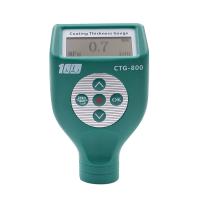
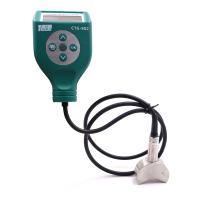
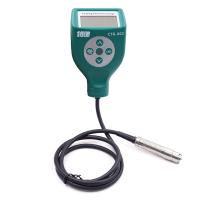
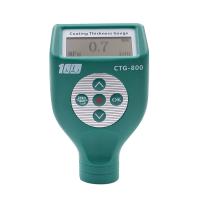
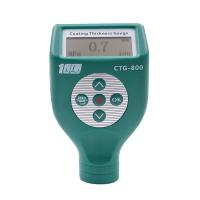
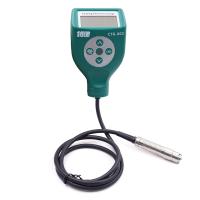
If the electronic Thickness Gauge has single probe and double probe, the error is within ±3%. If the measurement range is adjusted, the error can be controlled within ±1%. Electronic Thickness Gauges measure film thickness through magnetic flux between the probe and the substrate. It runs on batteries and requires frequent calibration. The reading of the Thickness Gauge can be accurate to 0 meters.
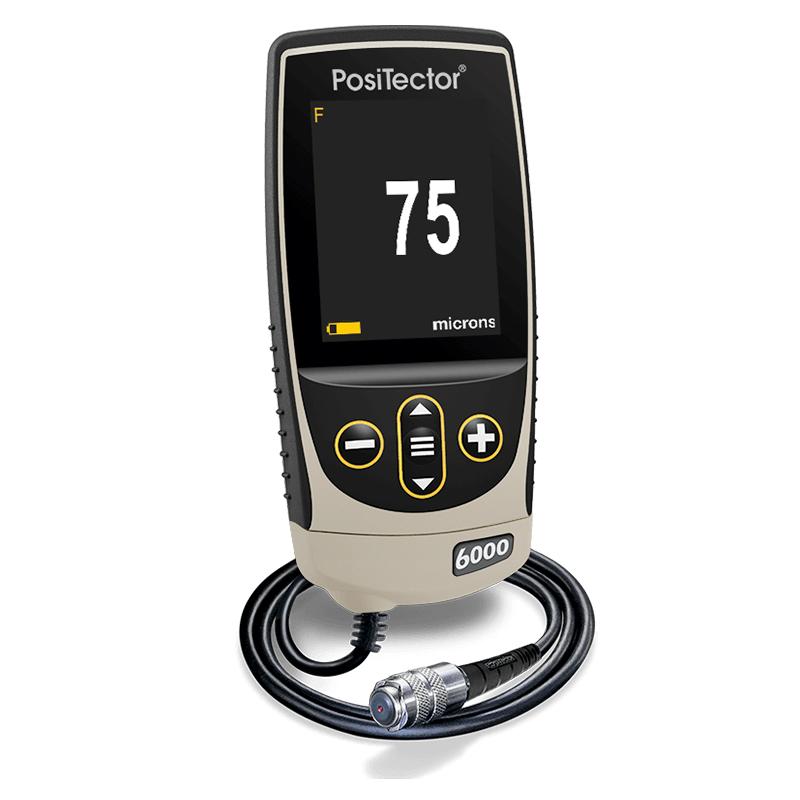
The standards used for dry film thickness measurement are ISO 2809-97 and SSPC SP2
When measuring dry film thickness, an 80-20, 90-10 or similar measurement principle should be followed. The 80-20 principle means that 80% of the measured value shall not be less than the specified dry film thickness, and the remaining 20% of the measured value shall not be less than 80% of the specified film thickness. For example, if the specified dry film thickness is 300pm, 80% of the measured value should be greater than 300jm, and the remaining 20% of the measured value should not be less than 80% of the specified 300m film thickness, that is, 240pm.