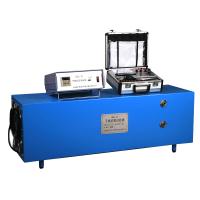
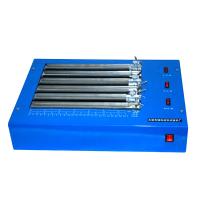
What happens if you don't pay attention to the drying and curing of the paint film?
Drying and curing of paint film
After construction, pay attention to the drying and curing time of the paint film to guide further construction. There are usually several data listed in the specification: surface dryness, solid dryness (specific hardness), complete cure, minimum recoating interval and maximum recoating interval. For marine antifoulings, a minimum launch time is also listed to indicate how dry the launch will be after application. The drying and curing time of the paint film is closely related to the thickness of the paint film, the temperature of the substrate, the ambient temperature and the ventilation state. During the drying process of the paint film, the drying time is related to the ventilation rate, temperature and film thickness. For physically drying coatings, it is also related to the number of layers and total film thickness.

Cure times are for two-component coating products. The curing time is based on the average ambient temperature of 20°C. Throughout the curing process, high temperatures will accelerate curing while low temperatures will slow down the curing process. According to experience, when the temperature is 10C, the curing time is twice that of normal temperature (20C), and when the temperature is 30C, the curing time is halved. Cure nearly stops below the minimum temperature specified by the application conditions. For some two-component coatings such as epoxy resin coatings, if the paint film has reached a fully cured state, the next layer of paint will cause adhesion defects between layers. Therefore, the minimum and maximum recoating intervals specified in the product specification need to be strictly observed during application.

- 1Basic Principle and Application Analysis of Paints drying time Tester
- 2Waterborne architectural coatings detection method
- 3Summary of drying time determination method for paint film and putty film
- 4Several Determination Methods of Coating drying time
- 5Coating performance testing: ensuring the efficiency and mass of the painting process
- 6Film drying method: natural drying, heating drying, irradiation curing and gas phase curing
- 7How to detect the drying time of architectural coatings (surface drying)?
- 8How to test architectural coatings workability?
- 9List of water-based paints testing laboratory equipment
-
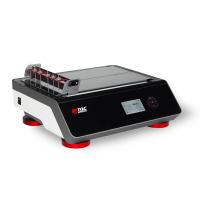
![TQC sheen AB3600 Drying Time Recorder BK method, six-track -20 ℃ to 70 ℃ test]()
-
![JFL QGS film drying time Tester]() JFL QGS film drying time Tester$ 110.00
JFL QGS film drying time Tester$ 110.00 -
![Pushen GZQ film drying time Tester]() Pushen GZQ film drying time Tester$ 110.00
Pushen GZQ film drying time Tester$ 110.00 -
![MODERNER ZGY automatic drying Tester for determining inks drying time QB562-83 standard]()
-
![MODERNER GKL-II drying anti-crack Tester, determination of initial drying anti-crack of laminated architectural coatings]()
-
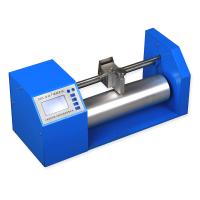
![JINGKELIAN QGZ-A Drying Time Recorder GB/T1728-89 Standard, Scribing stroke 305mm]()