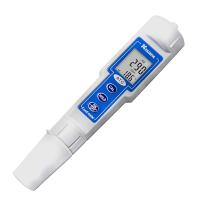
How to use the new touch screen conductivity meter correctly? [Five and a half minutes video demonstration]
overview
From Ohm's law, we know that the reciprocal of conductivity (g)-resistance (r) is determined by voltage and current. The conductivity can be calculated by measuring the solution resistance (R) or conductance (G) when the cell constant (J) is known. Put two parallel plates into the solution to be tested, apply a certain potential (usually a sine wave voltage) at both ends of the plates, then measure the current flowing between the plates, and measure the conductivity of the electrolyte solution by electrochemical measurement rate of the instrument, called conductivity meter.
Steps
Install the electrode holder and base.
Conductivity electrode connection: Clamp the groove of the electrode plug with the groove of the instrument plug. Place the conductivity electrode on the electrode holder after connection.
The temperature electrode is connected in the same way as the conductivity electrode and placed on the electrode holder.
Power on: Connect the power cord to the instrument, and the instrument will automatically turn on.
Click "COED" to enter the conductivity detection module.
Measurement: Place the electrode into the sample and stir the sample slightly. The value displayed on the screen is the conductivity value of the sample, and the value displayed on the right is the temperature value of the sample. On the left is the mode switch, you can view the resistivity value, etc.
After the measurement, the electrode needs to be cleaned to facilitate the next use. When placing the electrode, in order to prevent oxidation, it is necessary to soak the electrode in distilled water.
Note: For the first use, you need to set the electrode constant, enter the K value on the electrode label, and click OK.
video demo
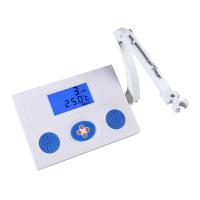


- 1The Working Principle of Gel Conductivity Meter Has Been Detailed
- 2Detection Principle and Application Analysis of Conductivity Meter
- 3Principle of Conductivity Analyzer
- 4Several common electrode types for Conductivity Meters
- 5Differences between three STIP-scans: pH Meter, Conductivity Meter, and Dissolved Oxygen Meter
- 6Conductivity Meter and Ion Meter specific differences
- 7Common types and application differences of STIP-scan
- 8How to detect the conductivity of lithium battery coating slurry?
- 9How to choose a high-precision conductivity meter?