Defects and solutions of polyurethane topcoat
The difference between polyurethane topcoat defects and other topcoat defects is that, in addition to pinholes, bubbles, bottom bite, orange streaks, flow, sagging, and impurities, pitting, peeling, uneven drying, Slow drying, poor adhesion, poor gloss and false thickness of the paint film and other undesirable phenomena.
The pinholes and bubbles produced by the polyurethane topcoat are not only caused by the poor quality of the thinner used (such as the thinner volatilizes too fast or contains alcohol solvents, etc.), but also has a certain relationship with the compressed air used for spraying. If the moisture and oil in the compressed air are directly used for painting without filtering, pinholes and air bubbles will easily occur. Therefore, during construction, attention should be paid to the quality of the thinner and the cleanliness of the compressed air.
For the undercutting of the polyurethane topcoat, in addition to the undercoating caused by poor matching of the primer (for example, alkyd is used for the primer, etc.), when the polyurethane topcoat is applied wet-on-wet, if the paint film is too thick for the first spray However, the second spraying paint is relatively thin, or the interval between the previous spraying and the subsequent spraying is too long, so that the paint film of the previous spraying has reached the level of surface dryness due to the long interval, and when spraying the second paint It is easy to bite the bottom. Therefore, during construction, attention should be paid to coating matching and construction methods.
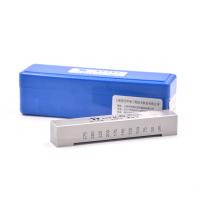
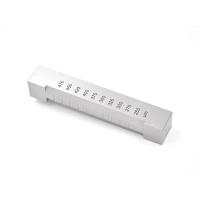
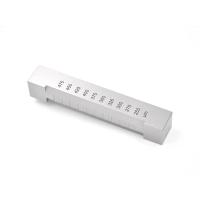
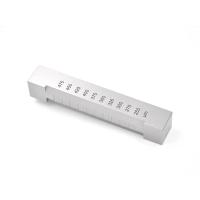
The reason for the orange pattern of polyurethane topcoat is the same as that of other paints (such as the paint is too thick and the spraying pressure is too low). As for the flow and sag defects (detection instrument: Sag Tester ), it is mainly caused by too thin paint mixing, too high spraying pressure or too close spraying distance or uneven moving speed of the Spray Gun, so the paint mixing should be well controlled. Viscosity, spraying air pressure and mastering the correct spraying method to prevent it.
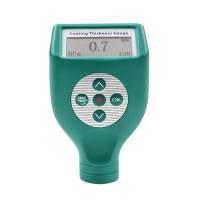
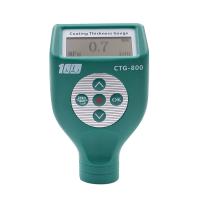
The pitting of the polyurethane topcoat is mainly due to the over-spraying of a certain part at one time (testing instrument: coating Thickness Gauge), which makes the curing agent react violently in the thick paint film, resulting in pitting on the surface. However, sometimes there is water or oil stains on the bottom layer, or a small amount of water is mixed into the paint (including thinner), or there is water in the compressed air, etc., which can also easily lead to pitting. Therefore, special attention should be paid.
The peeling of the polyurethane topcoat is mostly caused by poor matching of the primer and the topcoat or oil stains on the surface of the metal base. If the primer uses iron red perchlorethylene paint or iron red alkyd primer, spray polyurethane topcoat on the surface of such a primer. After the topcoat is dry, the adhesion of the topcoat (measured This performance can be strong with an adhesion Tester), and it is easy to peel off the skin. Therefore, special attention should also be paid.
The uneven drying of the polyurethane topcoat is caused by spraying without sufficient stirring when preparing the curing agent. For the slow drying of the paint film, in addition to the fact that the weather is too cold and the temperature is too low to affect the curing reaction, the proportion of curing agent used is too small is also an important factor leading to the slow drying of the paint film. Therefore, attention should be paid to the deployment method and the deployment ratio.
The poor adhesion is mostly caused by the excessive amount of curing agent and the fast curing reaction speed, which leads to the embrittlement of the paint film. As for the poor gloss and false thickness of the paint film, it is mainly caused by the poor solvency of the thinner. Practice has proved that spraying polyurethane topcoat, as long as the amount of curing agent is strictly controlled and good thinners are selected for deployment, it is not easy to produce defects such as poor adhesion, poor gloss and false thickness of the paint film. (Testing instruments: adhesion Tester, gloss meter)
- 1Nondestructive measurement Coating thickness
- 2Principle, application and selection of traffic coatings Coating Thickness Gauge
- 3Principle, Application and Selection of Eddy current Coating Thickness Gauge
- 4Principle, Application and Type Selection of Electronic Coating Thickness Gauge
- 5Explore the principle, application and selection of phosphating layer Coating Thickness Gauge
- 6Principle, Application and Type Selection Analysis of Chrome Coating Thickness Gauge
- 7Principle, Application and Selection of Coating Thickness Gauge for inner wall of small pipe
- 8Basic principle and application scenario of steel Coating Thickness Gauge
- 9Principle and Application Analysis of Coating Thickness Gauge