What are the artificial simulated salt spray corrosion test methods?
Salt spray test is a salt spray test equipment that uses artificial simulation of salt spray environmental conditions to assess the corrosion resistance of products or metal materials. It is divided into two categories, one is the natural environment exposure test, and the other is the artificially accelerated simulated salt spray environment test.
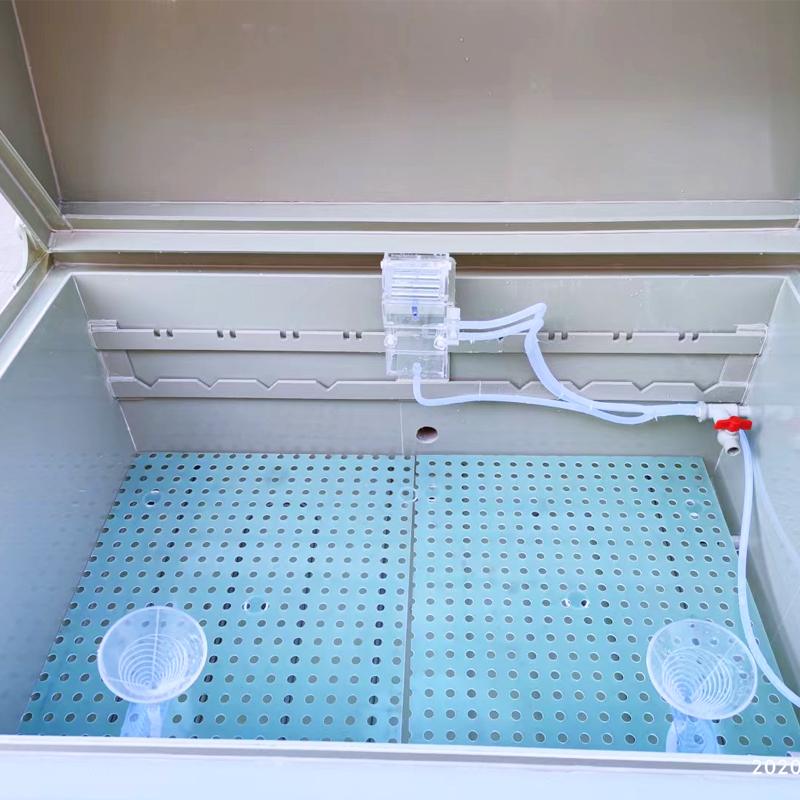
The artificial simulation salt spray environment test is to use a test equipment with a certain volume space - the salt spray Test Chamber, and use artificial methods in its volume space to create a salt spray environment to assess the quality of the product's salt spray corrosion resistance. . Compared with the natural environment, the salt concentration of chloride in the salt spray environment can be several times or dozens of times that of the general natural environment salt spray content, which greatly increases the corrosion rate. The salt spray test is carried out on the product and the results are obtained. The time is also greatly shortened. For example, if a product sample is tested in a natural exposure environment, it may take 1 year for it to corrode, while in an artificially simulated salt spray environment, it only takes 24 hours to obtain similar results.
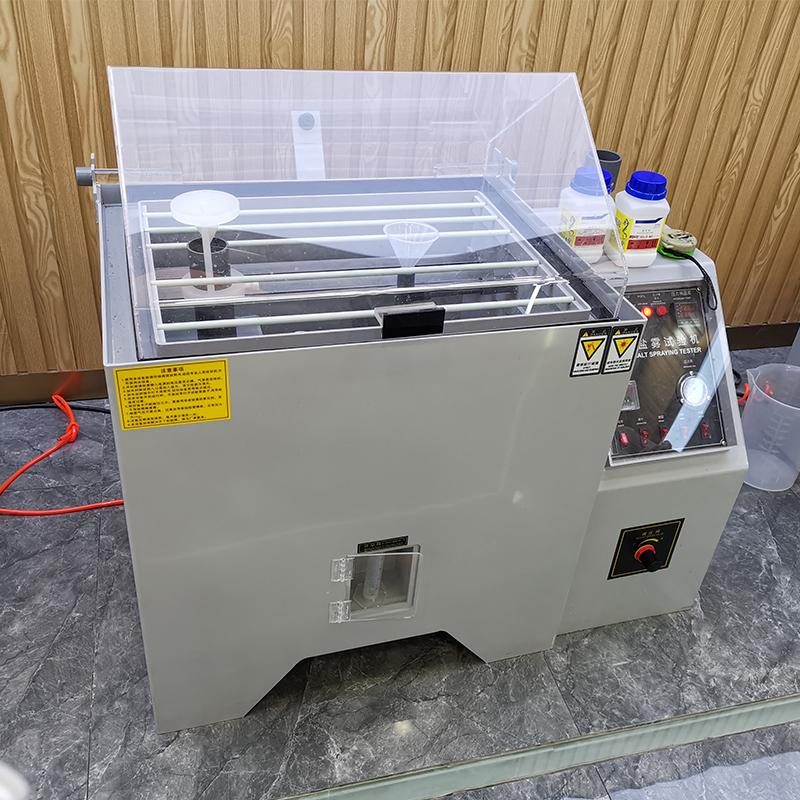
What artificial simulation salt spray corrosion test methods are there?
The artificial simulated salt spray test includes neutral salt spray test, acetic acid salt spray test, copper salt accelerated acetic acid salt spray test, and alternating salt spray test.
Neutral salt spray test (NSS test) is an accelerated corrosion test method that appeared in the early days and was widely used. It uses 5% sodium chloride saline solution, and the pH value of the solution is adjusted in the neutral range (6-7) as a solution for spraying. The test temperature is 35°C, and the sedimentation rate of salt mist is required to be between 1 and 2ml/80cm².h.
The acetic acid salt spray test (ASS test) is developed on the basis of the neutral salt spray test. It is to add some glacial acetic acid to the 5% sodium chloride solution to reduce the pH value of the solution to about 3, and the solution becomes acidic, and then the formed salt spray also changes from neutral salt spray to acidic. Its corrosion rate is about 3 times faster than that of the NSS test.
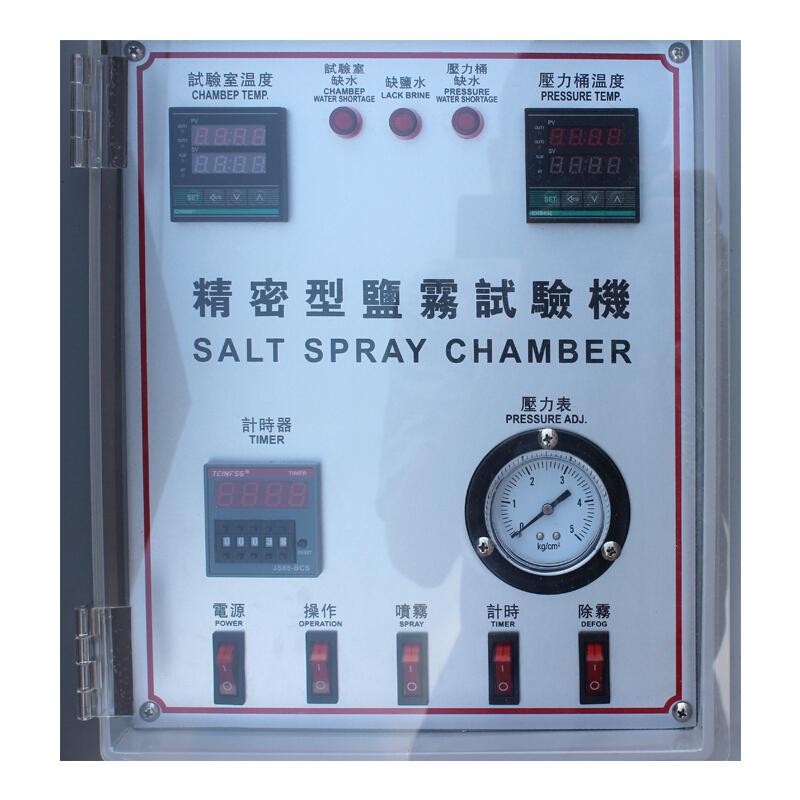
The copper salt accelerated acetic acid salt spray test (CASS test) is a rapid salt spray corrosion test recently developed abroad. The test temperature is 50°C, and a small amount of copper salt—copper chloride is added to the salt solution to strongly induce corrosion. Its corrosion rate is about 8 times that of the NSS test.
The alternating salt spray test is a comprehensive salt spray test, which is actually a neutral salt spray test plus a constant damp heat test. It is mainly used for cavity-type complete machine products. Through the penetration of the humid environment, salt spray corrosion not only occurs on the surface of the product, but also inside the product. It is to alternately switch the product under two environmental conditions of salt spray and humid heat, and then assess whether the electrical and mechanical properties of the whole product have changed.
- 1Cyclic corrosion test and its test procedures
- 2The principle and application of salt spray corrosion Test Chamber, the operation and selection method
- 3Cyclic Corrosion Testing and Applicable Standards
- 4Corrosion Test Methods and Standards
- 5Principle of cyclic corrosion test
- 6What is Automotive Cyclic Corrosion Test CCT?
Mark
- 7Important factors to be considered in the purchase of salt spray corrosion Test Chamber
- 8What is the purpose of the salt spray corrosion test?
- 9What is a salt spray test?
-
![HZAOC LSO2-100 SO2 corrosion Test Chamber]() HZAOC LSO2-100 SO2 corrosion Test Chamber$ 15123.00
HZAOC LSO2-100 SO2 corrosion Test Chamber$ 15123.00 -
![HZAOC SO2-300 SO2 corrosion Test Chamber]() HZAOC SO2-300 SO2 corrosion Test Chamber$ 15358.00
HZAOC SO2-300 SO2 corrosion Test Chamber$ 15358.00 -
![HZAOC SO2-250 SO2 corrosion Test Chamber]() HZAOC SO2-250 SO2 corrosion Test Chamber$ 15358.00
HZAOC SO2-250 SO2 corrosion Test Chamber$ 15358.00